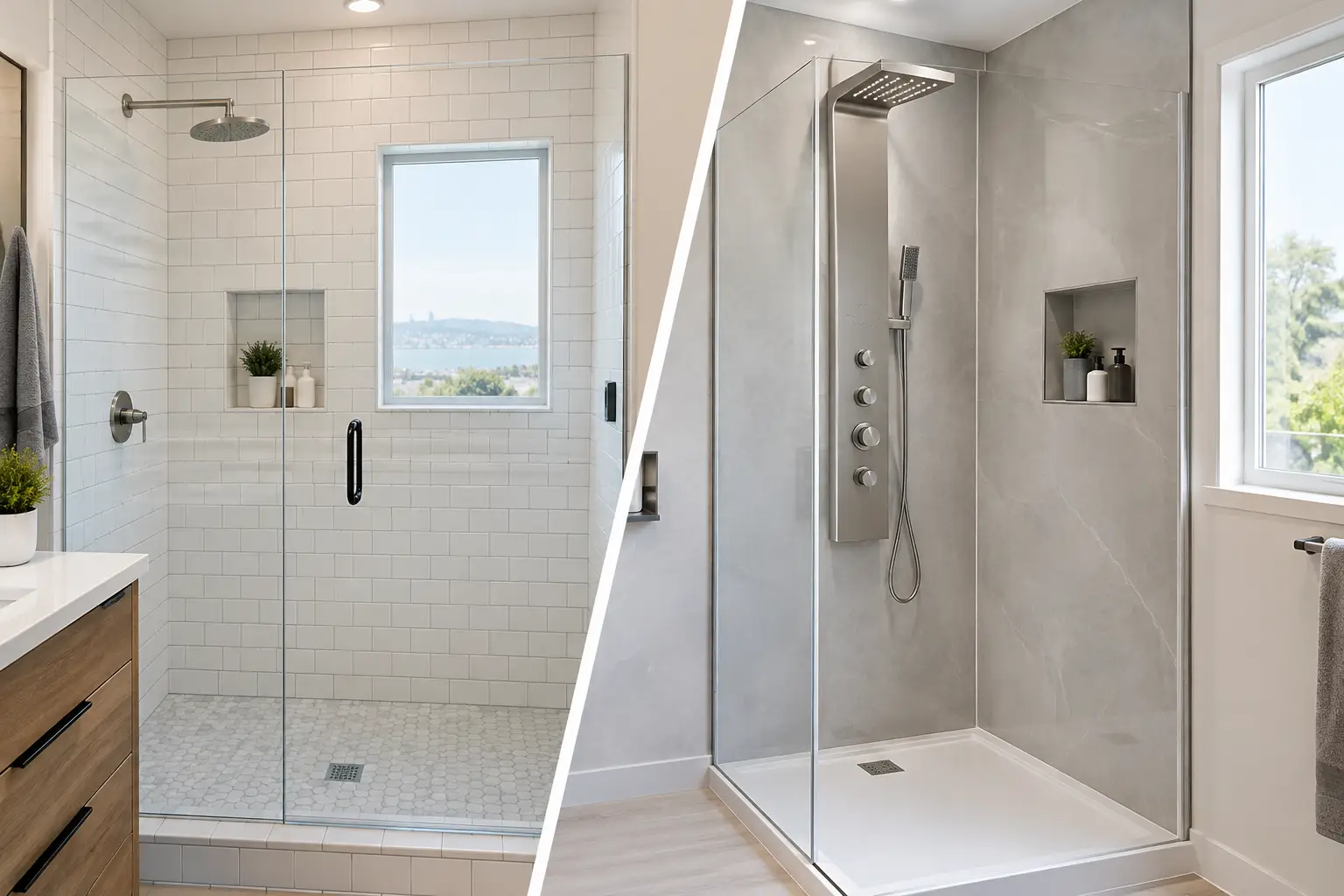
A shower can look clean and new on day one with either finish. The real difference between tile versus shower panels often shows up years later, when grout needs attention, a seam starts leaking, or a busy household needs the bathroom back in service quickly. For Bay Area homeowners, landlords, and property managers, the better choice comes down to the condition of the existing bathroom, the look you want, and how much maintenance you are willing to take on.
Both materials can create a durable, attractive shower when installed correctly. Neither one is automatically the right answer for every remodel. A well-built shower depends on proper wall preparation, waterproofing, drainage, and careful finishing as much as the visible surface.
Tile Versus Shower Panels: The Main Difference
Tile is installed piece by piece over a properly prepared shower wall system. It offers nearly unlimited choices in size, color, layout, texture, and pattern. Ceramic and porcelain tile are common practical choices, while natural stone can deliver a higher-end appearance but requires more ongoing care.
Shower panels are large waterproof wall sheets installed with far fewer joints than tile. Depending on the product selected, they may be made from acrylic, solid surface material, PVC composite, or other engineered materials. The panels are cut to fit the shower area, sealed at their edges and corners, and often paired with a matching shower base.
The biggest visible difference is grout. A tiled shower has grout lines, whether they are narrow or wide. Panels have a mostly continuous surface with seams at corners, edges, and where panels meet fixtures. That difference affects cleaning, installation time, repair options, and the final style of the room.
When Tile Is the Better Choice
Tile is often the best fit when design flexibility is the priority. It can work around unusual wall dimensions, built-in niches, benches, curved details, and custom layouts. A homeowner who wants a specific porcelain tile, a herringbone accent wall, or a coordinated floor-to-ceiling look will usually have more options with tile.
Tile can also be a strong choice for a full bathroom remodel where the walls are already open. When a contractor is replacing plumbing, correcting framing, adding a niche, and rebuilding the shower from the studs, the additional planning required for tile can make sense. It allows every detail to be designed together instead of treating the shower wall as a stand-alone surface upgrade.
Durability is another reason many homeowners choose tile. Quality porcelain tile resists water and holds up well to daily use. If one tile becomes chipped or cracked, it may be possible to replace that individual piece without rebuilding the entire shower wall. Matching older tile can be difficult, however, so it is smart to save a few extras after the project is complete.
Tile does require a disciplined installation process. The tile itself is not the waterproof layer. A reliable shower assembly needs a suitable backer, a continuous waterproofing system, correctly treated corners and penetrations, and proper slope at the shower pan. Skipping those steps can lead to moisture damage behind an attractive new tile surface.
The Maintenance Trade-Off With Tile
Grout needs regular cleaning, especially in a high-use shower. Modern grout options can reduce staining and improve performance, but no grout line is completely maintenance-free. Soap residue and mineral deposits can collect in textured tile and grout joints, particularly in areas with hard water.
Natural stone needs even more attention. It may require sealing and cleaning products selected for that material. For homeowners who want a low-effort bathroom, porcelain tile is generally easier to live with than marble, travertine, or other porous stone.
When Shower Panels Make More Sense
Shower panels are a practical option when speed, simple cleaning, and a streamlined finish matter most. Their large-format surface means fewer joints to scrub. For a rental property, guest bathroom, aging-in-place update, or a household that cannot have its main bathroom out of commission for an extended period, that can be a major advantage.
Panels are also effective in bathrooms with straightforward shower walls. A standard alcove shower or a simple corner layout can often be fitted efficiently, assuming the walls are sound and dimensions are verified carefully. The finished look can be clean and modern, with styles that range from plain white to stone-look and tile-look patterns.
Because there are fewer visible seams, shower panels can be easier to keep looking fresh. A non-abrasive cleaner and routine wipe-down are usually enough for day-to-day care. This is especially helpful for property managers responsible for turnovers and for homeowners who would rather spend less time scrubbing grout.
That said, panels are not a shortcut around preparation. The wall behind them must be flat, stable, and appropriate for the installation method. Seams, plumbing openings, corners, and transitions to the shower base must be sealed correctly. Water can still reach the wall cavity if those details are handled poorly.
Where Panels Have Limits
Panels offer fewer custom design choices than tile. They can look polished and intentional, but they do not provide the same freedom for patterns, mosaics, or highly personalized layouts. A large panel may also be less forgiving when damaged. Minor surface marks may be repairable depending on the material, but a major crack or impact can require replacing a larger section.
Complex showers can also reduce the speed advantage. Multiple niches, angled ceilings, unusual wall conditions, and extensive plumbing changes still require careful measuring and skilled fitting. The material may install faster than tile, but the surrounding construction work should never be rushed.
Installation Time and Bathroom Downtime
Tile typically takes longer because it is installed in stages. Walls need preparation and waterproofing, tile needs to be laid out and set, and grout must be applied after the tile has cured. Drying and curing times matter. Rushing a shower back into use can compromise the work.
Panels can often reduce the finish-installation portion of the schedule because there are fewer individual pieces to set and no field-applied grout over the main wall surface. But a fast finish does not always mean a one-day bathroom remodel. If there is water damage, dry rot, failing plumbing, an uneven subfloor, or an old shower pan that needs replacement, those issues should be fixed before the new walls go in.
For occupied homes, the best approach is to inspect the existing shower honestly before committing to a schedule. Covering a problem wall only delays the repair. A contractor should identify whether the project is a surface refresh or a full shower rebuild.
Cost Is More Than the Material Price
Comparing only the cost of a tile box against a panel kit can be misleading. Tile labor often includes more layout work, cutting, waterproofing, setting, grouting, and finishing. Panels may require less labor on a simple installation, but premium materials, custom cuts, trim pieces, and wall repairs can change the total.
The existing shower condition has a bigger impact than many homeowners expect. Removing damaged materials, repairing framing, replacing a drain, moving plumbing, or correcting a poorly built pan can affect either option. Clear scope and a written estimate help prevent surprises once demolition begins.
Long-term upkeep belongs in the calculation too. Tile may require more regular cleaning and occasional grout maintenance. Panels may save time on cleaning, but the right product and proper installation are essential to avoid seam or surface issues later.
How to Choose for Your Bathroom
Choose tile if you want a custom look, need flexibility for detailed shower features, or are already planning a complete bathroom renovation. It is a strong long-term finish when paired with a professionally built waterproof shower system and realistic maintenance expectations.
Choose shower panels if you want fewer joints, faster finish installation, and an easier-to-clean surface. They are especially practical for simple shower layouts, rental units, and projects where minimizing disruption matters.
For many Bay Area properties, the deciding factor is what is behind the existing shower walls. Older homes can hide moisture damage, outdated plumbing, or uneven framing that needs correction regardless of the finish selected. Fullhouse Remodeling & Handyman Services can assess the condition of the space, explain the practical options, and complete the work with the level of preparation a dependable shower requires.
The best shower finish is the one that fits the way you use the bathroom and is installed without cutting corners behind the walls. Start with a clear assessment, choose a material you will be comfortable maintaining, and make sure the details that keep water where it belongs receive as much attention as the finished look.
