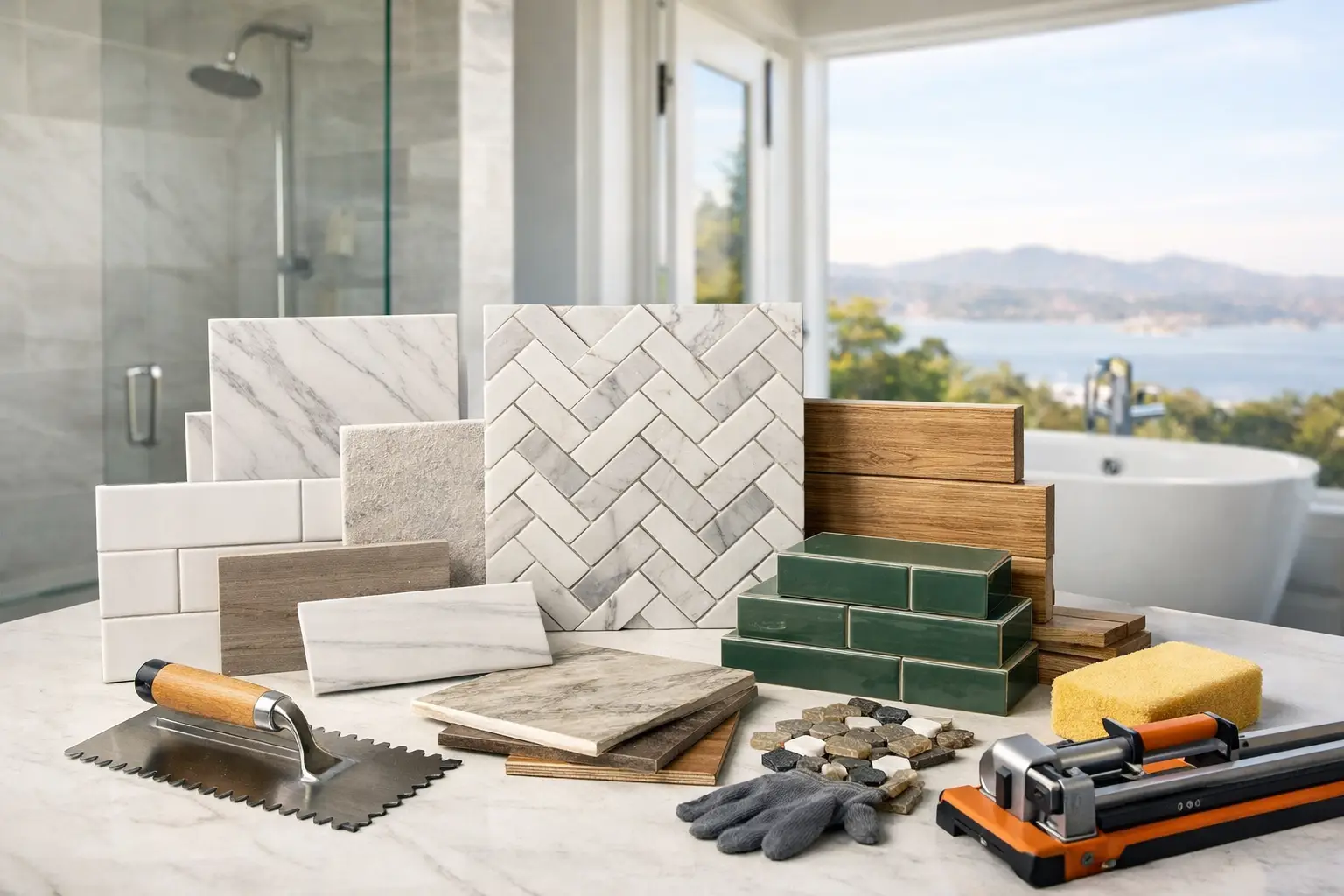
A bathroom tile sample can look perfect under showroom lights and still be the wrong choice for a busy family bath, a rental turnover, or a shower used twice a day. The best bathroom tile materials balance appearance with water resistance, slip safety, cleaning demands, and the condition of the surfaces underneath them.
For Bay Area homeowners, the decision can also involve older homes, uneven floors, compact bathrooms, and a preference for finishes that will stay current through years of daily use. A well-chosen tile installation should make the room easier to live with, not create a maintenance project you regret six months later.
What Makes a Bathroom Tile Material a Good Fit?
Tile has to perform differently depending on where it is installed. Shower walls need a material that stands up to constant moisture. Bathroom floors need traction and a durable surface that can handle water, dropped toiletries, and regular cleaning. A decorative backsplash has fewer performance demands, so it gives you more freedom with texture and finish.
The tile itself is only one part of the system. Proper surface preparation, waterproofing in wet areas, grout selection, layout, and clean edge detailing all affect how the finished bathroom looks and lasts. Even high-quality porcelain can fail if it is installed over a moving or damaged subfloor.
Before selecting a material, think through who uses the bathroom and how. A polished tile may suit a low-traffic powder room but feel too slippery for a family bathroom. Natural stone may deliver a high-end look, but it requires more consistent care than many homeowners expect.
Best Bathroom Tile Materials for Floors and Walls
Porcelain tile: the strongest all-around choice
Porcelain is often the most practical choice for bathroom floors, shower walls, and tub surrounds. It is dense, highly water-resistant, durable, and available in a wide range of colors, sizes, and styles. Modern porcelain can convincingly resemble marble, concrete, wood, or natural stone while requiring far less maintenance.
For a bathroom floor, choose porcelain with a matte, textured, or slip-resistant finish rather than a glossy polished surface. Larger-format porcelain can create a clean, contemporary look with fewer grout lines, which can make a small bathroom feel more open. However, large tiles require a very flat installation surface. If the floor is uneven, smaller tiles may provide a better result.
Porcelain is especially useful for homeowners who want a long-lasting finish without regular sealing. It is not automatically waterproof at the grout joints or behind the walls, though. Showers still need a complete waterproofing system beneath the tile.
Ceramic tile: reliable and budget-conscious
Ceramic tile is a dependable option for bathroom walls, backsplashes, and lower-traffic floors. It is generally easier to cut than porcelain and comes in an enormous selection of shapes, colors, and decorative finishes. Classic subway tile, handmade-look tile, and colorful wall tile are commonly ceramic.
The main trade-off is durability. Ceramic is usually less dense than porcelain, so it can chip more easily in high-impact areas and is not always the best choice for a heavily used bathroom floor. That does not make it a poor material. It simply means placement matters.
Ceramic wall tile is a practical way to bring personality into a bathroom without overcomplicating maintenance. Consider it for shower walls, vanity backsplashes, or a full-height accent wall, then use a tougher porcelain tile on the floor.
Natural stone: distinctive, but higher maintenance
Marble, travertine, slate, limestone, and granite bring natural variation that manufactured tile cannot fully duplicate. No two pieces are exactly alike, which gives a bathroom a custom, high-end character. Stone can be an excellent choice when its natural movement and texture are central to the design.
It also asks more from the homeowner. Many stone tiles are porous and need periodic sealing to resist moisture and staining. Acidic or harsh cleaners can etch or discolor certain stones, particularly marble and limestone. A polished marble floor can also become slippery when wet.
Stone works best for homeowners who understand the upkeep and want the real material rather than an imitation. Honed finishes and smaller mosaics can improve traction in wet areas. In a shower, correct waterproofing and experienced installation are essential because stone does not replace the moisture barrier behind it.
Glass tile: best used as an accent
Glass tile reflects light, adds depth, and can make a small or darker bathroom feel brighter. It is popular for shower niches, backsplashes, decorative bands, and feature walls. Because glass is nonporous, it resists staining and moisture well.
The limitation is that glass is not usually the most practical primary floor material. It can be slippery, and some products can scratch or show installation imperfections more easily than porcelain. Transparent or translucent glass also requires careful adhesive selection and an even substrate so shadows and ridges do not show through.
Use glass where its visual impact matters most. A carefully placed glass mosaic inside a shower niche can add detail without taking on the wear of an entire shower floor.
Mosaic tile: practical for shower floors
Mosaic refers to the tile size and sheet-mounted format more than one specific material. Porcelain, ceramic, stone, and glass can all be made into mosaics. Small mosaics are a smart choice for shower floors because the additional grout lines provide more traction and allow the tile to follow the slope toward the drain.
That benefit comes with more grout to clean. Selecting a quality grout and keeping up with routine cleaning makes a noticeable difference. For a low-maintenance shower floor, many homeowners choose porcelain mosaics in a matte finish.
Match the Finish to the Bathroom Zone
A beautiful tile can become a poor choice when the finish does not suit its location. Glossy tile is easy to wipe down and reflects light well, making it attractive for walls. On a wet floor, however, it may be unsafe. Matte tile tends to hide water spots and offers better traction, though textured surfaces can hold more soap residue if not cleaned regularly.
For shower floors, prioritize slip resistance, a proper slope, and drainage over a dramatic finish. For bathroom walls, you can be more design-driven. For a powder room, where the floor sees less water, there is more room for polished finishes or special materials.
Grout color deserves the same attention. Bright white grout creates a crisp look but can show discoloration sooner on a floor. Mid-tone or color-matched grout is often more forgiving in busy bathrooms. Narrow grout joints can create a refined appearance with rectified porcelain, while wider joints may better suit handmade-look ceramic or natural stone.
Do Not Skip the Installation Details
Most bathroom tile problems are not caused by the tile material itself. Cracked tiles, loose grout, leaks, and hollow spots are usually signs of movement, inadequate preparation, or failed waterproofing. In older Bay Area homes, floors and walls may need leveling, repair, or reinforcement before tile is installed.
A shower requires more than tile and grout. It needs a properly prepared substrate, waterproofed corners and seams, correctly detailed niches, and a drainage system that directs water where it belongs. Grout is not a waterproof barrier, and caulk at changes of plane is not optional cosmetic work. These details protect the framing and finishes behind the walls.
Tile layout also affects the final result. Centering a layout, avoiding awkward narrow cuts, aligning joints across walls, and planning fixture locations before installation are the craftsmanship details that separate a finished remodel from a rushed job.
A Practical Choice for Most Bathrooms
For many homes, a porcelain floor paired with ceramic or porcelain wall tile offers the best mix of durability, design flexibility, and manageable upkeep. Add a mosaic shower floor for traction, and reserve glass or natural stone for accents or areas where their character justifies the added attention.
The right material is the one that fits your household, not just the latest design photo. If you are planning a bathroom remodel, Fullhouse Remodeling & Handyman Services can help evaluate the existing surfaces, recommend practical tile options, and complete the installation with the preparation wet areas require. Start with how you use the room every day, then choose a tile that will still work hard after the new-bathroom shine has worn off.
