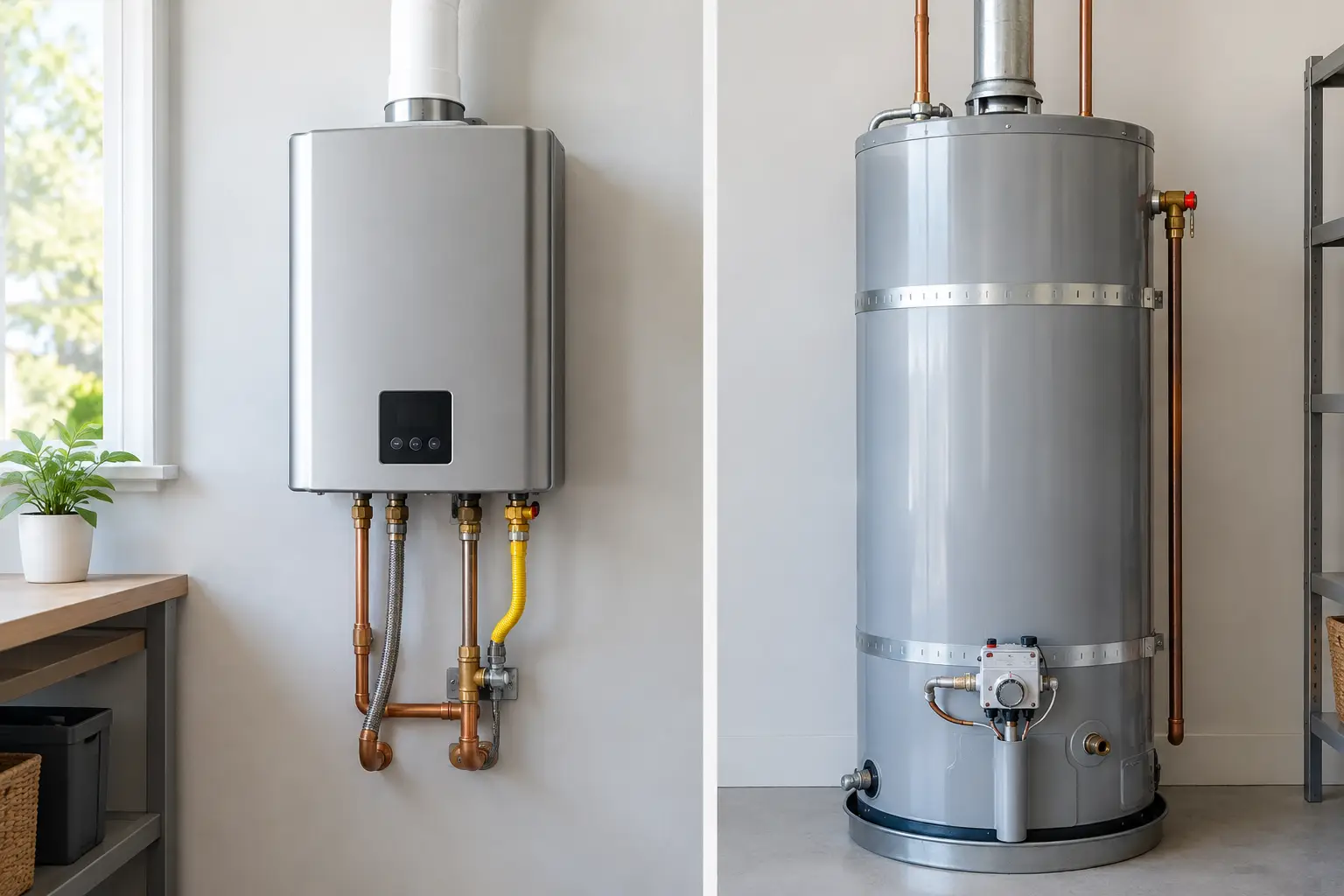
A shower turning lukewarm halfway through a busy morning is usually not a mystery – it is a demand problem. One person is bathing, the dishwasher is running, and a storage tank has reached its limit. When homeowners compare tankless versus traditional water heaters, the right choice comes down to more than a preference for newer technology. Your household’s hot-water habits, available utilities, installation conditions, and maintenance expectations all matter.
A reliable water heater should deliver enough hot water without creating surprises in your utility bills, remodel schedule, or future repair needs. Here is how to make a practical decision for your property.
Tankless versus traditional water heaters: the core difference
A traditional water heater stores a set amount of hot water in an insulated tank. The unit heats the water and cycles on as needed to maintain the selected temperature. When the tank is depleted, it needs time to recover before it can provide a full supply again.
A tankless water heater heats water as it flows through the unit. There is no stored reservoir. When a hot-water fixture opens, the heater activates and warms water on demand. In the right conditions, that means a long shower does not run out of hot water simply because a tank has emptied.
That distinction is meaningful, but it does not make tankless the automatic winner. A tankless unit has a maximum flow rate. If several showers, faucets, and appliances call for hot water at once, the unit may not be able to deliver the desired temperature and volume to every fixture. A properly sized traditional tank can be the more comfortable option for a household with high peak demand over a short period.
When a traditional tank is the better fit
Storage-tank water heaters remain a practical choice for many homes, rental properties, and small commercial spaces. They are familiar, straightforward to service, and often easier to replace when the existing utility connections and installation location are already set up for a tank.
For families that use a concentrated burst of hot water in the morning or evening, a properly sized tank can handle multiple fixtures well. Its stored capacity gives the household a reserve, rather than relying solely on a unit’s real-time heating rate. This can be especially useful when a home has multiple bathrooms but limited gas supply or electrical capacity.
Tank models also tend to involve fewer changes during a like-for-like replacement. That does not mean installation should be rushed. Local code requirements, shutoff valves, drain pans, venting, seismic strapping, expansion tanks, and safe discharge piping still need professional attention. These details protect the home and help prevent water damage or safety issues.
The main trade-off is standby heat loss. Because a tank holds heated water all day, it uses energy to keep that water warm even when nobody is using it. Once the stored supply is consumed, recovery time becomes the limiting factor. If your household regularly schedules showers around the water heater, a larger tank or a different system may be worth considering.
Where tankless water heaters make sense
Tankless systems are attractive for homeowners who want continuous hot water for normal day-to-day use, a smaller equipment footprint, and potentially lower energy use from avoiding standby heating. They can be a strong fit for homes where space is tight, such as a utility closet, garage corner, or compact remodel layout.
They are particularly useful when hot-water use is spread throughout the day instead of concentrated into one heavy rush. A couple working from home, for example, may take showers at different times and use hot water intermittently for laundry and dishes. In that situation, on-demand heating can be efficient and convenient.
Tankless equipment can also support a longer service life when it is correctly installed and maintained. However, it is not maintenance-free. Mineral buildup can affect performance, particularly in areas with hard water. Periodic flushing or descaling, filter checks, and inspection of the venting and condensate components are part of responsible ownership.
The biggest mistake is selecting a tankless model based only on the number of bathrooms. The unit must be sized for the incoming water temperature and the number of fixtures likely to run at the same time. Colder incoming water requires more heating work, reducing how much hot water the unit can produce per minute. A professional assessment should account for real household behavior, not just a product label.
Installation can be more involved than expected
Replacing a tank with a tankless unit may require upgrades beyond the heater itself. A gas-fired model can need a larger gas line, new venting, electrical power for controls, and a condensate drain. Electric tankless units can place a substantial demand on a home’s electrical panel and may require electrical upgrades.
These requirements are not reasons to avoid tankless systems. They are reasons to plan the project correctly. During a bathroom remodel, kitchen renovation, or broader utility upgrade, the added work may be easier to coordinate. For an urgent replacement after a tank failure, a compatible traditional model may be the faster, more practical path.
Compare daily performance, not just equipment features
The best way to evaluate your options is to look at the moments when hot water matters most. Think about who showers at the same time, whether the washing machine or dishwasher runs during those periods, and how often guests stay over. A property with one bathroom and two occupants has a different demand profile than a home with three bathrooms and a growing family.
A tankless system can provide a virtually uninterrupted shower, but it can take a moment to activate. Some households notice a brief temperature fluctuation when fixtures are turned on and off. A recirculation setup can reduce the wait for hot water at distant fixtures, though it adds equipment, installation considerations, and energy use.
A traditional tank provides immediate stored capacity, but its performance depends on tank size, recovery rate, fixture demand, and age. Sediment can accumulate at the bottom of a tank over time, reducing efficiency and contributing to noise or uneven performance. Routine maintenance can help, but an aging tank also carries a greater risk of leaking.
Neither option fixes problems caused by undersized plumbing, failed mixing valves, inconsistent water pressure, or worn fixtures. If your hot water is unreliable, the heater may be part of the problem, but it should not be blamed before the full plumbing system is evaluated.
Efficiency and long-term ownership
Tankless water heaters usually use less energy when hot-water demand is modest or spread out because they do not continually maintain a stored tank of hot water. That advantage can narrow in a large household with frequent, simultaneous demand or when a recirculation system runs often.
Traditional units have improved considerably, with better insulation and more efficient designs than older equipment. For some properties, the lower installation complexity and dependable reserve capacity can outweigh the potential operating savings of tankless equipment.
Long-term value should include more than monthly utility use. Consider the condition of your gas line or electrical service, the accessibility of the installation area, anticipated maintenance, available space, and how long you expect to own or manage the property. Landlords and property managers may prioritize reliable replacement and easy service access, while a homeowner planning a major remodel may place more value on space savings and on-demand performance.
Questions to answer before choosing
Before approving a replacement, identify your fuel source, the approximate age and condition of the existing system, and whether your home has experienced hot-water shortages or leaks. It also helps to know how many bathrooms and major hot-water appliances may operate at once.
Ask the installer to explain the proposed sizing, any required gas, electrical, venting, or drainage changes, and the ongoing maintenance the system will need. A clear scope is especially important in older Bay Area homes, where utility layouts and access can make a simple replacement less simple than it first appears.
Fullhouse Remodeling & Handyman Services can help homeowners assess installation conditions and coordinate water-heater work with related plumbing, electrical, or remodeling needs. The goal is not to sell the newest option. It is to install a system that performs reliably in the way your household actually lives.
Choose the water heater that removes a real frustration from your day, whether that means dependable stored capacity for a busy family or on-demand hot water that makes better use of limited space. A careful evaluation before installation is far less disruptive than correcting an undersized or poorly planned system afterward.
