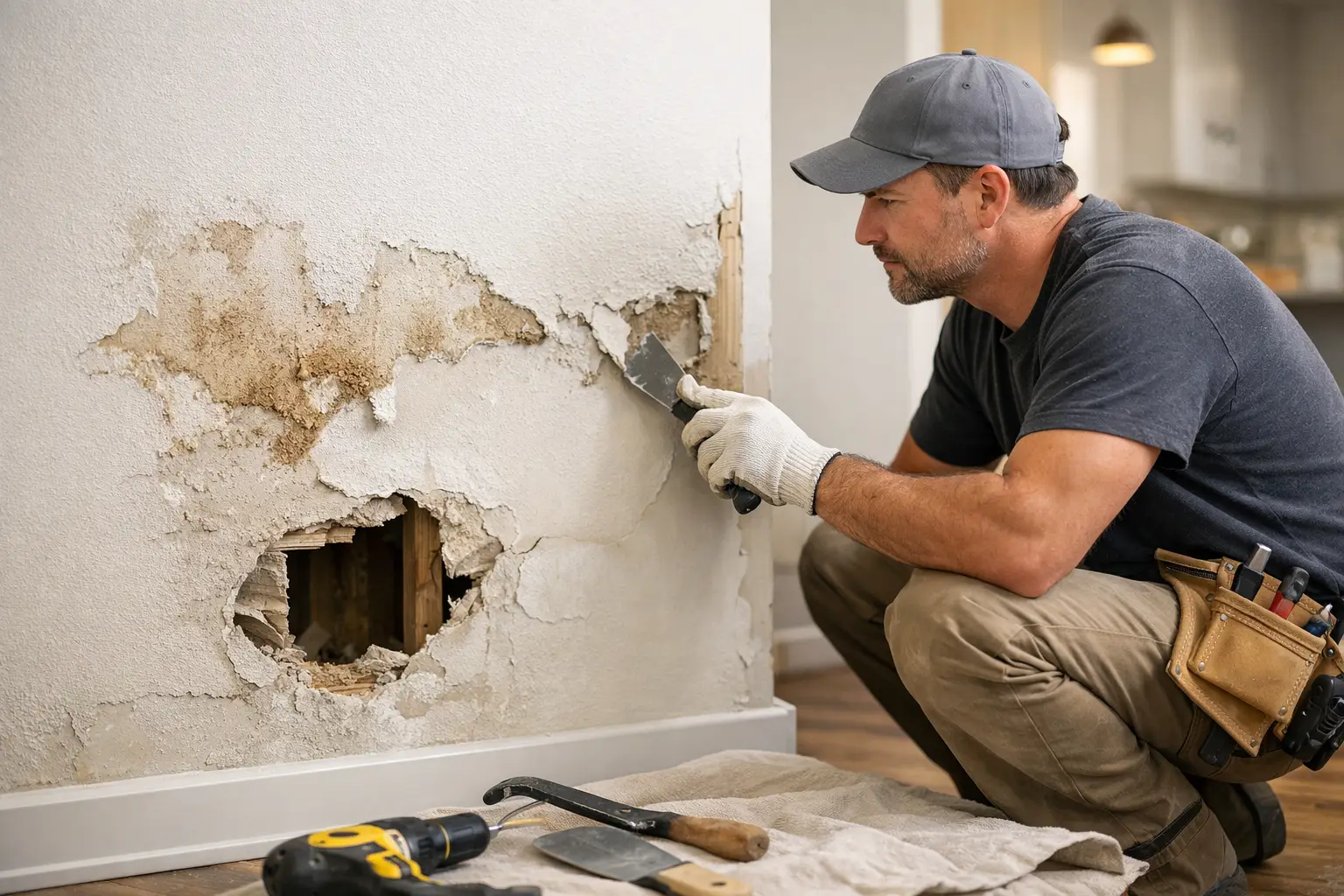
A small hole from a door handle is one thing. A soft wall that feels damp, smells musty, or keeps cracking in the same spot is something else entirely. If you’re wondering when should drywall be replaced, the short answer is this: replace it when the panel has lost its strength, taken on moisture, grown mold, or suffered damage that a standard patch will not solve.
For many homeowners, drywall problems start as cosmetic issues and turn into bigger repair jobs because the underlying cause is missed. The painted surface may look minor, but the real question is whether the drywall is still solid, clean, and stable. If it is, repair often makes sense. If it is not, replacement is usually the better long-term call.
When should drywall be replaced instead of repaired?
Drywall does not need to be torn out every time it gets dinged, scratched, or cracked. In fact, a lot of common wall damage can be repaired quickly with patching, taping, sanding, and repainting. Nail pops, minor dents, small holes, and hairline seam cracks are usually repair jobs.
Replacement becomes the smarter option when the drywall itself has been compromised. That means the gypsum core is soft, crumbling, swollen, moldy, or structurally weak. At that point, patching the surface only hides the problem for a while.
One good rule is to think beyond the paint. If the issue is only on the finish layer, repair may be enough. If the drywall board underneath has changed shape, absorbed water, broken apart, or lost integrity, replacement is usually the right move.
Water damage is one of the biggest reasons to replace drywall
Water and drywall do not get along for long. Drywall is porous, and once it absorbs enough moisture, it can swell, sag, stain, soften, and eventually break down. Even after it dries, it may never fully return to its original strength.
A small stain from an old issue does not always mean full replacement is needed. If the leak was minor, the area dried completely, and the drywall is still firm with no mold or crumbling, a targeted repair may be possible. But if the wall or ceiling feels soft, bulges outward, has bubbling paint, or shows repeated staining, replacement is often the safer solution.
Ceilings deserve extra caution. Water-damaged ceiling drywall can lose strength fast, and sagging overhead panels are not something to ignore. In bathrooms, kitchens, laundry areas, and around windows or roofs, recurring moisture problems are especially common.
Before any drywall is repaired or replaced, the water source has to be fixed. Otherwise, the new material ends up in the same condition as the old one.
Signs water-damaged drywall is beyond repair
Some symptoms are stronger warning signs than others. Drywall should usually be replaced if it is sagging, swollen along seams, soft to the touch, crumbling at the edges, or separating from fasteners. A musty odor is another red flag, especially if it lingers after the area appears dry.
If the damage covers a broad section, replacement often gives better results than trying to save scattered weak spots. It also makes it easier to inspect what is happening behind the wall, including insulation, framing, and any hidden mold.
Mold means drywall replacement is often necessary
Surface mildew on tile or painted trim can sometimes be cleaned. Mold in drywall is different. Because drywall is porous, mold growth can extend below the visible surface, and simply painting over it does not solve the problem.
If mold is limited, clearly identified, and tied to a small moisture event, a professional may be able to remove the affected section and replace only that area. But if mold has spread across multiple panels, around insulation, or inside a wall cavity, broader removal may be needed.
This is one of those cases where trying to save material can create bigger health and property problems later. If drywall has been wet long enough to support mold growth, replacement is often the cleanest and most dependable fix.
Cracks can point to replacement – or something deeper
Not every crack means the drywall has to go. Settlement cracks above doors and windows, tape seam cracks, and small corner cracks are common in homes and can often be repaired.
The bigger concern is recurring cracking. If the same crack keeps reopening after repair, the drywall may not be the only issue. There could be framing movement, moisture changes, poor installation, or structural shifting behind it. In those situations, replacing the drywall without addressing the cause may only buy time.
Larger cracks combined with bowing, separation, or loose panels may justify replacement, especially if the board has pulled away from studs or the fastening pattern has failed. A clean new section often produces a better and longer-lasting result than repeated patching over unstable material.
Holes and impact damage depend on size and location
Drywall takes daily abuse in busy homes. Furniture bumps, doorknob hits, moving damage, and accidental holes are common. Small to medium holes are usually straightforward repairs. Even a larger cutout can often be patched if the surrounding board is still solid.
Replacement starts to make more sense when damage is widespread, when multiple holes affect one wall, or when the area around the opening is cracked, crushed, or loose. In garages, hallways, rental units, and high-traffic rooms, you sometimes see repeated patch jobs layered over old damage. At a certain point, replacing the panel gives a cleaner finish and a stronger wall.
There is also a visual trade-off. A patch can be perfectly serviceable, but on walls with critical lighting or smooth finishes, a full panel replacement may blend better than several repairs.
Smoke, stains, and old material can justify new drywall
Sometimes drywall is technically intact but still a poor candidate for repair. Heavy smoke damage, strong lingering odors, grease contamination, or years of layered patchwork can make replacement the more practical option.
Older homes may also have drywall that has been repaired so many times that the surface is uneven from one end of the room to the other. If walls are being opened for remodeling, electrical updates, insulation improvements, or plumbing access, replacing sections instead of preserving worn-out material can save time and improve the finished result.
This is especially true when appearance matters. Fresh drywall gives a flatter surface for paint, tile, trim, and other finish work.
When partial replacement is enough
Full-room replacement is not always necessary. In many cases, only the damaged section needs to come out. That might mean cutting back to the nearest studs, removing a ceiling patch around a leak, or replacing the lower portion of a wall after moisture exposure.
Partial replacement works well when the damage is contained and the surrounding drywall is dry, clean, and stable. It usually reduces disruption while still removing compromised material. The key is cutting out enough to reach sound drywall and not stopping at the obvious stain line or crack edge.
A proper repair also depends on what is behind the wall. If insulation is wet, framing is damaged, or there is hidden mold, the scope may grow once the wall is opened.
What homeowners should watch for before deciding
If you are on the fence about repair versus replacement, a hands-on inspection matters more than a photo. Press gently on the area. Look for softness, swelling, bubbling, staining, crumbling edges, or repeated cracking. Pay attention to smell too. Drywall that looks acceptable but smells damp often tells a different story.
It also helps to think about timing. If you are already painting, remodeling, replacing trim, or fixing plumbing behind the wall, it may be worth replacing questionable drywall now instead of patching it and reopening it later.
For Bay Area homes, moisture-prone areas deserve extra attention, especially around older windows, exterior walls, bathrooms, and ceilings below roof lines. What looks like a simple drywall issue can sometimes be the visible sign of a larger home maintenance problem.
The right answer is not always the cheapest short-term fix
Homeowners often ask whether they can save money by patching instead of replacing. Sometimes yes. But if the drywall is soft, moldy, sagging, or repeatedly failing, patching is usually a short-term fix that leads to more labor, more paint work, and more disruption later.
A dependable drywall decision comes down to condition, cause, and finish quality. If the board is still sound, repair it. If the material has been compromised, replace it and address the source of the damage at the same time. That approach holds up better, looks better, and avoids doing the same job twice.
When the signs are not clear, getting a professional assessment can save you from guessing. A qualified contractor or handyman can tell whether the drywall is still serviceable, how far the damage extends, and whether a targeted replacement will solve it cleanly. Fullhouse Remodeling & Handyman Services handles both drywall repair and replacement, which makes it easier to choose the fix that actually fits the condition of the wall.
The best drywall work is the kind you do not have to think about again six months from now.
