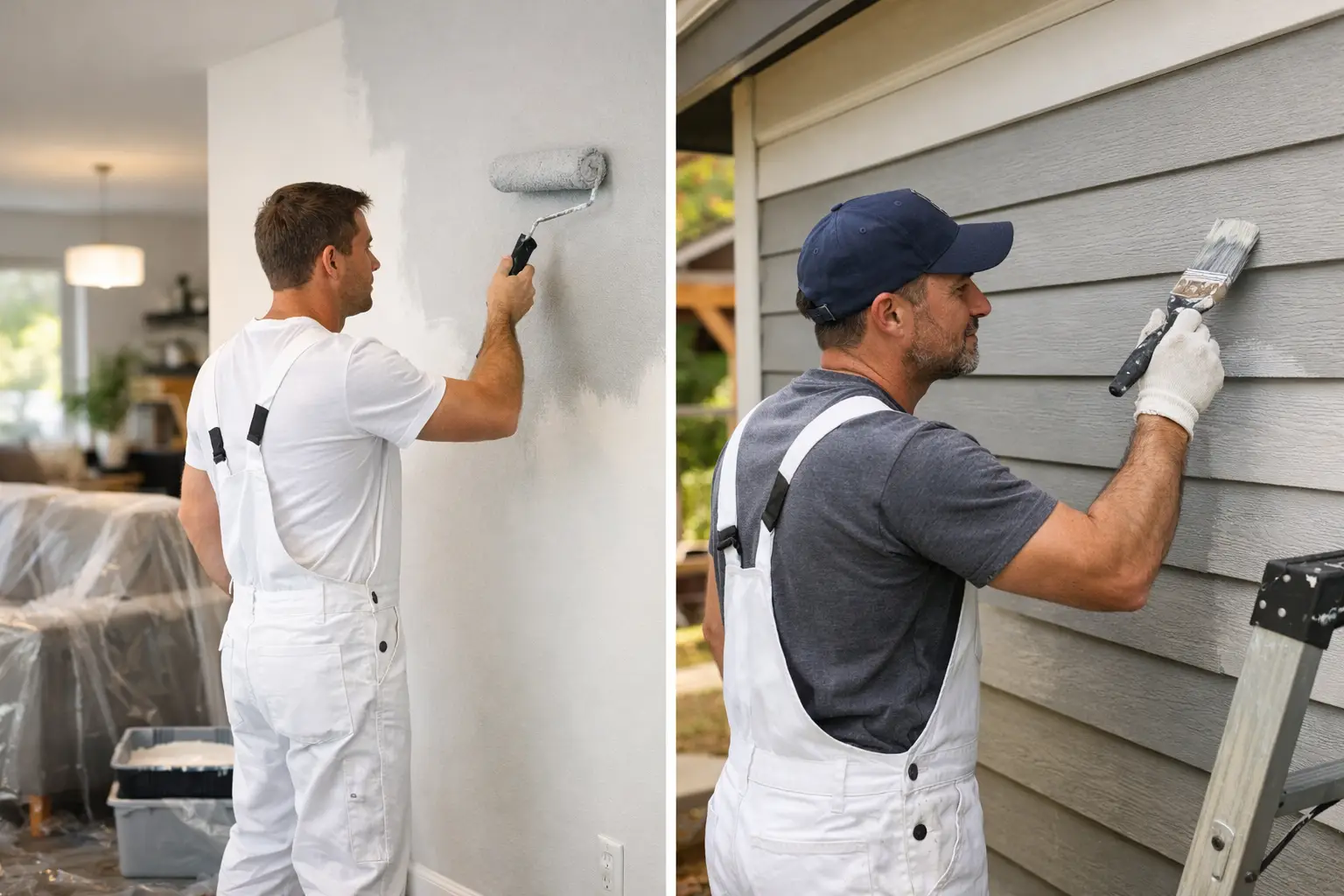
That extra can of paint in the garage can look like an easy shortcut. If you are touching up a bathroom wall, a fence, or the trim around a window, it is tempting to ask whether interior vs exterior paint is really that different. The short answer is yes – and using the wrong one usually shows up fast.
Paint is not just about color. It is a coating system designed for a specific environment. Inside your home, paint needs to handle cleaning, scuffs, moisture, and indoor air quality. Outside, it has to stand up to sun, rain, temperature swings, and surface movement. When paint is matched to the job, it lasts longer and looks better. When it is not, you can end up repainting much sooner than expected.
Interior vs exterior paint: what changes?
The biggest difference between interior and exterior paint is the formula. Manufacturers build each type for a different kind of stress.
Interior paint is made to resist everyday wear inside the home. That means fingerprints in hallways, cooking residue in kitchens, humidity in bathrooms, and the occasional wipe-down. It is also formulated with indoor use in mind, so odor and emissions matter more. Many interior paints are designed to go on smoothly, level out well, and leave a finish that looks clean under indoor lighting.
Exterior paint is engineered for weather. It has to tolerate UV exposure, moisture, temperature changes, and expansion and contraction in siding, trim, and other outdoor materials. The resins are usually more flexible, which helps prevent cracking and peeling as surfaces move through the seasons. Exterior paint also includes additives that help fight mildew, fading, and premature breakdown.
That is why the cans are not interchangeable, even when the colors look identical on the swatch.
Why interior paint fails outside
If interior paint is used on an exterior surface, failure is rarely subtle. It may look fine at first, especially right after application, but outdoor conditions expose its limits quickly.
Sun is one of the biggest problems. Interior paint is not built for constant UV exposure, so fading and chalking can happen early. Moisture is another issue. Rain, morning dew, and humidity can get under the coating or weaken it over time, leading to blistering, peeling, or mildew growth.
There is also the movement factor. Exterior wood trim, siding, and even masonry surfaces expand and contract as temperatures change. Interior paint is typically less flexible, so it can crack as the substrate shifts. On Bay Area homes, where fog, moisture, and sun can all be part of the same week, that mismatch becomes obvious even faster.
Can exterior paint be used indoors?
Technically, it can go on an indoor surface. Practically, it is usually a bad idea.
Exterior paint is made to survive harsh outdoor conditions, which means it often contains additives and resins that are not ideal for enclosed indoor spaces. The odor can be stronger, and the cure time may be longer. More importantly, it is not formulated around the priorities that matter most inside a home, such as smoother finish quality, easier touch-up, and lower indoor emissions.
There are also appearance trade-offs. Exterior paint may not level as nicely on drywall, and the final finish can feel heavier or less refined than a good interior wall paint. In garages, sheds, or utility spaces, some people try to make it work. Even there, the better move is to choose a product specifically rated for the conditions of that space.
Where people get tripped up most often
The confusion usually starts in transition areas. These are the places where inside and outside seem to overlap, but the paint choice still matters.
A front door is a common example. The inside-facing surface should usually get interior-grade paint if it is fully protected and functions like an indoor surface, while the outside-facing surface needs exterior protection. The same goes for door frames, trim around exterior windows, and covered porch elements. If part of the surface is exposed to weather, that exposure should guide the product choice.
Bathrooms, laundry rooms, and kitchens also create confusion. These rooms deal with moisture, but they still need interior paint, not exterior paint. The solution is not to switch categories. It is to choose the right interior paint for high-humidity conditions, often with a more durable finish and better moisture resistance.
Another common mistake is using leftover paint from one project to save time on another. It feels efficient in the moment, but it often leads to uneven sheen, poor adhesion, or early paint failure.
Interior vs exterior paint on common surfaces
Drywall almost always calls for interior paint. It is made for the smooth, controlled conditions found inside the home and gives the finish most homeowners expect on walls and ceilings.
Wood trim depends on location. Baseboards, casings, and crown molding inside the home should get interior trim paint. Exterior fascia, soffits, and door trim need exterior paint because they face moisture and temperature changes.
Masonry, stucco, and fiber cement also require careful product matching. Some exterior paints are designed to breathe better on these surfaces, which helps reduce trapped moisture issues. Indoors, masonry walls still need products suited to interior conditions.
Metal is another area where primer matters as much as the finish coat. Whether the project is indoors or outdoors, the paint needs to be compatible with the surface and the environment. A general category label alone is not enough.
Finish matters, but it does not replace the right formula
Homeowners often focus on sheen first – flat, eggshell, satin, semi-gloss – and that makes sense because finish affects both look and cleanability. But sheen does not solve a formula mismatch.
You can buy an exterior paint in satin and an interior paint in satin, and they are still built for different jobs. The finish tells you how reflective and washable the surface may be. The formula tells you how the coating performs in its environment.
Inside the home, lower sheens can help hide wall imperfections, while higher sheens are often used on trim, doors, and cabinets for durability. Outside, satin and low-luster finishes are common because they balance appearance with weather resistance. But the right finish should come after choosing the right paint type.
When primer changes the conversation
Primer does not turn interior paint into exterior paint, and it does not make a bad paint choice good. What it does is help with adhesion, stain blocking, surface uniformity, and long-term performance.
If you are painting bare wood, patched drywall, stained surfaces, or areas with old peeling paint, primer can be essential. Exterior projects especially benefit from proper prep because the paint system is only as strong as the surface underneath it.
This is one reason professional paint work tends to last longer. The visible color coat gets most of the attention, but surface repair, cleaning, sanding, caulking, and priming often determine whether the finish holds up.
How to choose the right paint without overthinking it
A simple rule works most of the time: if the surface lives inside, use interior paint; if it faces weather, use exterior paint. From there, choose for the room or material.
For living rooms, bedrooms, hallways, and ceilings, standard interior products are usually enough. For kitchens, bathrooms, and high-traffic areas, step up to a more washable and moisture-resistant interior paint. For siding, trim, doors, fences, and other outdoor elements, use exterior paint rated for that exact surface.
If a project sits in the gray area – like a sunroom, enclosed porch, garage, or exterior door with partial cover – it helps to look at the real exposure. Is there direct sunlight, moisture, temperature swing, or condensation? If yes, that matters more than what the space is called.
For many homeowners, the most practical move is to ask for guidance before buying gallons of the wrong product. A licensed pro can tell you not only which paint category fits, but whether the surface needs patching, priming, or repairs first. That is often where paint problems begin.
At Fullhouse Remodeling & Handyman Services, we see this issue most often after a quick DIY touch-up turns into peeling trim, stained walls, or mismatched finishes. The right paint helps, but the right prep and application are what keep the job looking clean months later.
If you are deciding between interior and exterior paint, think beyond the label and focus on the conditions the surface actually faces. That one decision can save you a repaint, protect the material underneath, and give you a finish that holds up the way it should.
