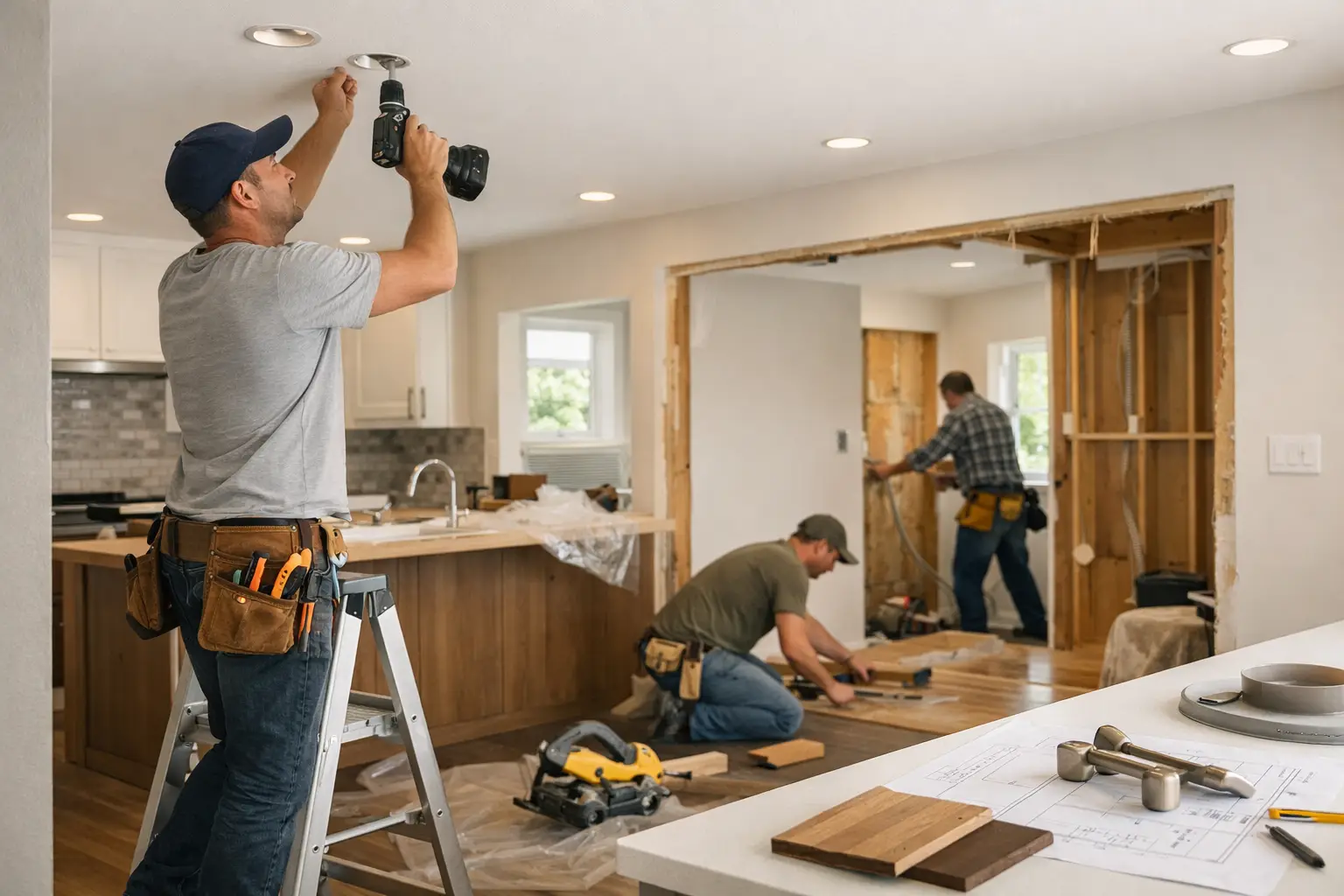
A bathroom that no longer works for a growing family. A kitchen with a layout that slows everything down. A rental property that needs more than patchwork fixes. That is usually when homeowners start asking, what is home remodeling, and whether their project actually falls into that category.
Home remodeling means changing part of a home to improve how it looks, works, or feels. Sometimes that means updating finishes, but true remodeling usually goes further. It can involve changing layouts, replacing old materials, upgrading systems, and making a space better suited to the way you live now, not the way the house was set up years ago.
For many homeowners, the confusion starts because remodeling gets grouped together with repairs, maintenance, and renovation. Those terms overlap, but they are not always the same thing. Knowing the difference helps you plan the right project, hire the right professional, and set realistic expectations for cost, timeline, and disruption.
What Is Home Remodeling?
At its core, home remodeling is the process of improving an existing home by changing or upgrading part of it. That can happen in one room or across the whole property. A remodeling project may be cosmetic, structural, or both, depending on the goal.
If you replace worn kitchen cabinets with a new layout, move plumbing for a better bathroom design, open a wall to improve flow, or rebuild a damaged deck with stronger materials, you are in remodeling territory. The project is not just fixing what is broken. It is changing the space to perform better.
That matters because remodeling is usually more involved than a standard repair job. It often requires planning, coordination across trades, permits in some cases, and a clear understanding of what needs to happen behind the walls as well as what will be visible when the work is done.
Remodeling vs. Repair vs. Renovation
These words get used interchangeably, but they describe different kinds of work.
A repair brings something back to working condition. If drywall is damaged, a pipe leaks, or a door no longer closes properly, the goal is to fix the issue. Repairs are usually narrower in scope and are often reactive.
A renovation typically refreshes or updates a space without major changes to the structure or layout. New paint, flooring, fixtures, or tile can fall under renovation. The room may look dramatically better, but the basic footprint often stays the same.
Remodeling usually means changing the design, function, or configuration of a space. If the old bathroom had one vanity and poor storage, and the new one includes a different layout, upgraded plumbing, new tile, and improved lighting, that is remodeling. If a cramped kitchen is opened up for better movement and utility, that is remodeling too.
There is overlap, and one project can include all three. A bathroom remodel, for example, may include repairs to subflooring, renovation-level finish upgrades, and a full layout change. That is why clear project planning matters more than the label alone.
What Home Remodeling Can Include
Home remodeling is broad, which is one reason homeowners often underestimate the scope. It can include kitchens, bathrooms, basements, decks, siding, windows, doors, flooring, drywall, lighting, plumbing, built-ins, and more.
In practical terms, a remodeling project often combines several types of work. A kitchen update may involve demolition, cabinet installation, tile work, countertop fitting, plumbing connections, electrical changes, painting, and finish carpentry. A bathroom remodel may require waterproofing, ventilation improvements, fixture replacement, and subfloor repair before the final finishes go in.
This is also where homeowners benefit from working with a provider that can handle both larger remodeling work and the smaller related tasks that come up along the way. In real homes, projects are rarely as simple as replacing one visible feature. Once the work starts, you may discover aging drywall, outdated wiring, dry rot, or installation problems from previous work.
Why Homeowners Remodel
Most people do not remodel just to make a room look newer. Appearance is part of it, but function usually drives the decision.
A home may no longer fit your routine. Storage may be poor, traffic flow may be awkward, or older finishes may be harder to clean and maintain. In some cases, the issue is safety or reliability. Loose tiles, water damage, aging plumbing, failing caulk, and damaged siding may start as maintenance concerns but lead to a larger remodel once the underlying condition is clear.
There is also the value side. Remodeling can improve everyday comfort while making the home more attractive to future buyers or tenants. That said, not every project adds value in the same way. A highly customized upgrade may be worth it if you plan to stay long term, while a more practical update may make more sense if resale is part of the plan.
When a Project Becomes More Than a Simple Update
A lot of homeowners start with the idea of a quick refresh and then realize the job is more complex. That is common, especially in older homes.
For example, replacing a vanity sounds straightforward until the wall behind it shows moisture damage. Swapping out tile may reveal an uneven subfloor. Installing a new light fixture may expose outdated wiring. None of that means the project has gone wrong. It means the visible surface was only part of the story.
This is one reason remodeling should be approached with both a design goal and a practical plan. You want the finished space to look right, but you also want the work behind it to hold up. A clean final result depends on proper prep, sound installation, and attention to the conditions underneath.
What to Expect During a Home Remodeling Project
The first step is defining the goal. Are you trying to improve appearance, fix long-term issues, increase usability, or prepare a property for sale or rental? The answer shapes the scope.
Next comes evaluation. A professional should look at the existing space, identify limitations, and explain what is straightforward versus what may require more involved work. This is where homeowners get clarity on whether the job needs permitting, multiple trades, or structural review.
Then the work itself is organized in sequence. Demolition usually comes first, followed by any framing, rough plumbing, electrical, drywall, flooring, tile, painting, and finish installation. The order matters. Good remodeling is not just about craftsmanship in each task. It is about coordinating those tasks so the whole project moves efficiently and the finished work lasts.
There is always some level of disruption. Dust, noise, temporary loss of access, and scheduling around material delivery are part of the process. A dependable contractor helps reduce that stress by communicating clearly, showing up on time, and keeping the work area as controlled as possible.
How to Tell if You Need Remodeling or Handyman Work
This is where many homeowners get stuck. Not every job needs a full remodel, and not every issue can be solved with a quick fix.
If the work is limited, such as patching drywall, replacing a fixture, fixing trim, installing a door, or handling minor carpentry, a handyman service may be the right fit. These jobs are usually faster and more targeted.
If the space needs coordinated updates across multiple systems or trades, remodeling is more likely the right path. A kitchen with layout problems, a bathroom with water damage and outdated plumbing, or exterior deterioration involving siding and trim goes beyond basic maintenance.
Sometimes the smartest approach is a mix of both. Fullhouse Remodeling & Handyman Services works with homeowners who need a larger remodel in one area and smaller repair or installation work in another. That can save time and reduce the hassle of managing multiple providers.
What Makes a Remodel Successful
A successful remodel is not just one that looks good on the final day. It should solve the original problem, hold up over time, and feel worth the disruption it took to complete.
That usually comes down to a few practical factors: clear scope, honest expectations, quality workmanship, and strong communication. Homeowners do best when they know where they can be flexible and where they should not cut corners. Waterproofing, structural integrity, electrical safety, proper installation, and durable materials are rarely the place to take the cheapest route.
It also helps to think in terms of use, not just style. The best remodeling decisions often come from everyday friction points. Where do things pile up? What takes too long? What keeps breaking? What feels cramped, dated, or hard to maintain? Those answers lead to smarter improvements than trends alone.
A Better Way to Think About Home Remodeling
If you are still asking what is home remodeling, the simplest answer is this: it is the process of making your home work better for the life you are living now. Sometimes that means a major transformation. Sometimes it means correcting years of wear, outdated design, or piecemeal fixes and turning the space into something reliable again.
The best projects are not driven by buzzwords. They are driven by real needs, solid workmanship, and a plan that matches the home. If a part of your house has stopped being functional, comfortable, or dependable, that is usually the right place to start.
