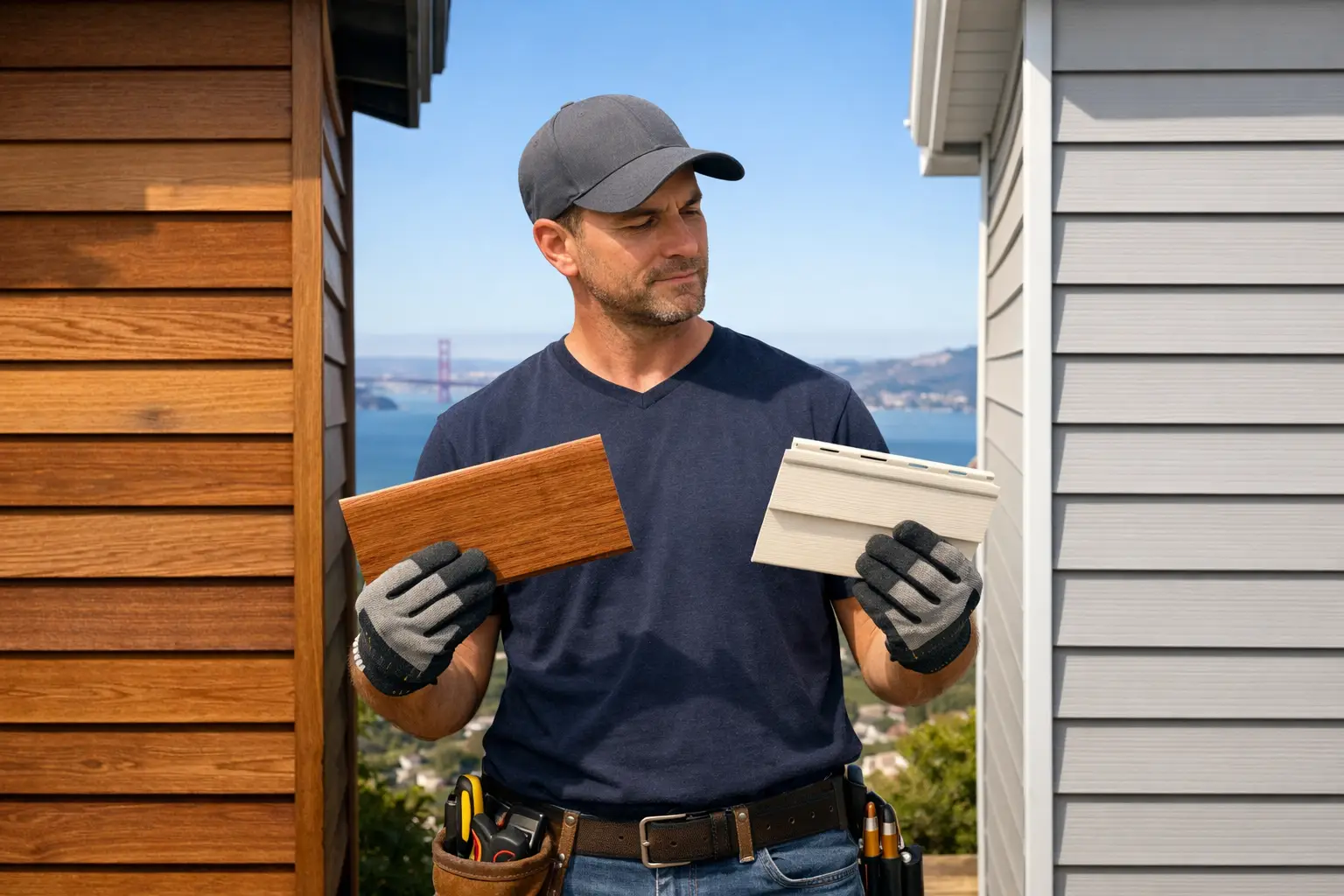
A siding decision becomes very real when you notice peeling paint, warped boards, water stains near a window, or a soft spot caused by dry rot. For Bay Area property owners, wood versus vinyl siding is not simply a style preference. It affects maintenance demands, long-term repair risk, curb appeal, and how well the exterior handles fog, coastal moisture, sun exposure, and changing temperatures.
The right choice depends on your home’s architecture, its location, your tolerance for upkeep, and the condition of the wall behind the existing siding. A good replacement project should solve the underlying issue, not just cover it up.
Wood Versus Vinyl Siding: The Core Difference
Wood siding is valued for its authentic character. Whether it is lap siding, shingles, board-and-batten, or a more traditional profile, real wood has depth, grain, and a finish that many homeowners feel vinyl cannot fully replicate. It can be painted or stained in a wide range of colors and is often the natural fit for older homes, Craftsman-style properties, cottages, and custom architectural designs.
Vinyl siding is a manufactured exterior cladding designed for lower routine maintenance. It does not need painting, and its color runs through the material rather than sitting only on the surface. Modern vinyl comes in more profiles and textures than earlier versions, including options intended to resemble painted wood.
Neither material wins in every situation. Wood asks more from the homeowner but offers a premium, adaptable appearance. Vinyl reduces the painting cycle and resists many moisture-related surface issues, but it has limitations in appearance, repair matching, and heat performance.
Appearance and Architectural Fit
For homes where original character matters, wood is often difficult to beat. Its joints, texture, and natural variation create a finish that looks appropriate on many historic and high-character Bay Area homes. Wood also gives owners more flexibility years down the road. If the exterior color needs to change, it can be repainted without replacing the siding itself.
Vinyl is a practical option when the goal is a clean, consistent exterior with less ongoing finish work. From the street, a quality installation can look neat and attractive. Up close, however, some homeowners may still prefer the visual depth of real wood. This difference matters most on prominent front elevations, homes in established neighborhoods, and properties where design consistency supports resale appeal.
Color is another practical consideration. Dark colors can absorb considerable heat, especially on sunny exposures. With vinyl, heat buildup can contribute to warping or distortion if the product is not suited to the application. Wood can also expand and contract with weather, but it can be refinished and repaired more easily when properly maintained.
Maintenance: Where the Trade-Off Is Clearest
Wood siding needs active care. Paint or stain forms part of its defense against water, sun, and insects, so peeling or failed finish should be addressed promptly. Caulk around penetrations, trim, windows, and doors also needs periodic inspection. If moisture gets behind neglected boards, small defects can become dry rot repairs involving sheathing, framing, trim, or window flashing.
That does not mean wood siding is automatically high-risk. Properly installed wood, protected with quality coatings, and inspected regularly can serve a home well for decades. The key is staying ahead of maintenance rather than waiting for visible decay.
Vinyl eliminates painting, which is its biggest advantage for busy homeowners, landlords, and property managers. It still needs care. Dirt, mildew, and airborne residue can build up, especially in shaded or damp locations, so occasional gentle cleaning helps keep the exterior looking its best. Cracked panels, loose pieces after wind, and failed trim channels should also be repaired before water reaches the wall assembly.
Vinyl is not maintenance-free. It is lower maintenance, particularly compared with painted wood, but it still depends on correct installation and periodic inspection.
Moisture, Dry Rot, and Bay Area Conditions
Coastal fog, winter rain, shaded side yards, and limited airflow can put siding systems under pressure. In San Francisco, Daly City, Pacifica, and other moisture-prone areas, the condition of flashing and the water-resistive barrier behind the siding may matter as much as the siding material itself.
Wood is vulnerable when it remains wet or when its protective finish fails. End cuts, butt joints, areas near rooflines, and sections around windows deserve close attention. Signs such as bubbling paint, cracking boards, soft wood, staining, or recurring moisture inside may point to a larger water-management problem.
Vinyl does not rot, but it is not a waterproof wall system. Rain can pass behind vinyl panels by design, which means the housewrap, flashing, trim details, and drainage plane must be installed correctly. Installing new vinyl over damaged sheathing or unresolved rot may hide the evidence temporarily while allowing the actual problem to continue.
Before replacing either material, a qualified contractor should inspect suspect areas and repair damaged wood framing, sheathing, or trim as needed. This is especially important around doors, windows, deck connections, and roof-wall intersections.
Durability and Repair Expectations
Wood can be repaired board by board. If one section is damaged by impact, rot, or a failed fastener, a skilled installer can often replace the affected boards and blend the repair with paint or stain. This repairability is a meaningful long-term advantage, particularly for homeowners who want to preserve an established exterior.
Vinyl resists many everyday issues, including insects and surface rot, but it can crack under impact or become brittle over time. Replacing a damaged panel is possible, although an exact color match can be difficult after years of sun exposure. A discontinued profile can also complicate repairs.
Heat is another consideration. Vinyl can soften or warp when exposed to intense reflected sunlight or nearby heat sources. Wood can char and burn, so fire performance and local requirements should be discussed carefully for any property near wildfire-prone areas. The best material choice should account for applicable building codes, product ratings, and the home’s specific exposure rather than relying on a general claim that one siding type is safer in every setting.
Installation Quality Matters More Than Most Homeowners Expect
Even the best siding product can fail early if it is installed over hidden damage, poorly flashed, improperly fastened, or finished without attention to vulnerable transitions. The project is not just about attaching boards or panels to a wall. It is about creating a dependable exterior system that directs water away from the structure.
With wood, installers must account for proper clearances, primed cuts, fastener placement, expansion, and consistent protective finishing. With vinyl, panels need room to move with temperature changes. Fastening them too tightly can cause buckling, while poor trim and flashing details can allow water intrusion behind the panels.
For older homes, siding replacement may uncover more than expected. Damaged sheathing, outdated flashing, dry rot, or compromised trim should be addressed before the new exterior goes on. That is where working with a licensed contractor who can handle both siding and underlying repairs saves time and prevents handoffs between multiple providers.
Which Siding Is Right for Your Property?
Choose wood when authentic appearance, architectural detail, repair flexibility, and future color changes are priorities. It is a strong choice for homeowners who are prepared to maintain paint or stain and who want an exterior with lasting character.
Choose vinyl when reducing routine painting is the main goal and the home’s style works well with the available profiles. It can be particularly practical for rental properties or busy households that want a tidy exterior with fewer finish-related tasks.
If you are unsure, start with the condition of the existing wall. A careful inspection can reveal whether you are dealing with a cosmetic upgrade, isolated board damage, or moisture intrusion that needs repair before any new siding is installed. Fullhouse Remodeling & Handyman Services helps Bay Area property owners evaluate siding damage, dry rot, trim, and exterior repairs with a straightforward scope of work.
The best siding choice is the one that fits the house you own, not just the material that looks best in a sample. Protect the wall first, choose a finish you can realistically maintain, and make sure the installation details are built to handle the weather outside your door.
