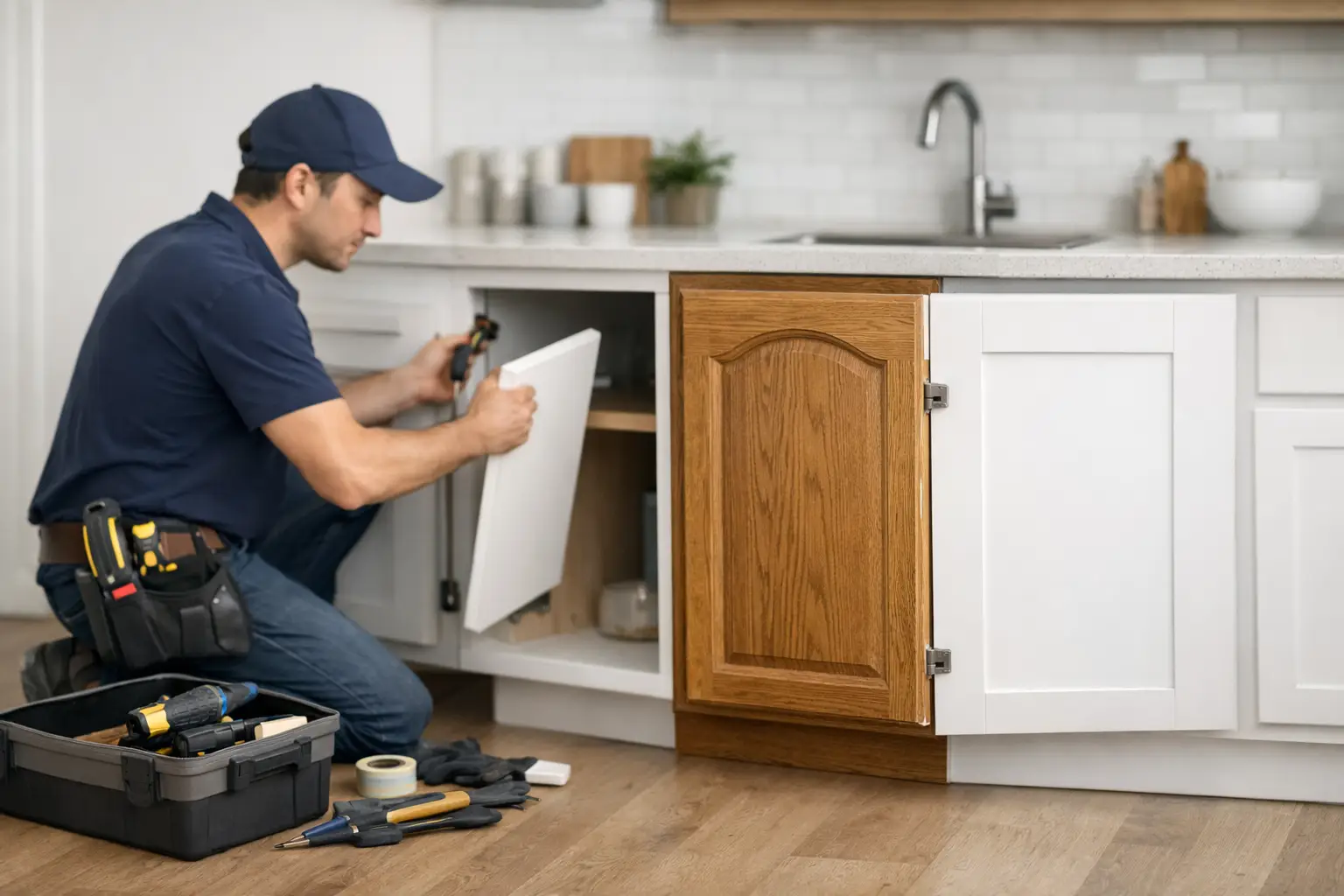
A kitchen can look dated long before its cabinet boxes stop doing their job. When homeowners search for “what is kitchen cabinets refacing,” they are usually looking for a way to change the look of the room without taking on a full cabinet replacement. Refacing can be a smart middle ground, but only when the existing cabinets are solid, properly installed, and suited to the kitchen you want to keep.
What Is Kitchen Cabinet Refacing?
Kitchen cabinet refacing updates the visible exterior of existing cabinets while keeping the cabinet boxes in place. The doors and drawer fronts are typically replaced, exposed cabinet surfaces are covered with a new finish material, and new hardware is installed. Depending on the scope, the project may also include new hinges, trim, crown molding, light valances, or other details that make the cabinetry feel fully refreshed.
The cabinet frames, also called boxes, remain attached to the wall and floor. That is the key difference between refacing and replacing cabinets. Instead of removing the entire cabinet system, a professional works with the existing layout and gives the surfaces you see every day a new appearance.
For a homeowner who likes the current kitchen footprint but dislikes worn oak doors, dated finishes, or mismatched hardware, refacing can create a major visual change with less demolition. It can work well for kitchens in San Francisco Bay Area homes where preserving a functional layout helps keep a project focused and efficient.
How the Cabinet Refacing Process Works
A quality refacing project starts with an inspection, not a finish sample. The contractor checks whether the cabinet boxes are square, secure, and free of moisture damage, swelling, loose joints, or major wear. Doors and drawers are measured carefully, since uneven walls and older homes can require adjustments for a clean final fit.
Once the cabinets are approved for refacing, the old doors, drawer fronts, and hardware are removed. The exposed front frames, side panels, and other visible portions of the boxes are prepared and covered in a matching material. New custom-sized doors and drawer fronts are installed, followed by hinges, pulls, knobs, and any selected trim.
The final adjustment work matters. Doors should align evenly, drawer fronts should sit straight, and hinges should allow smooth opening and closing. A cabinet refacing job can look unfinished when these details are rushed, even if the new door style is attractive.
Materials Used for Refacing
Refacing materials vary based on the desired look, durability, and condition of the existing cabinets. Many projects use wood veneer for a natural wood finish or durable laminate and thermofoil-style materials for a more uniform appearance. Painted finishes may also be possible, but the preparation and materials need to match the cabinet surface and the homeowner’s expectations for upkeep.
New doors and drawer fronts can be selected in many styles, including shaker, slab, raised-panel, and modern flat-front designs. This gives homeowners more design flexibility than simply repainting old doors. Hardware choices also have an outsized impact. Replacing dated knobs with pulls, or selecting soft-close hinges where appropriate, can make the kitchen feel newer and more functional.
Refacing vs. Painting vs. Replacing Cabinets
These three options solve different problems. Painting keeps the existing doors and drawer fronts, while refacing replaces them. Cabinet replacement removes the boxes as well as the doors, allowing for a new layout, different cabinet sizes, and deeper changes to storage and function.
Painting may be a reasonable choice when cabinet doors are in excellent condition and the homeowner wants a color change. However, paint will not fix damaged door profiles, peeling surfaces, warped panels, or an outdated style that is built into the door design. It also will not add new drawer fronts, updated hinges, or improved cabinet details by itself.
Refacing is a stronger option when the boxes are sound but the doors are dated or worn. It offers a more substantial visual update than painting while avoiding the demolition associated with replacement. The trade-off is that the current cabinet layout remains mostly the same. You cannot turn a narrow galley kitchen into an open-concept kitchen through refacing alone.
Full replacement is usually the better path when cabinets have water damage, sagging shelves, structural problems, poor installation, or inefficient storage that no longer works for the household. It is also appropriate when a kitchen remodel involves moving walls, relocating plumbing, changing appliance locations, or significantly expanding the room.
When Cabinet Refacing Makes Sense
Refacing is worth considering when your cabinet boxes are sturdy, the layout functions well, and the project goal is primarily aesthetic. Many homeowners choose it because they want cleaner lines, newer finishes, and better-looking doors without rebuilding the entire kitchen.
It can be especially practical if the countertop, flooring, and backsplash are either staying in place or being updated around the existing cabinet footprint. Keeping the cabinet boxes can reduce disruption compared with a full tear-out, which may be helpful for busy households, rental properties, and occupied commercial spaces.
Refacing can also make sense before listing a property for sale when the kitchen needs a credible visual upgrade but does not require a complete redesign. The results depend on choosing finishes that fit the home and completing the installation with careful measurements and durable materials.
When You Should Skip Refacing
Refacing is not a cover-up for failing cabinets. If cabinet boxes are swollen from leaks, soft from water exposure, loose at the wall, heavily damaged by pests, or made from deteriorating material, retaining them may create more problems later. A fresh door cannot correct a weak cabinet structure.
You should also reconsider refacing if your biggest frustration is the kitchen layout. If you need more storage, wider drawers, a larger island, a pantry cabinet, or space for different appliances, replacement may give you a better long-term result. Changes involving electrical wiring, plumbing lines, ventilation, or structural walls should be planned as part of a broader remodeling scope.
Older homes can bring another consideration: walls and floors may not be perfectly level. That does not automatically rule out refacing, but it makes experienced measuring, fitting, and adjustment essential. The right recommendation should come after an on-site assessment, not from photos alone.
Questions to Ask Before Choosing Refacing
Before making a decision, ask whether you are happy with the cabinet layout, not just the cabinet color. Think about how you use the kitchen during a busy week. Are drawers hard to access? Do you lack pantry storage? Is the sink base showing signs of past leaks? Are the upper cabinets placed too high or too low for the people who use them?
Also consider the surfaces around the cabinets. A new cabinet style can make an old countertop or damaged backsplash stand out more. In some kitchens, refacing is best paired with new counters, tile, lighting, paint, or updated fixtures. In others, a focused cabinet update is exactly what the room needs.
A clear quote should explain what is being retained, what is being replaced, what finish material will be used, and how hardware, trim, adjustments, and site protection are handled. This prevents the common disappointment of expecting a full remodel when the project is designed as an exterior cabinet update.
Getting a Result That Looks Intentional
The best refaced kitchens do not look like old cabinets with new doors attached. They look coordinated. Choose a door style that matches the home, a finish that works with the room’s natural light, and hardware that feels proportional to the door size. Keep the design practical as well. Highly textured finishes, intricate door profiles, and dark colors can be beautiful, but they may show fingerprints, dust, or wear differently than a simple painted shaker door.
For homeowners who want dependable guidance on cabinet condition, layout limitations, and related kitchen repairs, Fullhouse Remodeling & Handyman Services can evaluate the project and help define the right scope. A well-planned refacing project should leave you with more than a newer-looking kitchen – it should give you a space that still works hard for the way you live.
