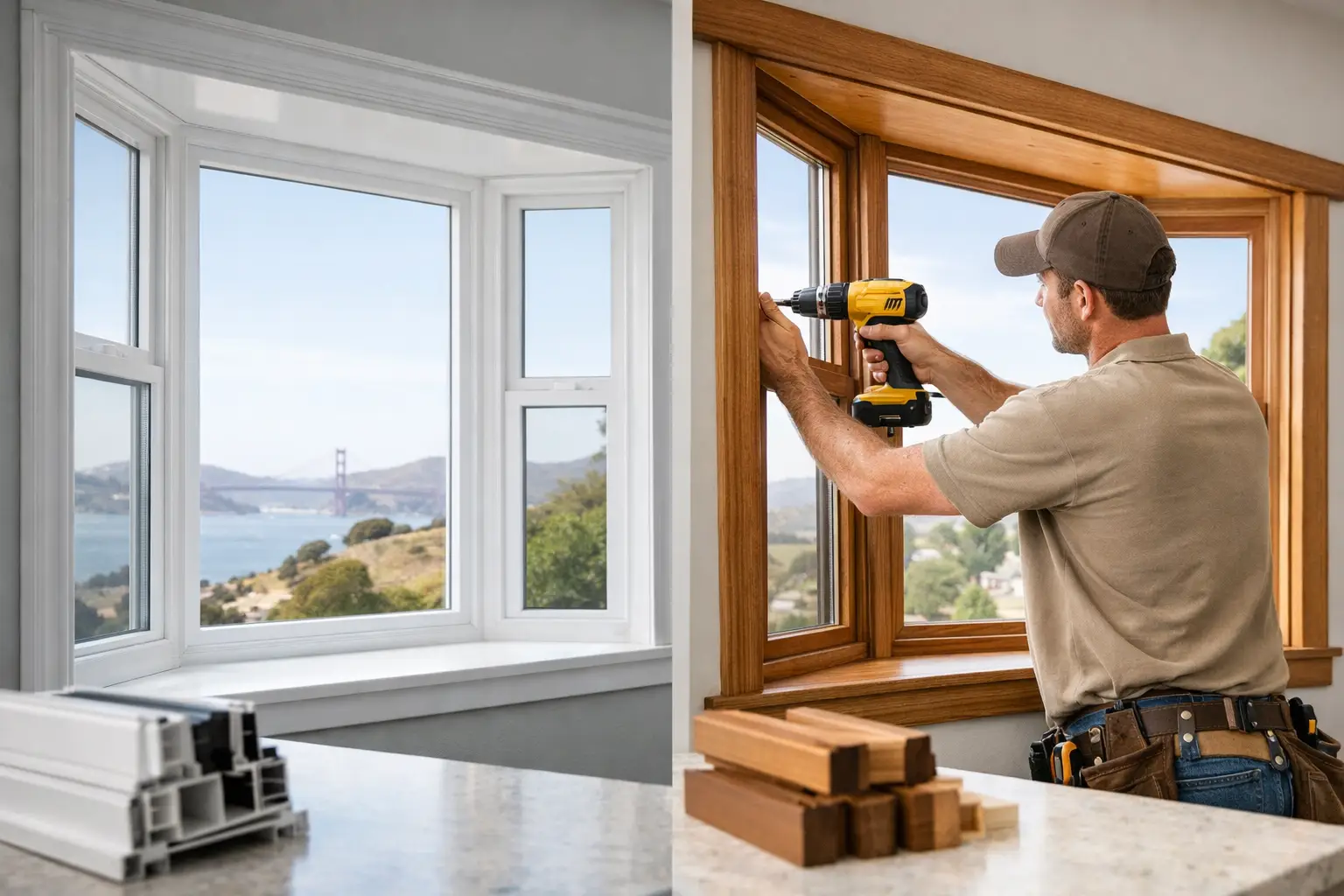
A window replacement can change how a home feels every day. It affects street appeal, indoor comfort, outside noise, maintenance demands, and how much attention the exterior needs after a wet winter. When comparing vinyl windows vs wood, the better material is not automatically the cheapest or the most traditional. It is the one that fits your home’s style, exposure, maintenance plan, and long-term goals.
For Bay Area homeowners, that decision can be especially personal. A newer home in San Mateo may benefit from the clean, low-maintenance performance of vinyl. A historic San Francisco property with original trim may call for wood windows that preserve its character. The right answer depends on the building, not just the material.
Vinyl Windows vs Wood: The Main Differences
Vinyl windows use frames made from PVC, a durable plastic material. They are commonly chosen for their lower upkeep, moisture resistance, and consistent finish. Most vinyl frames do not need painting, and they will not rot, peel, or attract termites the way unprotected wood can.
Wood windows use natural wood frames and can be painted or stained to suit the home. They bring warmth and detail that vinyl cannot fully copy, particularly in older homes with traditional millwork, divided-light designs, or custom trim. Wood is also easier to modify or repair in some situations, which matters when matching existing architectural features.
The trade-off is simple: vinyl usually asks less of the homeowner after installation, while wood gives more design flexibility and visual authenticity but requires regular care.
Appearance and Architectural Fit
Wood has a clear advantage when appearance is the top priority. It has natural grain, depth, and crisp profiles that work well in Craftsman, Victorian, Colonial, and other traditional home styles. It can also be painted virtually any color, which gives homeowners more freedom when coordinating siding, trim, shutters, and interior finishes.
Vinyl has improved substantially in appearance, with more color choices and wood-look finishes than in the past. Still, vinyl frame options are generally more limited than wood, especially for custom shapes, fine details, and exact color matching. Dark vinyl finishes can also require extra care in high sun exposure because heat buildup may affect the frame over time.
For a home with painted white trim and straightforward window openings, vinyl can look clean and appropriate. For a period home where the existing windows are central to the facade, wood may be worth the added maintenance commitment.
Consider the Interior View Too
Window choices are not only visible from the curb. Indoors, painted or stained wood frames can make a living room, dining room, or bedroom feel more finished. They can match wood flooring, cabinetry, built-in shelving, and existing trim.
Vinyl offers a neat, practical look and is often a strong fit for rental units, contemporary homes, garages, accessory spaces, and rooms where easy cleaning matters more than custom finish work. The best choice should make sense on both sides of the glass.
Maintenance Requirements
Maintenance is one of the biggest differences between vinyl and wood windows. Vinyl is designed for a lower-maintenance lifestyle. Homeowners can generally clean the frames with mild soap and water, inspect the caulking, and keep the tracks free of dirt and debris. The material does not need periodic painting or staining.
Wood needs more attention because it is vulnerable to moisture. Paint and sealant protect the frame, but those coatings eventually wear down. If water reaches bare or cracked wood, the result can be swelling, soft spots, dry rot, peeling paint, and insect damage. South-facing walls and windows exposed to wind-driven rain often need closer inspection.
That does not make wood a poor choice. Well-built, properly installed, and regularly maintained wood windows can perform for many years. But they require an owner who is prepared to repaint, reseal, and address small issues before they become larger repairs.
For busy homeowners, landlords, and property managers, vinyl is often easier to plan around. Less routine upkeep means fewer exterior maintenance tasks competing for time and budget.
Energy Efficiency Depends on More Than Frame Material
Both vinyl and wood windows can be energy efficient when they have quality glass packages, well-built frames, proper weatherstripping, and professional installation. The glass itself often makes a major difference. Features such as double-pane or triple-pane glazing, insulated glass, and low-emissivity coatings help control heat transfer and improve comfort.
Wood is naturally insulating, while vinyl frames are typically designed with hollow chambers that help reduce heat flow. In practical terms, a high-quality vinyl window and a high-quality wood window can both perform well. A poorly installed window in either material can still leak air, allow water intrusion, and create drafts.
Installation details matter just as much as the product selection. The window opening must be measured correctly, the flashing and waterproofing must be handled carefully, and gaps must be sealed without blocking proper drainage. This is especially important in Bay Area homes, where older construction, stucco walls, siding transitions, and hidden dry rot can complicate a replacement project.
Durability in Rain, Sun, and Changing Conditions
Vinyl handles moisture well. It will not rot, and it is generally a reliable choice in areas that see damp conditions or frequent fog. That makes it appealing for coastal and hillside properties where moisture management is a continuing concern.
Wood can also perform well, but it depends on protection. High-quality paint, exterior cladding, drip caps, and correct flashing help keep water away from the frame. If those details fail or maintenance is delayed, wood is less forgiving than vinyl.
Sun exposure is another consideration. Strong direct sunlight can be hard on any exterior finish. Wood paint may fade or crack over time, while vinyl can expand and contract with temperature changes. Product quality, color choice, and correct installation all influence how a window holds up over the years.
Cost and Long-Term Value
Vinyl windows are often the more budget-conscious choice at the start of a project. Their lower maintenance needs may also reduce future painting and repair work. For homeowners replacing multiple windows, vinyl can make it easier to improve comfort and efficiency without turning the project into a major exterior restoration.
Wood windows commonly require a greater investment because of the material, finish options, craftsmanship, and customization involved. That investment may make sense when preserving the character of an older home, satisfying architectural requirements, or matching existing wood windows that are still in good condition.
Long-term value is not only about the purchase price. Consider how long you plan to own the property, whether you will maintain the windows consistently, and what future buyers may expect from the home. A well-chosen vinyl window can be a practical upgrade. A well-maintained wood window can be a valuable architectural feature.
When Vinyl Is Usually the Better Fit
Vinyl is often the practical choice for homeowners who want dependable performance with minimal routine upkeep. It works particularly well for modern homes, rental properties, secondary rooms, and projects where consistent appearance and moisture resistance are priorities.
It may also be the better direction when existing wood windows show widespread rot, warped frames, failed seals, or repeated water damage. In those cases, replacing damaged windows with a durable, properly installed vinyl option can reduce ongoing repair concerns.
When Wood Is Worth Considering
Wood is often the stronger choice when preserving the home’s original style matters as much as energy performance. If the property has historic trim, custom profiles, or interior woodwork that would be difficult to match with vinyl, wood windows can keep the design cohesive.
Wood may also be appropriate when only a few windows need replacement and the goal is to match existing units rather than change the entire window package. A qualified contractor can inspect the condition of the surrounding trim, sill, siding, and wall opening before recommending repair or replacement.
Make the Decision With the Whole Wall in Mind
A window replacement should never be treated as only a glass-and-frame purchase. Before work begins, inspect the surrounding caulking, exterior trim, siding or stucco, interior drywall, and signs of moisture damage. Replacing a window without addressing failed flashing or dry rot around the opening can leave the real problem behind the new frame.
Fullhouse Remodeling & Handyman Services helps Bay Area property owners assess window replacement projects with the surrounding construction in mind. Clear scope, careful installation, and attention to the details around the opening help protect the investment long after the new windows are in place.
Choose vinyl if you want a straightforward, low-maintenance solution. Choose wood if the home’s character, custom finish, and architectural continuity deserve the extra care. The best window is the one installed correctly and suited to the way you plan to live in the home.
