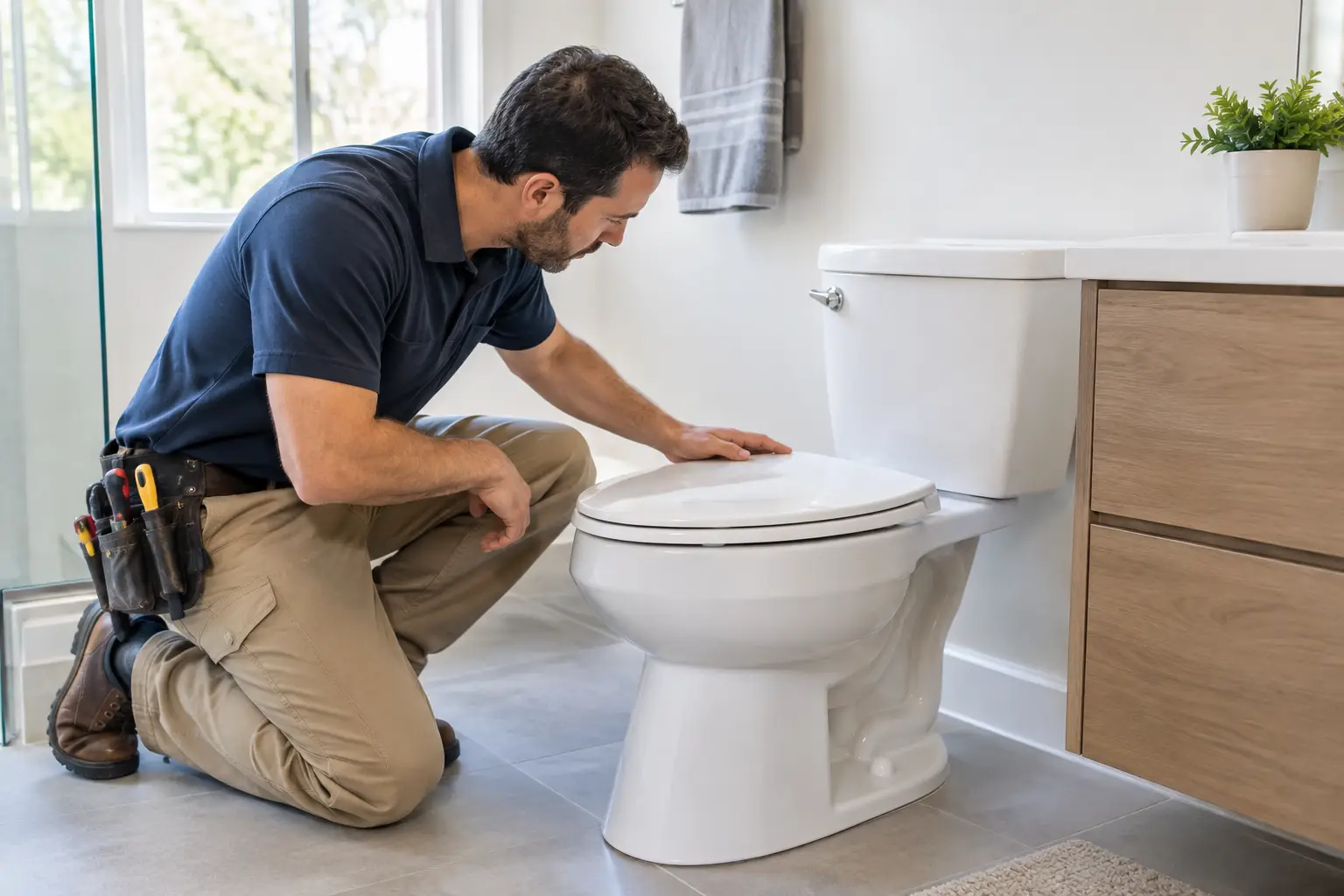
A toilet can look perfectly normal right up until it leaks into the floor, rocks underfoot, or stops flushing when guests are over. Good toilet replacement timing is less about replacing a fixture on a schedule and more about recognizing the difference between a simple repair and a problem that can damage your bathroom.
For Bay Area homeowners, landlords, and property managers, acting early can prevent a small plumbing issue from becoming flooring damage, mold concerns, or an unexpected bathroom outage. The right decision depends on the toilet’s condition, the source of the problem, and whether other bathroom work is already planned.
Toilet Replacement Timing Starts With the Source of the Problem
Many toilet problems are repairable. A running toilet may need a new flapper, fill valve, or flush valve. Weak flushing can result from a worn internal component, a partial clog, or mineral buildup. Water around the base may be caused by a failing wax ring or loose mounting bolts.
Those repairs are usually sensible when the porcelain is sound, the toilet sits securely, and the plumbing connection is in good condition. Replacing an entire toilet for a minor tank component issue is often unnecessary.
Replacement becomes the better call when the toilet itself is damaged, unreliable, outdated, or repeatedly requiring service. The key is to avoid treating the same symptom over and over while the underlying fixture or installation continues to deteriorate.
Signs It Is Time to Replace the Toilet
A crack is visible in the bowl or tank
A hairline crack in porcelain deserves prompt attention, especially if it is in the bowl, near the base, or accompanied by moisture. Tank cracks can worsen without warning and release a significant amount of water. Surface marks are not always structural cracks, but a professional inspection can determine whether the fixture is safe to keep using.
Do not rely on a patch as a long-term solution for a cracked toilet. Even if a repair temporarily stops a leak, the porcelain may continue to fail under the pressure of regular use.
The toilet rocks or moves at the floor
A toilet should feel solid. Movement can mean loose bolts, but it may also point to a failed wax ring, a damaged flange, deteriorated subflooring, or an uneven finished floor. Tightening bolts without checking the cause can crack the porcelain or conceal moisture damage beneath the toilet.
This situation does not always require a new fixture. However, the toilet needs to be removed so the mounting system, flange, and floor can be evaluated correctly. If the toilet is older or has other issues, replacement during that repair is often the most efficient option.
Leaks keep returning around the base
Water at the base should never be ignored. First, confirm that it is not condensation, a loose supply connection, or water dripping from the tank after flushing. If the leak appears after use or returns after a wax ring replacement, the problem may involve the toilet’s base, flange height, drain connection, or flooring.
Repeated leaks can stain finished flooring and damage wood framing below. Replacement may be appropriate if the base is cracked, the fixture does not sit level, or removal reveals problems that make reinstallation unreliable.
Clogs are frequent despite normal use
An occasional clog happens. Frequent clogs are different, particularly when the toilet has always had weak performance or needs plunging with ordinary household use. Older toilets may have narrow trapways or inefficient flush designs that struggle with modern demand.
Before replacing the toilet, rule out a blockage farther down the drain line. If other fixtures drain slowly or back up, the issue may be plumbing-related rather than the toilet itself. If the drain is clear and the toilet remains unreliable, a replacement can improve everyday function.
Repairs are becoming routine
A toilet with one inexpensive repair is not a concern. A toilet that needs repeated work on its fill valve, flush mechanism, seat mounts, tank bolts, seal, or base is sending a different message. At some point, the cost and inconvenience of piecemeal repairs outweigh the value of keeping an aging fixture.
Consider the reliability you need from the bathroom. In a primary bathroom, a busy family home, a rental property, or a commercial restroom, an unpredictable toilet creates more disruption than it would in a rarely used guest bath.
When Repair Is Still the Smart Choice
Replacement is not automatically the best answer just because a toilet is old. Many older toilets are well-made, stable, and easy to maintain. If the bowl and tank have no cracks, the toilet flushes properly, and the issue is limited to a replaceable internal part, repair is usually the practical path.
A qualified technician can also correct common installation issues, such as a deteriorated wax ring or loose hardware, without replacing the fixture. This is especially useful when the toilet matches a bathroom design you want to preserve or when a larger remodel is planned later.
The decision should be based on condition, not appearance alone. A newer toilet installed incorrectly can cause more trouble than an older toilet that was installed and maintained properly.
Plan Replacement Around Bathroom Projects When You Can
Bathroom remodeling creates an ideal opportunity to evaluate toilet replacement timing. If you are replacing tile, changing flooring thickness, updating a vanity, repairing subflooring, or opening walls for plumbing work, removing and reinstalling an older toilet may not be the best use of your budget.
Installing the new toilet after flooring is complete helps ensure the fixture sits correctly and the flange is at the proper height. It also avoids trying to match an outdated toilet to a refreshed bathroom later.
There is a trade-off. If the current toilet is stable and you are not changing the floor or plumbing layout, replacing it solely for appearance may be lower priority than repairs that protect the home. But when renovation work already requires removal, combining the projects can reduce repeat labor and prevent scheduling headaches.
Choose the Right Replacement, Not Just Any Replacement
A replacement toilet needs to fit the room and the existing plumbing. The rough-in measurement, or the distance from the finished wall to the center of the drain, must be verified before purchase. A toilet that does not match the rough-in may not install properly, even if it looks like a standard model.
Bowl shape and height also matter. An elongated bowl can be more comfortable but takes up additional space. A comfort-height toilet may be useful for many adults and older residents, while a standard-height model can work better for smaller children. In compact bathrooms, clearance around the door, vanity, and shower should guide the selection.
Water efficiency is another factor, but flushing performance matters just as much. A low-water fixture should still clear waste reliably. The best choice balances room size, household needs, cleaning preferences, and dependable performance.
Do Not Delay When Water Is Reaching the Floor
Some toilet issues can wait for a scheduled repair. Active leaking, a cracked bowl or tank, a toilet that shifts at the base, and sewage odors around the fixture should not. Shut off the toilet’s water supply if water is continuing to flow, keep people from using the fixture, and arrange an inspection as soon as possible.
If the floor feels soft, stained, or swollen around the toilet, there may already be moisture damage below the surface. This is not just a plumbing concern. It may require repair to the subfloor and careful preparation before a replacement toilet is installed.
Get a Clear Assessment Before You Commit
The best replacement decision starts with identifying exactly what has failed. A professional can inspect the toilet, water supply, mounting hardware, drain connection, flange, and surrounding floor to determine whether a targeted repair will last or whether replacement is the safer investment.
Fullhouse Remodeling & Handyman Services helps homeowners and property managers address toilet repairs, replacements, and related bathroom damage with straightforward recommendations and professional installation. A timely inspection can keep a small bathroom problem from becoming a much larger repair.
