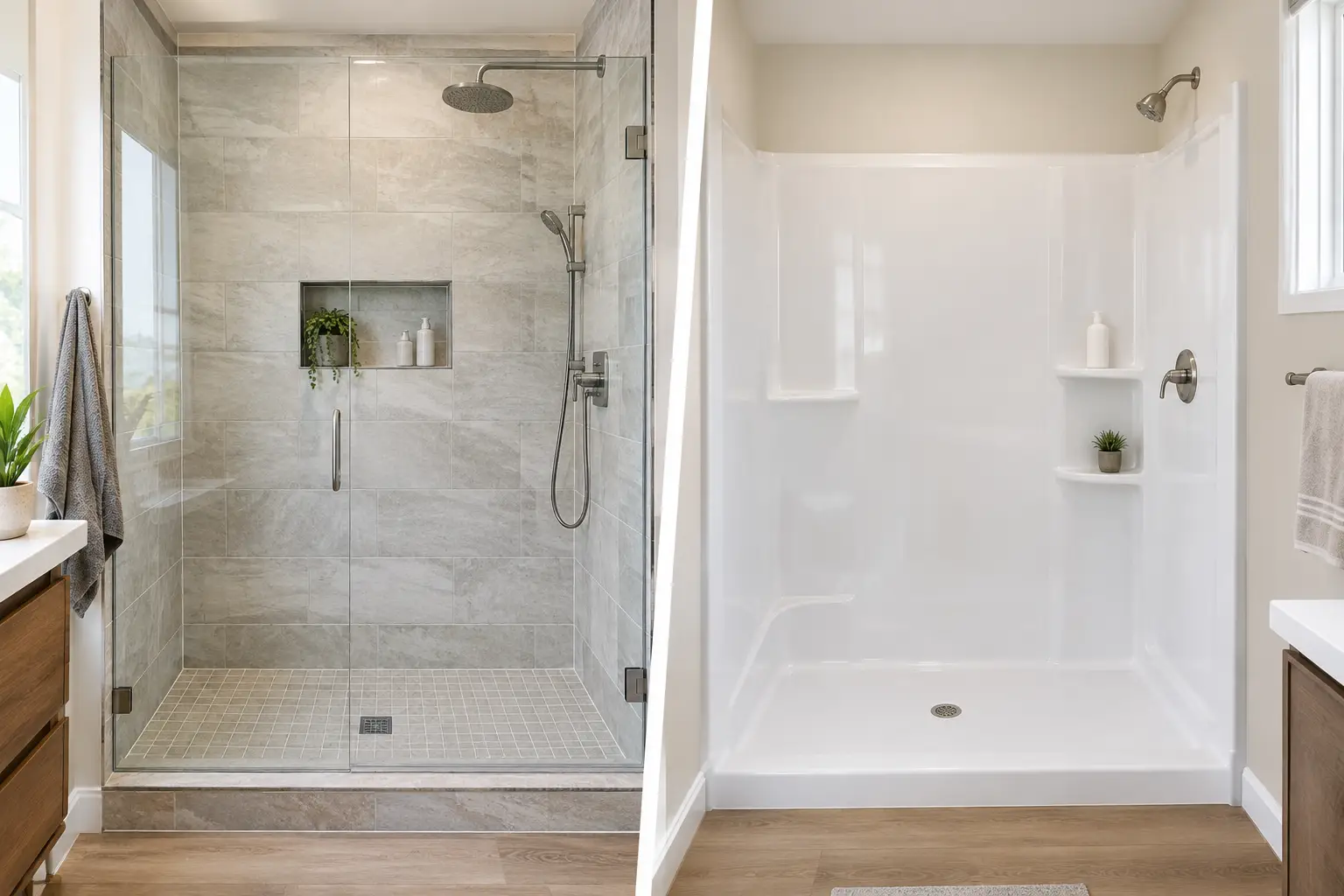
A bathroom shower has to handle daily use, constant moisture, cleaning products, and changing household needs. In the tile shower vs fiberglass decision, the better choice is not always the one that looks best in a showroom. It is the one that fits your budget, timeline, maintenance tolerance, and the condition of the bathroom behind the walls.
For a quick rental turnover or a straightforward replacement, a fiberglass shower can be the practical answer. For a long-term primary bathroom remodel where layout and appearance matter, tile often earns its higher upfront investment. The details below can help you choose with fewer surprises once the project begins.
Tile Shower vs Fiberglass at a Glance
Fiberglass showers are factory-made units or multi-piece surrounds installed over properly prepared walls. They are built for efficiency: fewer seams, a fast installation process, and simple routine cleaning. Many homeowners use the term fiberglass to describe several prefabricated shower options, including molded shower pans and wall surrounds.
A tile shower is built on site. It typically includes a waterproofing system, shower pan or mud bed, wall backer, tile, grout, and trim. Because it is assembled in layers, it can be made to fit a specific footprint, accommodate a niche or bench, and work with nearly any tile style.
The key difference is not simply surface material. A fiberglass unit is a manufactured product installed as a system. A tile shower is a custom-built waterproof assembly, and its long-term performance depends heavily on the quality of the preparation and installation.
Installation Time and Project Disruption
When speed is the priority, fiberglass usually has the advantage. A standard replacement may be completed much faster than a custom tile shower because the walls and base arrive ready to install. There is no tile layout, cutting, setting, grouting, or grout-curing stage.
That does not mean every fiberglass project is a one-day job. If there is water damage, mold, plumbing changes, damaged subflooring, or framing issues, those problems must be corrected before any new shower is installed. In older Bay Area homes, opening a shower wall can reveal dry rot, outdated plumbing, or uneven framing that needs professional attention.
Tile takes longer because each layer needs to be installed correctly and, in many cases, allowed to cure before the next phase begins. The schedule also expands when the design includes a niche, bench, decorative tile, a linear drain, glass enclosure, or plumbing relocation. The payoff is a shower built around the room rather than around standard unit sizes.
Access Can Affect the Choice
A large one-piece fiberglass unit can be difficult to bring through narrow doors, stairways, or hallways. This is particularly relevant in condos, upper-floor bathrooms, and homes with tight access. Multi-piece surrounds solve some access problems, but their seams need careful installation and maintenance.
Tile materials are brought in separately, making them easier to use in a compact or hard-to-reach bathroom. For a bathroom with an unusual layout, tile may be the more realistic option even when a homeowner initially prefers a prefabricated unit.
Design Flexibility and Resale Appeal
Tile offers far more room for personalization. You can select the tile size, color, finish, grout color, fixtures, shower layout, storage niche, and drain location. It can make a small bathroom feel more finished, especially when the shower design connects visually with the floor or vanity area.
This flexibility matters in homes where the bathroom is part of a larger remodel. A custom tile shower can be designed to complement new flooring, cabinetry, lighting, and paint rather than looking like a separate replacement project.
Fiberglass has a more limited appearance, although modern units are cleaner and more attractive than many homeowners expect. They are commonly available in neutral colors and practical configurations. For a guest bathroom, rental property, or secondary bath where durability and easy turnover matter more than customization, that simplicity can be a strength.
Resale value depends on the home, neighborhood, and overall bathroom condition. A well-executed tile shower often has stronger visual appeal for buyers, but an attractive fiberglass shower is better than an aging tile shower with cracked grout, stains, or visible water damage. Buyers respond to clean, functional bathrooms first.
Maintenance: Simple Cleaning vs Ongoing Care
Fiberglass is generally easier to maintain because it has fewer joints. Routine cleaning with a nonabrasive cleaner and soft cloth can keep it looking good. Avoid harsh scouring pads and aggressive chemicals, which can dull or scratch the finish over time.
Tile needs more consistent attention. Grout lines can collect soap residue and mildew, especially in bathrooms with limited ventilation. Regular cleaning, good airflow, and prompt repairs to damaged grout or caulk help protect the shower and keep it looking fresh.
Some homeowners choose tile but underestimate the maintenance involved. Large-format tile can reduce the number of grout lines, while quality grout and proper sealing where applicable can make cleaning easier. The best choice is not necessarily the lowest-maintenance option. It is the option you will realistically care for over the years.
Durability Depends on What Is Underneath
A fiberglass shower can last a long time with normal care, but it can crack, flex, discolor, or lose its finish over time. The base must be properly supported. A shower pan that flexes underfoot is not just uncomfortable. It can lead to cracks and premature failure.
Tile can last for decades, but only when the waterproofing system beneath it is correctly designed and installed. Tile and grout are not waterproof on their own. Water management happens behind the finished surface, through a properly sloped pan, sealed penetrations, waterproofed walls, and secure connections at the drain.
This is where workmanship matters most. A beautiful tile installation can still fail if the substrate, waterproofing, or drain assembly is wrong. Conversely, a carefully built tile shower can provide lasting performance and a high-end finish.
Do Not Cover Up Existing Water Damage
Whether you choose tile or fiberglass, do not install over soft drywall, deteriorated framing, active leaks, or a damaged subfloor. A new surface may hide the problem temporarily, but trapped moisture can lead to more extensive repairs later.
A thorough remodel addresses the condition behind the shower, including plumbing connections, venting, framing, and wall structure. This is especially valuable when replacing an older shower that has leaked or when changing the shower footprint.
Budget: Look Beyond the Initial Material Cost
Fiberglass is usually the lower-cost option because the materials are standardized and labor time is reduced. It can be an efficient way to replace a worn-out shower without committing to a full custom remodel.
Tile typically costs more because of the additional labor and materials involved. Demolition, surface preparation, waterproofing, tile setting, grout, trim, and detailed finishing all add time. Complex patterns, premium tile, custom glass, and plumbing changes can increase the scope further.
Still, the lowest initial cost is not automatically the best value. A low-cost installation that skips structural repairs or waterproofing can become expensive when leaks appear. Ask for a clear scope that explains what is being removed, how the shower will be waterproofed, what plumbing work is included, and how damaged materials will be handled if discovered.
Which Shower Is Right for Your Property?
Choose fiberglass when you need a dependable, straightforward shower replacement, want simpler upkeep, have a limited remodeling timeline, or are updating a rental or secondary bathroom. It is a sensible choice when the existing layout works and customization is not the main goal.
Choose tile when you want a custom layout, need to work around an unusual space, are remodeling a primary bathroom, or want features such as a niche, bench, curbless entry, or a more tailored design. It is also a strong choice when you are already opening walls to update plumbing or correct underlying damage.
For landlords and property managers, the decision may vary by unit. Fiberglass can support faster turns and easy maintenance, while tile may be the right fit for a higher-end property where finish quality is part of the value proposition.
Before committing, have the existing shower evaluated instead of selecting materials based on appearance alone. Fullhouse Remodeling & Handyman Services can help homeowners understand the condition of the space, plan the right scope, and complete the work with the level of care a wet-area remodel requires. A shower should feel like a daily improvement, not a future repair waiting behind the wall.
