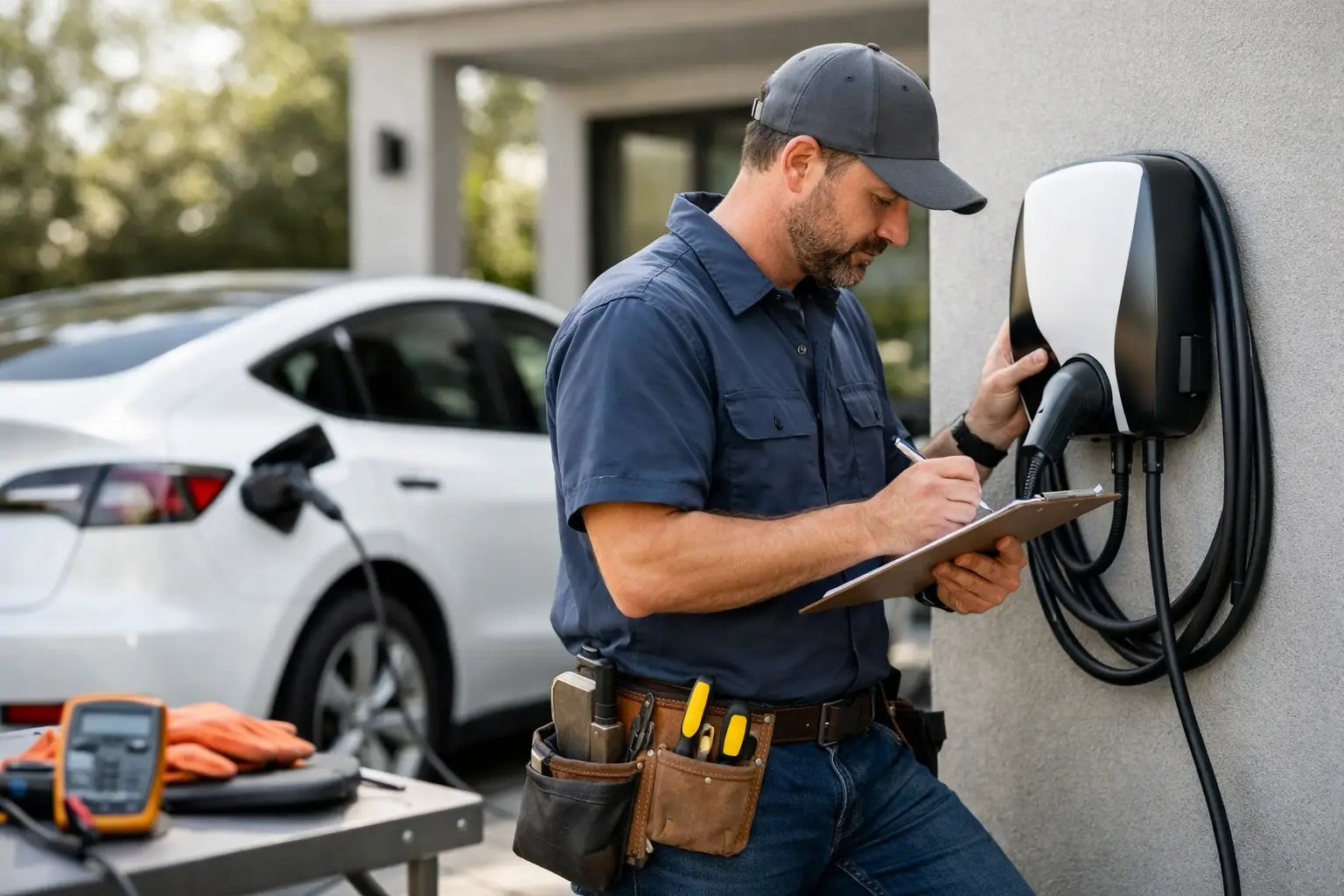
A home EV charger should make daily driving easier, not create a new electrical problem behind the garage wall. A useful EV charger installer review goes beyond a star rating. It helps you confirm that the professional understands your home’s electrical capacity, local permit requirements, charging needs, and the details that affect safety over time.
For Bay Area homeowners, the right installer can turn an overnight charging routine into a straightforward home upgrade. The wrong fit may leave you with a charger that trips breakers, a delayed permit inspection, exposed wiring, or a scope of work that grows after the job begins. Here is what to look for before scheduling the installation.
Start an EV Charger Installer Review With Credentials
Reviews matter, but credentials come first. EV charger installation is electrical work, and the person handling it should be properly licensed and insured for the scope of the project. Ask who will perform the electrical work, whether the company handles permits when required, and whether an inspection will be scheduled if your city requires one.
A dependable installer should answer these questions directly. You should not have to guess whether the work will be subcontracted, whether the permit is included in the plan, or who will correct an issue if the inspection identifies one.
Look at how reviewers describe professionalism, too. The strongest reviews often mention specific behaviors: arriving on time, explaining electrical options in plain language, protecting the work area, completing the agreed scope, and following up when needed. Generic praise is encouraging, but details show how a contractor operates when the job involves real decisions and real property.
The Site Visit Should Be More Than a Charger Location
A charger installation starts with your electrical panel, not the wall where you want to park. A qualified installer should assess available panel capacity, the condition of the existing equipment, the distance from the panel to the charging location, and the route for new wiring.
This matters because the easiest parking location is not always the simplest or most cost-effective installation point. A detached garage, long conduit run, finished drywall, narrow crawlspace, or panel on the opposite side of the house can change the labor and materials involved. In older homes, the panel may also need additional work before it can safely support a higher electrical load.
Ask the installer to explain the proposed route. Will wiring run through a wall, attic, crawlspace, basement, or surface-mounted conduit? Where will the disconnect or breaker be located? If exterior equipment is involved, how will it be protected from weather and physical damage? Clear answers now prevent surprises after work has started.
A good assessment also considers how you use the vehicle. Some homeowners only need reliable overnight charging, while others want faster charging for frequent driving or multiple EVs. More charging power can be useful, but it may require more electrical capacity. The best choice depends on your vehicle, driving habits, home electrical system, and future plans.
Read Reviews for Patterns, Not Just Ratings
A five-star average can be useful, but the details and consistency behind it matter more. Read recent reviews first, then look for patterns across several months or years. A company that consistently earns praise for communication and clean workmanship is usually easier to work with than one that receives compliments only for low estimates.
Pay attention to comments about these practical parts of the job:
- Whether the installer arrived when promised and kept the customer informed about schedule changes.
- Whether the final scope matched the estimate and any changes were explained before extra work began.
- Whether the crew left the panel area, garage, and surrounding surfaces clean and undamaged.
- Whether the company responded professionally when an inspection, equipment issue, or customer question required follow-up.
One negative review does not automatically disqualify a contractor. Remodeling and electrical work can involve hidden conditions, delayed materials, permit timing, and inspection requirements. What matters is how the company responded. Did it communicate early, offer a reasonable solution, and stand behind the work? A calm, specific response is generally more meaningful than a defensive one.
Compare the Scope, Not Only the Estimate
Two proposals can look similar while covering very different work. Before making a decision, make sure you understand what is included in each scope. The charger equipment itself may be supplied by the homeowner or included by the installer. The proposal should also clarify the circuit installation, breaker work, conduit, wiring route, wall mounting, patching if applicable, permit handling, and inspection coordination.
Do not assume that an installation described as simple will remain simple once the wall is opened or the panel is inspected. A professional cannot always see every concealed condition during an initial visit. Still, the estimate should identify likely variables and explain how change work will be handled. Transparent pricing is not just about the initial number. It is about knowing what could alter that number and receiving approval before additional work moves forward.
If a panel upgrade is recommended, ask why. In some cases, an upgrade is the right long-term solution. In others, load management, a different charging configuration, or a lower-amperage circuit may better match the home and the owner’s needs. The installer should explain the trade-offs rather than pushing a single option without context.
Permits and Inspections Protect the Homeowner
Permit rules vary by city and by the exact work being performed. In many situations, adding a dedicated EV charging circuit requires a permit and inspection. That process can feel like an inconvenience, but it provides an independent check that the installation meets applicable electrical and safety requirements.
Ask the contractor whether permits are required for your address and who is responsible for filing them. You should also know whether the work will be inspected before final payment and whether your utility has any service-related requirements. These questions are especially relevant for older Bay Area homes, where existing panels and service equipment may not match the demands of modern electrical loads.
An installer who suggests skipping required permits to save time or reduce cost should be a concern. Unpermitted electrical work can complicate future repairs, property sales, insurance questions, and safety investigations. Fast service is valuable, but it should never come at the expense of compliant work.
Ask What Happens After Installation
The job is not complete when the charger powers on once. The installer should test the circuit, confirm that the charger is securely mounted, verify the settings appropriate to the installed circuit, and explain basic operation. If you supplied the charger, confirm in advance that the installer is prepared to install that model and that the equipment is compatible with the planned setup.
It is also reasonable to ask about workmanship coverage and the process for requesting service if an issue appears later. A dependable company will tell you who to call, what information to provide, and how it handles warranty-related concerns. Keep copies of the permit, inspection approval, proposal, and equipment documentation with your home records.
For property managers and landlords, clear documentation is even more useful. It helps with future maintenance, tenant turnover, electrical planning, and decisions about adding more chargers as EV ownership grows.
When a Handyman-Style Quote Is Not Enough
Homeowners often look for a quick installation because the charger itself may seem simple to mount. Mounting is only one part of the work. The circuit, breaker, wire sizing, grounding, load calculation, permit requirements, and equipment placement are what make an EV charger installation a professional electrical project.
That does not mean every installation is disruptive or complicated. Some homes have available capacity, a nearby panel, and a clear wiring path. Others require more planning. The right contractor will tell you which situation you have before starting, without making the process harder than it needs to be.
Fullhouse Remodeling & Handyman Services helps homeowners coordinate practical home improvement work with clear communication and professional project planning. For an EV charging project, the goal should be simple: a properly assessed installation, a clean finished appearance, and dependable charging when you need it.
A careful review process takes a little longer than choosing the first available appointment, but it gives you a stronger result. Choose an installer who assesses the whole electrical picture, explains the options clearly, and treats your home with the same care they give the equipment being installed.
