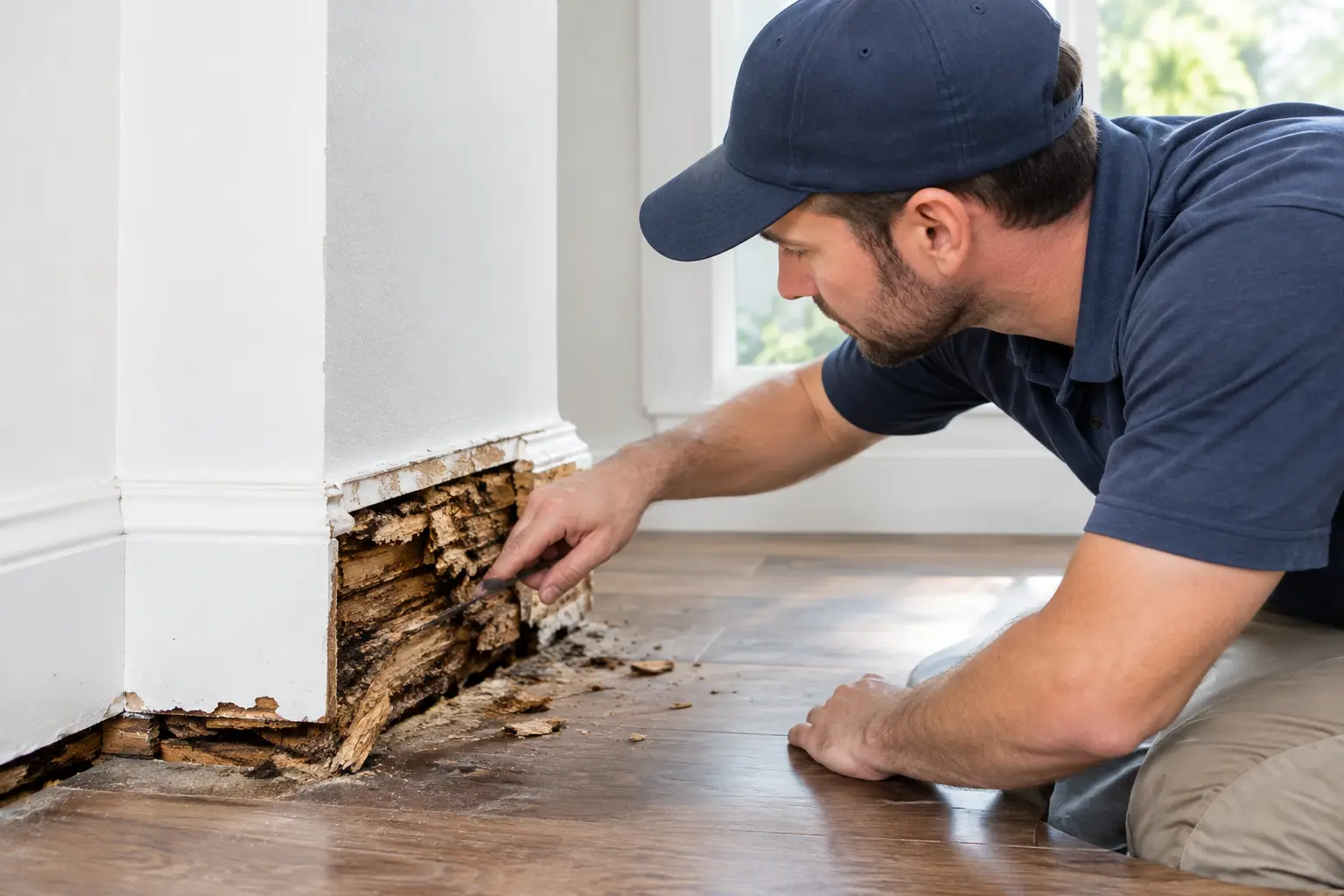
A window sill that feels soft under a fingertip, a deck post with a dark split near its base, or paint that keeps peeling from the same corner can point to more than a cosmetic problem. These dry rot examples often begin where rainwater, coastal fog, plumbing leaks, or poor drainage allow wood to stay damp for too long. Left alone, the damage can move beyond trim boards and affect siding, framing, subfloors, and structural connections.
For Bay Area homeowners and property managers, catching decay early is usually the difference between a focused repair and a larger restoration project. The key is knowing where to look, what signs matter, and why simply adding caulk or paint rarely solves the underlying issue.
What Dry Rot Actually Means
Despite its name, dry rot needs moisture to start. It is a type of fungal wood decay that develops when wood remains wet enough for fungi to grow. Once established, the fungus breaks down the wood fibers, leaving lumber brittle, cracked, darkened, or crumbly.
Dry rot is often used as a catchall term for damaged wood, but not every soft board has the same cause. Termites, carpenter ants, ordinary weathering, and plumbing leaks can create similar-looking damage. A professional inspection identifies the moisture source and the true condition of the wood before repairs begin. That matters because replacing one rotten board without correcting the water intrusion can lead to the same problem a season later.
Common Dry Rot Examples Around a Home
Window sills, trim, and exterior door frames
Windows and exterior doors are among the most common places for dry rot. Water can enter through failed caulking, worn flashing, cracked paint, or gaps where trim meets siding. The exposed lower corners of window trim are especially vulnerable because water naturally collects there.
Look for swollen trim, paint that bubbles or flakes in repeated cycles, dark staining, soft spots, or wood that gives way when gently pressed. A door frame may look intact from the front while the jamb behind it is deteriorating. When that happens, the repair may require removing trim and checking the surrounding framing rather than replacing only the visible face board.
Siding at ground level and wall intersections
Wood siding can rot when it sits too close to soil, concrete, roof surfaces, or landscaping that holds moisture. Sprinklers aimed at the house, clogged gutters, and plants pressed against siding can keep boards wet long after a storm passes.
Pay close attention to siding near porch steps, chimney intersections, hose bibs, downspouts, and roof-to-wall connections. These areas receive more water than broad, open wall sections. A single soft siding board is not always a structural emergency, but it should be opened up and evaluated before moisture reaches sheathing or wall framing.
Fascia boards, soffits, and roof edges
The fascia is the board along the roof edge where gutters are commonly attached. When gutters overflow, leak at seams, or pull away from the roofline, water repeatedly soaks this wood. Soffits beneath the eaves can also rot when roof flashing fails or attic ventilation problems create condensation.
Early signs include peeling paint along the eaves, gutters that sag, stained soffit panels, and sections of fascia that feel soft. This is one repair homeowners should not postpone. Failing fascia can compromise gutter attachment, while ongoing roof-edge leaks can spread into rafter tails and the roof structure.
Deck boards, stairs, posts, and ledger connections
Decks face constant exposure, so surface weathering is normal. Dry rot is different. It shows up as deep cracks, spongy boards, mushroom-like growth, wood that flakes apart, or dark, softened areas around fasteners and post bases.
The most concerning deck locations are structural components: support posts, beams, stair stringers, joists, and the ledger board that connects the deck to the house. A deck board can often be replaced individually. Decay in the framing or ledger requires a more careful assessment because it may affect the deck’s safety and its connection to the home.
Bathroom floors and toilet areas
A slow toilet leak can damage a bathroom floor long before water becomes visible in the room below. The flooring may feel slightly soft near the toilet base, grout may crack, or the toilet may shift when used. In some cases, the problem begins with a failed wax ring or a small supply-line leak hidden behind the fixture.
Dry rot under tile or vinyl flooring is easy to miss because the finished surface can conceal the damaged subfloor. Repairing it correctly may involve removing the toilet, opening the floor, replacing compromised material, and correcting the plumbing issue before new finishes are installed.
Kitchen sink cabinets and nearby flooring
Under-sink leaks are another frequent source of hidden wood decay. Supply valves, drain connections, garbage disposal fittings, and dishwasher lines can drip slowly enough that cabinets absorb moisture for months. Homeowners may notice a musty odor, swollen cabinet bottoms, loose laminate, or discoloration at the toe kick.
The damage may be limited to a cabinet base, but it can also extend into adjacent flooring and the wall behind the sink. Prompt repairs protect both the cabinetry and the finishes that make a kitchen renovation expensive to restore.
Crawl spaces and subfloor framing
Crawl spaces are where moisture problems become costly when they go unnoticed. Damp soil, poor drainage, plumbing leaks, inadequate ventilation, or water entering through foundation openings can affect subflooring, floor joists, and sill plates.
Warning signs upstairs include bouncy or uneven floors, a persistent musty smell, and gaps opening between flooring and baseboards. Because these areas involve structural lumber and limited access, a proper inspection is safer than guessing from inside the house. The repair plan should address both the deteriorated wood and the moisture condition below it.
Signs That Point to Active Wood Decay
Paint alone cannot confirm dry rot, but several signs together deserve attention. Watch for:
- Wood that feels soft, spongy, or unusually easy to puncture
- Deep cracking that forms block-like or cubical pieces
- Dark stains, gray discoloration, or a bleached, weathered appearance
- Peeling paint that returns after repeated touch-ups
- Musty odors near walls, cabinets, floors, or crawl-space access points
- Sagging gutters, loose railings, unstable steps, or shifting exterior trim
A screwdriver test can reveal a soft surface, but avoid aggressively probing structural components or deck connections. It is easy to make existing damage worse, and visible decay may represent only a portion of the affected area.
Why Covering It Up Does Not Work
Caulk, filler, primer, and fresh paint can improve appearance, but they cannot restore decayed wood fibers. In some cases, sealing wet wood beneath a coating traps moisture and makes deterioration harder to see. The same is true of installing new siding or trim over a damaged substrate.
A lasting repair starts with finding the route water took into the assembly. That could be a missing drip edge, faulty flashing, an overflowing gutter, a leaking window, failed caulk, a plumbing issue, or poor exterior drainage. The damaged wood is removed back to sound material, adjacent areas are checked, and replacement materials are installed with the proper weather protection. The exact scope depends on whether the decay is limited to finish trim or extends into framing.
When to Call for Professional Dry Rot Repair
Call for an inspection promptly when decay appears near a roof edge, exterior door, deck support, bathroom floor, crawl space, or any area that feels unstable. These locations can involve structural members, concealed moisture, electrical wiring, plumbing, or waterproofing details that are not visible from the surface.
For a small, isolated trim issue, the work may be straightforward. For widespread siding damage, a soft deck, or a floor that moves underfoot, a licensed contractor should determine the full extent before work begins. Fullhouse Remodeling & Handyman Services can help Bay Area property owners identify the source, repair damaged wood, and handle related siding, deck, drywall, painting, plumbing, or finish work when the project calls for coordinated repairs.
If you suspect dry rot, take a few clear photos, note when you first noticed the issue, and avoid putting extra weight on any soft deck, step, or floor area. Acting while the damage is contained gives you more repair options and helps protect the parts of your home that are hardest to see.
