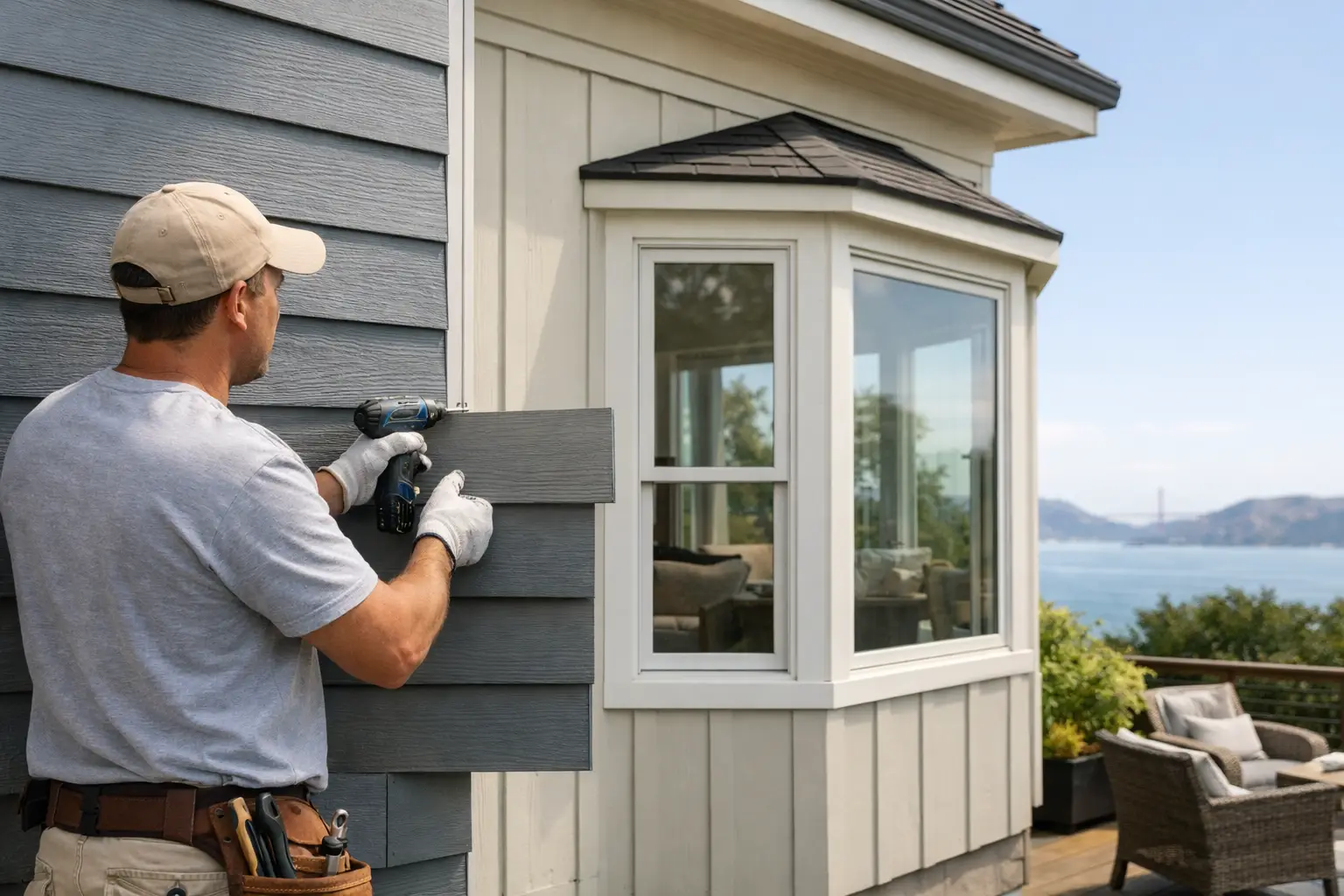
A siding replacement should make homeownership easier, not create another weekend chore. For Bay Area properties dealing with coastal fog, seasonal rain, strong sun, and temperature changes, the best low maintenance siding options are materials that resist moisture, hold their appearance, and protect the structure with limited ongoing work.
The right choice is not always the material that needs the least attention on paper. Your home’s design, exposure to weather, existing wall condition, and long-term plans all matter. A well-installed siding system with proper flashing, trim, and moisture management will usually outperform a premium material installed carelessly.
What Low-Maintenance Siding Really Means
Low maintenance does not mean no maintenance. Every exterior benefits from occasional washing, visual inspections, and prompt repairs when damage appears. The difference is how often the material needs painting, sealing, scraping, caulking, or board-by-board replacement.
For most homeowners, low-maintenance siding should do four things well: resist water intrusion, stand up to sun exposure, discourage pests, and keep its color or finish without frequent repainting. It should also be practical to repair if a delivery truck, fallen branch, or plumbing leak damages one section of the wall.
In the Bay Area, moisture control deserves special attention. Wind-driven rain and marine air can expose weak seams, failed caulk, and poor flashing. Before selecting a new exterior finish, address any dry rot, damaged sheathing, or drainage issue behind the existing siding. New panels cannot solve a problem that starts inside the wall.
The Best Low Maintenance Siding Options Compared
Fiber Cement: A Strong All-Around Choice
Fiber cement is often one of the best choices for homeowners who want a durable exterior with a traditional painted-siding appearance. It can be made to resemble lap boards, shingles, panels, or trim, giving it flexibility across Craftsman, Victorian, contemporary, and ranch-style homes.
Its main strengths are resistance to rot, insects, and fire exposure. It also handles damp conditions far better than untreated wood. Factory-finished fiber cement can reduce the need for early repainting, though painted surfaces will eventually need maintenance as the coating ages.
The trade-off is installation. Fiber cement is heavy and requires careful cutting, fastening, clearances, and flashing details. Improper installation can lead to cracked boards, moisture intrusion, or premature finish problems. It is a contractor-level job, especially when wall repair or replacement of trim and weather barriers is involved.
Vinyl Siding: Simple Upkeep and Practical Value
Vinyl siding remains a popular low-upkeep option because it does not need regular painting. Routine care is usually limited to a gentle wash to remove dust, pollen, and mildew. It is also available in a wide range of colors and profiles.
For a straightforward exterior update, vinyl can be a practical fit. It works best when the siding system is installed over properly prepared walls with appropriate flashing and moisture protection. Quality and installation details matter because thinner products may be more vulnerable to impact damage, waviness, and fading over time.
Vinyl is not ideal for every property. Some homeowners prefer the look and texture of painted wood or fiber cement, particularly on older Bay Area homes with detailed trim. It can also expand and contract with changing temperatures, so panels must be installed correctly to move as designed.
Engineered Wood: The Wood Look With Less Work
Engineered wood siding gives homeowners a warmer, more natural look than vinyl while requiring less maintenance than traditional wood siding. It is manufactured from wood-based materials with protective treatments and coatings designed to improve moisture and pest resistance.
This option can be attractive for homeowners who like the proportions and character of wood lap siding but do not want the frequent scraping, priming, and repainting associated with older wood exteriors. It is also generally easier to cut and install than fiber cement.
The key consideration is keeping water out. Engineered wood products rely on correct installation details, including proper ground clearance, flashing, sealed cuts, and protected joints. If water repeatedly reaches exposed edges or trim transitions, damage can develop. Choose an experienced installer and keep gutters, roof drainage, and landscaping from directing water toward the walls.
Metal Siding: Durable, Modern, and Weather Resistant
Metal siding, including aluminum and steel panel systems, is a strong option for modern homes, commercial properties, accessory structures, and homeowners who want a crisp architectural finish. It resists insects and rot, and a quality factory coating can provide long-lasting color with little routine care.
Metal performs especially well when installed as part of a complete rainscreen or panel system that manages water behind the cladding. It is also lightweight compared with fiber cement and can be a smart choice for clean-lined contemporary designs.
Its appearance is more distinctive than traditional lap siding, which may not suit every neighborhood or architectural style. Dents are possible, especially on thinner panels, and coastal locations should use products and fasteners appropriate for marine conditions. Professional detailing around windows, doors, corners, and penetrations is essential.
Brick and Stone Veneer: Very Durable, but Not Maintenance-Free
Brick and manufactured stone veneer can provide a long-lasting exterior accent with minimal finish maintenance. Unlike painted siding, these materials do not require regular repainting, and they offer a substantial appearance that works well around entries, lower walls, chimneys, and feature areas.
They are usually better used as part of a mixed-material exterior than as the only cladding on every wall. Veneer installation requires proper support, drainage, flashing, and transitions to other exterior materials. Mortar, sealants, and drainage paths still need periodic inspection.
For homeowners focused on a full siding replacement, brick or stone veneer often works best as a durable complement to fiber cement, engineered wood, or metal rather than a direct substitute for them.
How to Choose the Right Material for Your Property
Start with your priorities. If you want a classic painted finish with high durability, fiber cement is often the leading candidate. If avoiding repainting is your top concern, vinyl or metal may make more sense. If your home needs a wood-like appearance without the upkeep of natural wood, engineered wood is worth considering.
Next, look closely at the house itself. Older homes may have hidden dry rot around windows, rooflines, decks, and exterior doors. Homes near the coast may need extra attention to corrosion-resistant hardware and rain management. Properties with dense landscaping need clear space between plants and siding so moisture does not stay trapped against the walls.
Architectural compatibility also matters. A material can perform well and still look out of place if the profile, trim scale, and color are wrong for the home. Good siding design includes the full exterior system: fascia, soffits, corner boards, window trim, flashing, caulk joints, and paint or factory finish.
Installation Details Matter More Than Many Homeowners Expect
Siding is the visible layer of a wall assembly, but the protection happens behind it. During a replacement project, a qualified contractor should assess the condition of the sheathing, weather-resistant barrier, flashing, and areas where water commonly enters.
Pay particular attention to window and door openings, deck connections, roof-to-wall intersections, pipe penetrations, and bottom edges near grade. These are frequent failure points. If rot is found, repair it before the new cladding goes on. Covering damaged wood may make the exterior look better temporarily while allowing structural deterioration to continue.
Proper ventilation and drainage can be just as valuable as the siding material itself. In many applications, a small drainage space behind the cladding helps moisture escape and allows the wall to dry. The right approach depends on the material, home design, and local conditions.
Keep Any Siding System Performing Well
Even the most durable exterior needs basic care. A quick check once or twice a year can catch small issues before they turn into expensive wall repairs. Focus on these areas:
- Look for cracked panels, loose trim, open seams, or damaged caulk around windows and doors.
- Keep gutters and downspouts clear so roof runoff does not overflow onto siding.
- Trim shrubs and vines back from exterior walls to improve airflow and prevent trapped moisture.
- Wash away dirt, mildew, and salt residue using the cleaning method recommended for the material.
Avoid blasting siding with a high-pressure washer unless the manufacturer specifically permits it and the operator knows how to use it safely. High pressure can drive water behind panels, damage finishes, and loosen caulk.
A Better Siding Project Starts With an Honest Assessment
The best material is the one that fits your home, your maintenance expectations, and the condition of the walls underneath. A low-maintenance finish cannot compensate for failing flashing, hidden rot, or poor drainage, but a properly planned replacement can address those concerns at the same time.
For Bay Area homeowners, landlords, and property managers, Fullhouse Remodeling & Handyman Services can assess exterior damage, repair dry rot, and complete siding replacement with the practical details that protect the property long after the work is finished. Choose a system you will be comfortable maintaining, then make sure it is installed with the care your home deserves.
