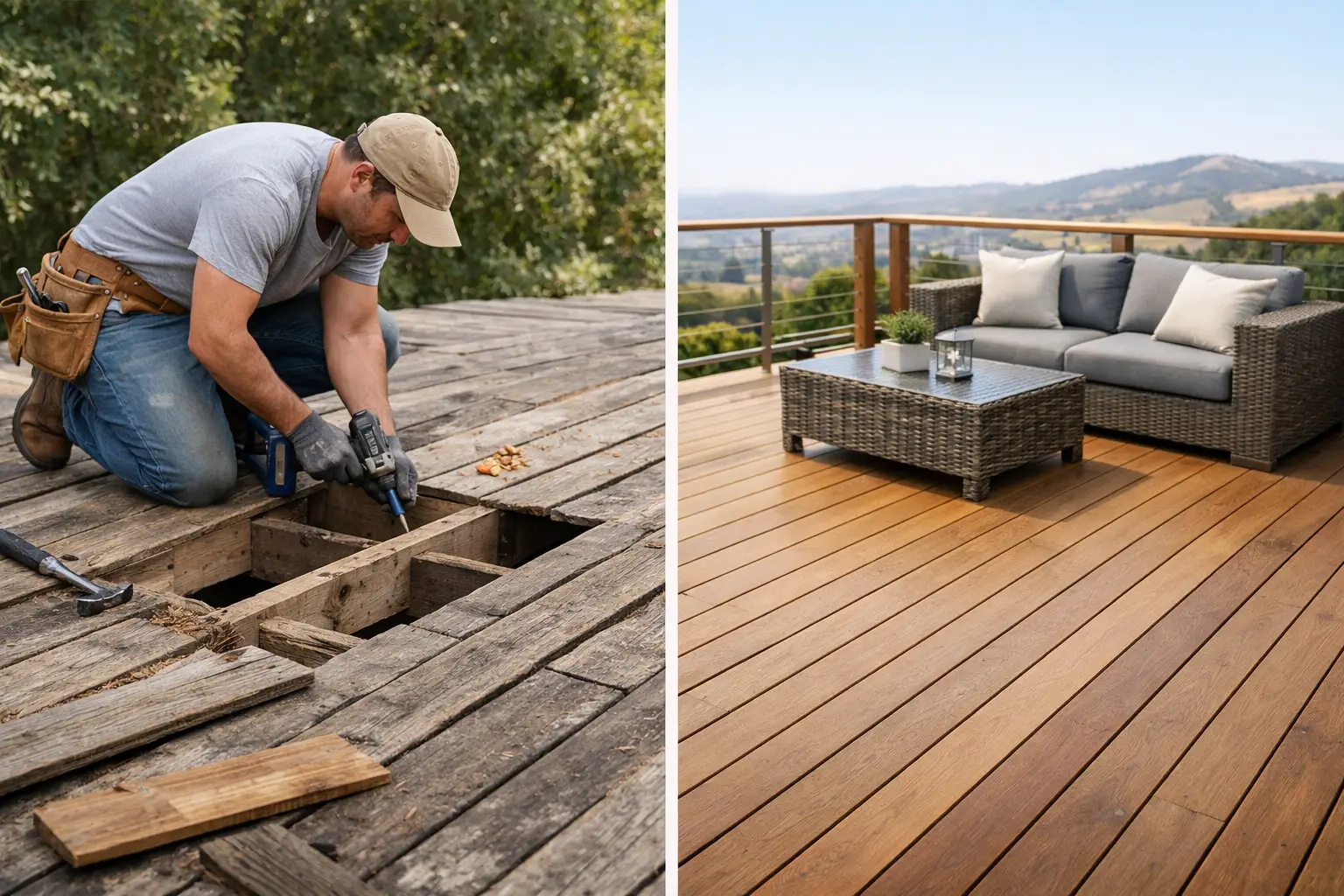
A deck can look worn out long before it is unsafe – and, just as often, a deck can look acceptable while hidden decay is weakening the framing underneath. That is why the deck repair vs replacement decision should start with a close assessment of the structure, not just the surface boards. Replacing a few cracked boards may restore appearance and function. But when moisture damage has reached the joists, posts, ledger board, or footings, a repair-first approach can become an expensive short-term fix.
For Bay Area homeowners, landlords, and property managers, the right choice comes down to safety, the extent of deterioration, the deck’s age and construction, and what you need from the space in the years ahead. A qualified contractor can identify the real condition of the deck and give you a straightforward scope before work begins.
Deck Repair vs Replacement: Start With Safety
A deck is a structural element of the home, not simply an outdoor finish. It carries people, furniture, grills, planters, and sometimes heavy traffic from gatherings or tenants. The most serious problems are often at the points that support the deck and connect it to the house.
Pay close attention to a deck that feels bouncy, slopes noticeably, shifts underfoot, or has railings that move when you lean on them. Soft spots, loose fasteners, widespread splitting, and wood that crumbles when pressed with a screwdriver can also point to dry rot. These are not cosmetic concerns. They can indicate that the deck no longer has dependable load-bearing capacity.
Four warning signs usually call for a professional inspection before any cosmetic work is planned:
- Posts, beams, or joists show rot, insect damage, major cracks, or visible sagging.
- The ledger board where the deck meets the home is loose, deteriorated, or showing water intrusion.
- Railings, stairs, or guards are unstable, too low, or no longer securely attached.
- Damage appears across multiple structural components rather than in a few isolated boards.
If an inspection finds a localized issue, repair may be the practical answer. If the support system has widespread decay or was built with poor connections, replacement is generally the safer long-term choice.
When Deck Repair Is the Smart Investment
Repair makes sense when the deck has a sound frame, stable footings, and secure connections to the house. In that situation, the project can focus on the parts exposed to the most wear: deck boards, handrails, stair treads, trim, flashing, or a small section of damaged framing.
For example, a deck with several weathered boards near a planter or a stair landing may only need those boards removed and replaced. A loose railing can often be rebuilt with proper blocking and fastening. Peeling finish, surface splintering, and faded color may call for cleaning, preparation, and refinishing rather than a full rebuild.
Repair is also a sensible route when the deck is relatively new and the damage has a clear, contained cause. A leaking planter, poor drainage in one area, or a damaged board from moving furniture does not automatically mean the entire deck has failed.
The key is to avoid repairing only what is visible. If the source of moisture remains – such as failed flashing, standing water, or soil in contact with wood – the same problem can return. A good repair addresses the damaged material and the condition that caused it.
Repairs That Often Deliver Good Value
Replacing a limited number of deck boards, reinforcing a railing, repairing stairs, correcting minor framing damage, and installing proper flashing are commonly worthwhile when the main structure remains sound. These improvements can extend the useful life of a deck while keeping the project focused and manageable.
Matching new boards to old ones can be difficult, especially when existing lumber has weathered for years. That does not make repair a bad decision, but it is worth considering if appearance is a priority. In some cases, replacing all surface boards while retaining a sound frame gives the deck a cleaner, more consistent finish without requiring a full structural rebuild.
When Replacement Is the Better Decision
Replacement becomes the stronger option when repairs would be scattered across much of the deck or when structural problems affect the areas that keep it standing. Replacing boards on top of compromised joists is not a solution. Covering up rot can create a false sense of security and make later repairs more difficult.
A full replacement is often recommended when a deck has extensive dry rot, recurring water damage, undersized or deteriorated support members, failing footings, or an unreliable connection to the home. It may also be the right choice when the deck has reached the end of its service life and needs frequent repairs every year or two.
Replacement is an opportunity to correct old construction details that may not meet current expectations for safety and durability. That can include stronger railing systems, better stair design, improved drainage, proper hardware, upgraded flashing, and materials that suit the home’s maintenance needs. If you have been putting off changes to the deck’s size, layout, access, or function, rebuilding can be more efficient than making repeated modifications to an aging structure.
For rental properties and commercial spaces, replacement may also provide more predictable maintenance and reduce the disruption of ongoing patchwork repairs. A stable, professionally built deck protects occupants and helps property owners plan ahead instead of responding to the next failure.
Look Beyond the Surface Boards
Deck boards receive the most attention because they are easy to see. The frame below is what determines whether repair is truly viable. During an evaluation, the contractor should look at the ledger board, flashing, joists, beams, posts, post bases, footings, connectors, stair framing, and railings.
Moisture is especially relevant in coastal and fog-prone Bay Area communities. Wet winters, shaded yards, poor airflow, and vegetation pressed against the deck can keep wood damp long enough for decay to develop. Even a deck that is regularly stained can have hidden damage if water is reaching the framing through gaps, failed flashing, or connections near the home.
Older decks can present another issue: construction methods and safety expectations change over time. A deck may have served a household for years yet still need upgrades to its connections, railings, or stairs. That does not mean replacement is always required, but it does mean the decision should be based on an inspection rather than a visual guess.
Consider the Cost of Repeating Repairs
The lowest immediate cost is not always the best value. A small, targeted repair is efficient when it solves a limited problem. But if you are replacing boards in several areas, reinforcing multiple railings, repairing rot around posts, and scheduling another round of work next season, those separate repairs can begin to approach the cost and inconvenience of replacement.
Think about your planned ownership timeline as well. If you expect to stay in the home for many years, a rebuilt deck designed for your household may be worth the larger initial investment. If you are preparing a property for sale, a focused repair may be appropriate when it resolves documented safety concerns and improves the deck’s presentation. For landlords, the priority should be a safe, durable solution that limits repeated maintenance calls.
Material selection matters, too. Natural wood offers a classic look and can be repaired board by board, but it requires ongoing protection from moisture and sun. Other decking materials may reduce routine maintenance but can require different framing, fastening, and detailing. The best choice depends on the existing structure, exposure to weather, desired appearance, and how much maintenance you want to take on.
A Clear Process Prevents the Wrong Call
Before approving deck work, ask for a clear explanation of what is damaged, what can be safely retained, and what must be replaced. Photos of concealed or hard-to-see areas can be useful, particularly for posts, framing, and the connection at the house. The scope should distinguish cosmetic improvements from structural corrections so you know exactly what the project is solving.
Do not assume a new coat of stain or a few new boards will address a structural concern. Likewise, do not assume every aged deck needs to be torn down. The right recommendation should be proportional to the condition of the deck and backed by visible evidence.
If your deck has soft areas, unstable railings, suspected dry rot, or recurring water damage, it is wise to schedule an assessment before the problem spreads. Fullhouse Remodeling & Handyman Services can help Bay Area property owners identify whether a focused repair will restore the deck or whether replacement is the safer path – with workmanship that supports the way you use your property.
