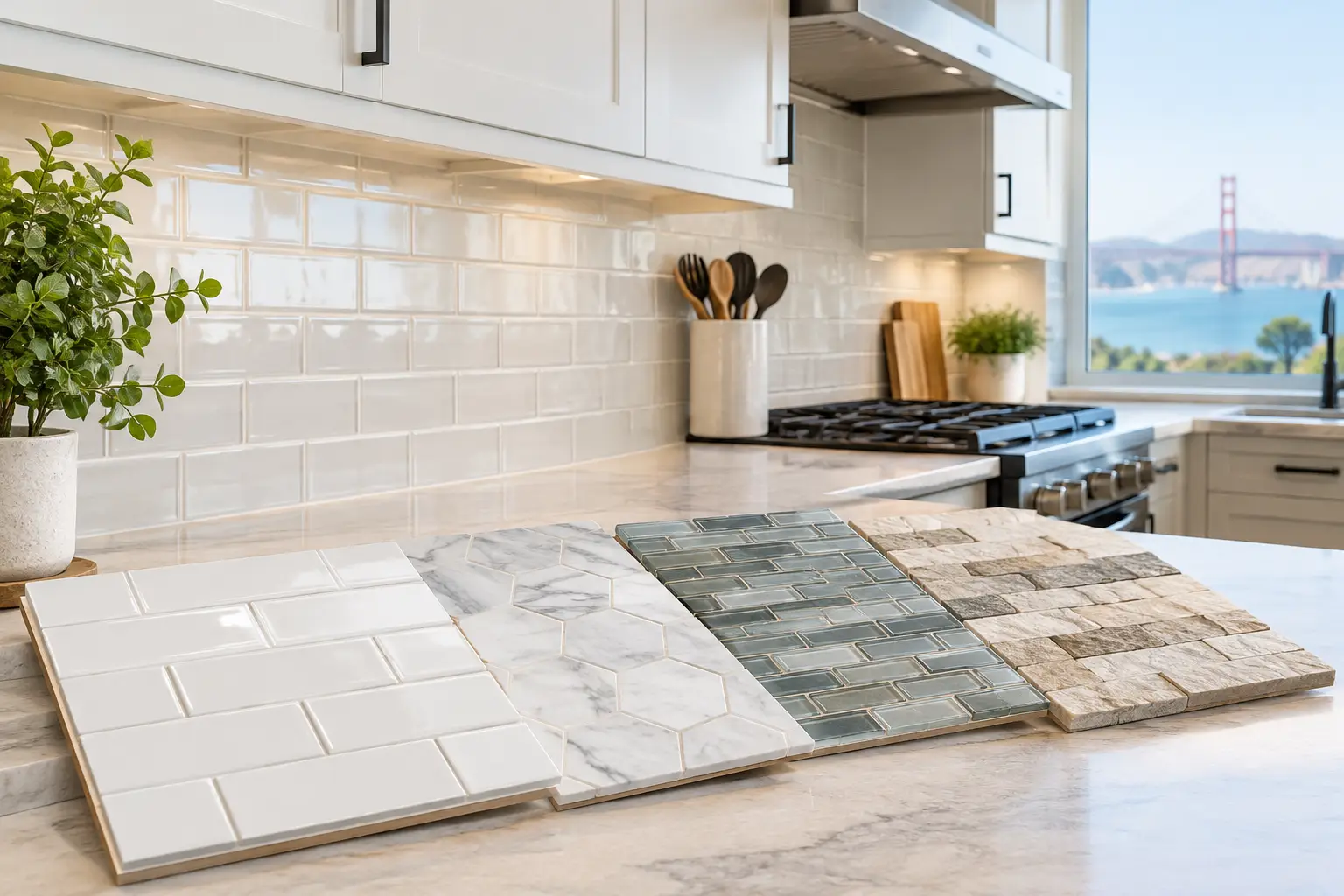
A backsplash has a demanding job in a Bay Area kitchen. It needs to handle cooking splatter, steam, daily cleanup, and the visual pressure of sitting between your countertops and cabinets. The best kitchen backsplash materials are not simply the ones that look good in a showroom. They are the ones that suit how you cook, how much maintenance you want, and the character of the rest of your remodel.
For a busy household, easy cleaning may matter more than a dramatic pattern. For a rental property, durability and repairability may take priority. For a full kitchen renovation, the backsplash can be the detail that makes standard cabinetry and countertops feel intentionally designed. The right choice comes from balancing those real-world needs before tile installation begins.
How to Choose the Best Kitchen Backsplash Materials
Start with the countertop, not the tile sample. A backsplash should either provide a calm visual backdrop or create a deliberate contrast. When countertops have strong veining, movement, or a bold color, a quieter backsplash often keeps the room from feeling crowded. With simple quartz or solid-color counters, you have more room for texture, pattern, or color on the wall.
Next, consider the maintenance commitment. Smooth, nonporous surfaces are generally the easiest to wipe down near a range. Natural stone, handmade tile, and deeply textured finishes can be beautiful, but they may require more careful cleaning or periodic sealing. Grout also deserves attention. A light grout line can look crisp, but it may show cooking residue more quickly than a medium or darker tone.
Installation conditions matter as much as material selection. Walls must be flat, sound, and properly prepared before tile goes up. Old drywall damage, loose wall surfaces, uneven outlet boxes, and poor previous tile work can affect the finished result. A professional installer can address those issues before they become visible through uneven spacing, lippage, or cracked grout.
Ceramic Tile: The Reliable All-Around Choice
Ceramic tile remains one of the most practical backsplash options for many homes. It is widely available in different sizes, colors, shapes, and finishes, so it works in kitchens ranging from clean contemporary spaces to traditional homes. Glazed ceramic has a protective surface that resists stains and makes routine cleanup straightforward.
Classic subway tile is popular because it is affordable-looking only when it is installed carelessly. With the right layout, grout color, trim details, and clean cuts around outlets, it can feel polished and timeless. Larger ceramic formats reduce grout lines, while vertical stacking, herringbone, or a contrasting border can give a familiar tile a more custom look.
Ceramic is a sensible choice for homeowners who want a good balance of durability, design flexibility, and manageable upkeep. The main trade-off is that some lower-grade tiles can vary in size or have uneven edges. Careful layout and proper spacing are what keep the finish looking intentional.
Porcelain Tile: Stronger Performance, More Design Options
Porcelain is denser than standard ceramic and is especially useful when homeowners want the appearance of stone, concrete, wood, or decorative handmade tile with lower maintenance. Its printed and textured finishes have improved significantly, offering realistic looks without the sealing requirements of many natural materials.
For a kitchen backsplash, porcelain’s toughness may be more than the wall technically requires, but its low absorption and durability offer reassurance in hardworking kitchens. Large-format porcelain can create a sleek, nearly continuous surface with minimal grout. It also works well when you want a backsplash that coordinates closely with porcelain floor tile elsewhere in the home.
The installation is less forgiving than it may appear. Large tiles need a very flat wall, accurate cuts, and careful handling around cabinets and outlets. The clean, modern result depends on preparation as much as the tile itself.
Glass Tile: Bright, Clean, and Reflective
Glass tile is a strong option for kitchens that need more light or visual lift. Its reflective surface can brighten a compact kitchen, especially in homes where natural light is limited. Glass comes in glossy subway shapes, mosaics, soft translucent finishes, and more contemporary large panels.
Because glass is nonporous, it is easy to clean after everyday cooking. It also holds color well, which makes it useful for homeowners who want a blue, green, or other distinctive backsplash color without committing to painted cabinetry.
The trade-off is installation sensitivity. Glass can show adhesive ridges, inconsistent coverage, or improper cuts more readily than ceramic tile. Some glass products require specific setting materials, and overly aggressive cleaning products can affect grout or surrounding finishes. When installed correctly, however, glass gives a kitchen a clean finish that stays bright with simple maintenance.
Natural Stone: Warmth With Added Care
Marble, travertine, slate, and other natural stone materials bring variation that manufactured products cannot fully duplicate. Every piece has differences in veining, mineral color, and texture, giving the backsplash a warmer and more distinctive appearance. Stone often fits beautifully in traditional, transitional, Mediterranean, and high-end custom kitchens.
That character comes with responsibility. Many stone tiles are porous and need sealing to reduce staining and moisture absorption. Acidic foods and harsh cleaners can etch or discolor certain materials, particularly marble. A stone backsplash behind a range can still be a good decision, but it is best for homeowners who accept patina as part of the material rather than expecting a uniform, unchanged surface forever.
A honed finish can be more forgiving than a highly polished one because it softens the visibility of minor marks. If low maintenance is your top priority, porcelain that resembles natural stone may deliver a similar look with fewer long-term concerns.
Quartz and Solid-Surface Slabs: Minimal Grout, Maximum Continuity
Using the same quartz or solid-surface material from the countertop as the backsplash creates a cohesive, streamlined kitchen. It is especially effective in modern layouts, small kitchens, and spaces with heavily veined counters where a separate tile pattern could compete with the slab.
The major advantage is cleanup. With few or no grout joints, grease and food splatter have fewer places to collect. A full-height slab backsplash also creates a strong visual connection between the counter and upper cabinets, or between the counter and a painted wall when there are no upper cabinets.
This option requires precise measuring, fabrication, and installation. Openings for outlets, switches, and fixtures must be accurately cut, and the wall needs to be ready before the slab arrives. It can also be less practical to repair than individual tile if damage occurs. Still, for homeowners who want a refined, low-maintenance finish, it is one of the most effective options available.
Stainless Steel: Practical for Serious Cooks
Stainless steel backsplashes are not limited to commercial-style kitchens. A simple stainless panel behind the range can be a smart, hardworking feature in a residential kitchen, especially for people who cook often with oil, sauces, and high heat. It is heat-resistant, sanitary, and quick to wipe clean.
The look works best when it relates to other finishes in the room, such as stainless appliances, brushed hardware, or modern cabinetry. Fingerprints and water spots can show on some finishes, so it may need regular wiping to stay pristine. For the cooking zone specifically, though, stainless steel offers performance that decorative materials cannot always match.
Mosaic Tile: Detail Without Covering the Whole Kitchen
Mosaic tile offers color, texture, and visual interest in a compact format. It can be used across an entire backsplash, but it is often most successful as a focal point behind the range or at a beverage station. Small pieces can wrap around curves and fit detailed areas easily, which makes mosaics useful in kitchens with unusual wall conditions.
The downside is grout. More tile pieces mean more grout joints, and more grout means more surface area to clean. Choose a quality grout and a color that suits how the kitchen will actually be used. A white mosaic with bright-white grout can look sharp at installation, but it may not be the most practical choice for a household that cooks every day.
Make the Final Choice With the Whole Kitchen in Mind
The best backsplash is not always the trendiest one. A glossy ceramic subway tile may be the right answer for a rental refresh, while a full-height quartz slab may make more sense for a long-term kitchen remodel. If the kitchen already has patterned flooring, dramatic counters, or detailed cabinet doors, a simple backsplash can bring the entire room into balance.
Before committing, view samples vertically in your actual kitchen and check them at different times of day. Compare them next to cabinet paint, countertop samples, and hardware rather than evaluating each finish alone. In San Francisco Bay Area homes, where kitchens often combine older architecture with updated finishes, this step helps prevent a material from feeling out of place once installation is complete.
A properly installed backsplash should look clean at every edge: along the countertop, under cabinets, around outlets, and at transitions to painted walls. Choose the material that fits your daily routine, then give the installation the same level of attention. That is how a backsplash becomes a durable part of the kitchen, not just a decorative afterthought.
