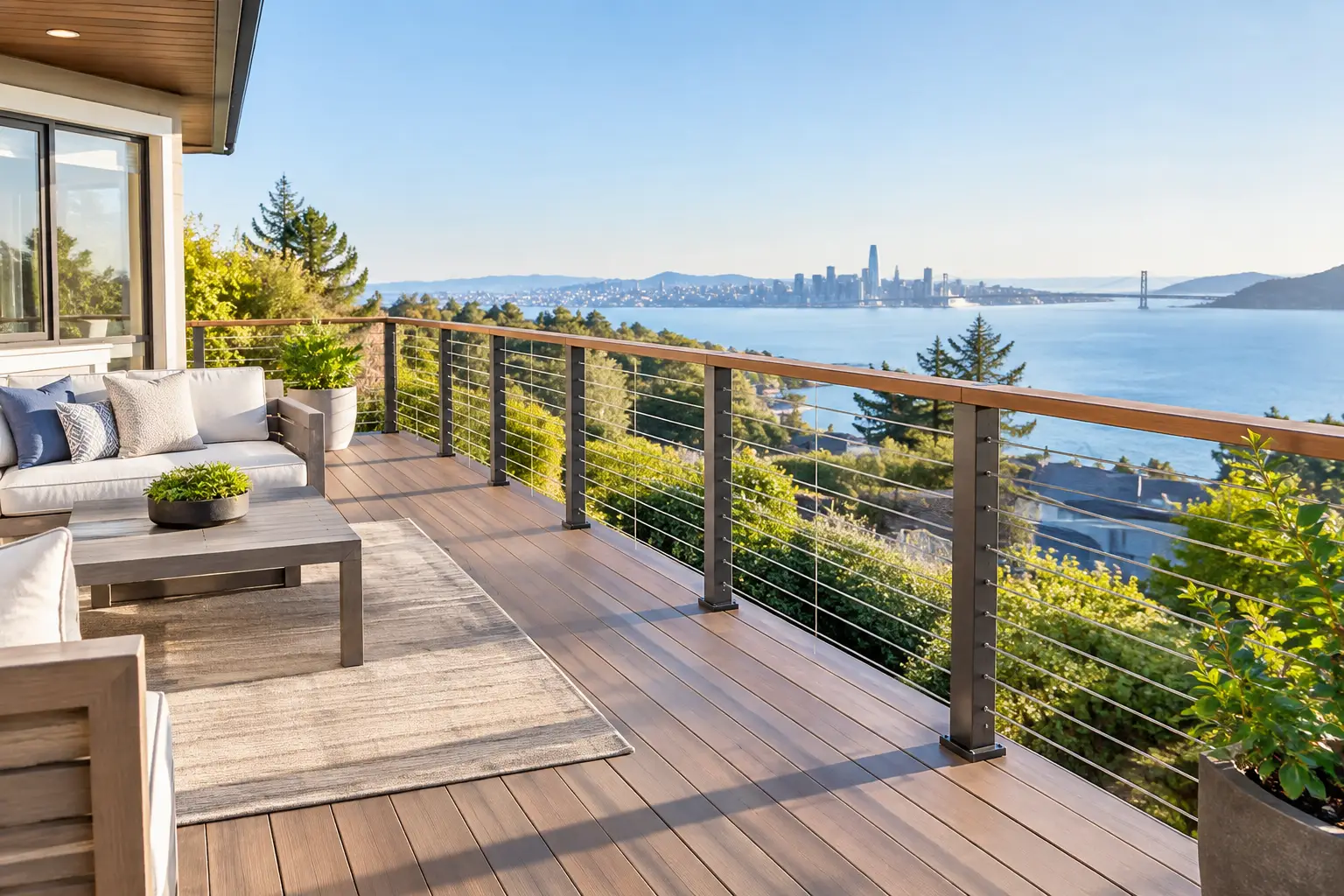
A deck railing does more than prevent a fall. It frames the view from your home, affects how open the deck feels, and can make an older outdoor space look newly finished. The best deck railing ideas balance appearance with safety, maintenance, privacy, and the conditions your home faces – from coastal moisture and fog to strong sun and hillside views.
For Bay Area homeowners, the right choice is rarely just the trendiest material. A beautiful railing that needs constant refinishing or blocks the view you paid for may not be the right fit. Start with how you use the deck, then choose a system that works with your home’s architecture and local building requirements.
1. Horizontal Cable Railings for Open Views
Cable railings use slim stainless-steel cables stretched between metal or wood posts. They are a strong choice for decks overlooking a yard, greenbelt, water, or city view because the lines disappear from a distance.
This style works especially well with contemporary homes, but it can also update a traditional wood deck without making it feel overly modern. The trade-off is tension and maintenance. Cables must be correctly spaced and tensioned so they remain safe and do not sag over time. In coastal or damp locations, marine-grade hardware is worth considering for better corrosion resistance.
2. Glass Panels for a Clean, Uninterrupted Look
Glass deck railings give you the clearest possible sightline while providing a substantial barrier around an elevated deck. Framed glass systems feel more defined, while frameless systems create a lighter, more architectural effect.
Glass is ideal when the view is the main feature, but it does show fingerprints, water spots, and pollen. Homeowners with children, dogs, or a deck near trees should expect regular cleaning. Professional installation matters because the panels, posts, and fasteners must be engineered and secured correctly for the deck structure.
3. Metal Picket Railings for Lasting Performance
Powder-coated aluminum or steel picket railings are a practical option for homeowners who want a crisp look with less upkeep than painted wood. Vertical pickets suit many home styles, from craftsman and colonial exteriors to more modern renovations.
Aluminum is lightweight and resistant to rust, making it a dependable choice in damp microclimates. Steel can deliver a heavier, more custom appearance, though it needs the right protective finish. Black is a popular color because it visually recedes and keeps the focus on the yard or landscape, but bronze, gray, and white can better match certain exterior palettes.
4. Wood Railings That Match the Deck
A wood railing creates a warm, cohesive finish when paired with a natural wood deck. Cedar and redwood are familiar choices for their natural resistance to moisture and insects, while pressure-treated lumber can be a cost-conscious structural material when properly finished.
The main decision is whether you want the railing to blend in or become a design feature. A simple wood top rail with square balusters feels classic. Wider posts, cap details, or a contrasting stain can make the railing more substantial. Wood requires ongoing care, including inspection for loose connections, checking for rot, and periodic sealing or staining. That maintenance is manageable, but it should be part of the plan from day one.
5. Mixed-Material Railings for a Custom Finish
Many of the best deck railing ideas combine materials rather than relying on one. Wood posts with black metal balusters offer warmth and definition. A metal frame with a wood handrail feels modern without looking cold. Cable infill inside stained wood framing keeps the deck connected to its natural surroundings.
Mixed materials can help a railing match both the house and the deck. For example, a home with black window frames may benefit from metal details, while a cedar-sided home may need a wood top rail to maintain visual balance. The key is avoiding too many competing finishes. Choose one dominant material and use the second material as an accent.
6. Privacy Screens Where Neighbors Are Close
An open railing is not always the best answer. In dense neighborhoods, a partial privacy screen can make a deck more comfortable without enclosing it completely. Vertical wood slats, horizontal boards with spacing, decorative metal panels, or frosted glass can block direct sightlines from an adjacent property.
Place privacy features where they solve a real problem, such as near a dining area, hot tub, or seating zone. Covering every side of the deck can make the space feel boxed in and may reduce airflow. A well-positioned screen often provides the privacy you need while preserving sunlight and views elsewhere.
7. Horizontal Wood Slats for a Modern Profile
Horizontal slat railings have a clean, contemporary appearance and can double as a privacy element. They are often built with narrow gaps between boards, allowing light and air through while making the deck feel more enclosed.
This approach needs careful planning. Gaps, rail height, climbability, and structural attachment all matter under current safety rules. A design that looks simple in a photo may not be appropriate for a raised deck or a home with young children. A qualified contractor can adapt the look to meet code rather than treating the railing as a purely decorative project.
8. Hog Wire Panels for a Relaxed, Modern-Rustic Style
Hog wire, also called welded wire mesh, is a useful infill material for homeowners who want more openness than traditional balusters offer. It pairs naturally with wood posts and rails and works well on garden-facing decks, cabins, and modern-rustic homes.
The pattern is more visible than cable, but it has a casual character that cable railing does not. Use a strong frame and make sure the mesh is installed tightly. As with any railing design, mesh opening size and placement must support safety requirements, particularly on elevated decks.
9. Composite Railings for Low-Maintenance Decks
If your deck is made from composite boards, a matching composite railing can create a polished, unified appearance. These systems are available in traditional white, darker tones, and combinations with metal balusters.
Composite railings avoid many of the repainting and sealing demands of wood, although they still need occasional washing. They can be a smart fit for busy homeowners, rental properties, and decks exposed to heavy sun or regular moisture. The limitation is that composite systems may not offer the same custom flexibility as site-built wood or metal railings.
10. Bench Railings for Small Decks
On a compact deck, built-in perimeter seating can make the space feel more useful. A bench integrated with the railing creates a natural edge for entertaining and can reduce the need for extra outdoor furniture.
This design must be planned carefully because a bench can affect the required guard height and can create a climbable surface. It is not a detail to add casually after the railing is built. When designed as part of the full deck layout, it can be both functional and attractive.
11. Wide Top Rails for Everyday Use
A wide, flat top rail is one of the simplest upgrades you can make. It provides a convenient place to set a drink, rest a hand, or display small planters during a gathering. Wood top rails are especially comfortable and can soften the appearance of metal or cable infill.
This feature is practical, but drainage and finish matter. Flat surfaces collect water, leaves, and debris, so the material should be durable and maintained. On exposed decks, a slightly sloped or well-detailed cap can reduce standing water and extend the life of the assembly.
12. Built-In Lighting for Safer Evenings
Low-voltage post-cap lights, under-rail lighting, and stair lights improve the look of a deck after sunset while helping guests see edges and steps. Warm lighting usually feels more inviting than harsh bright fixtures, especially around a dining or lounge area.
Lighting should be designed around how the deck is used. Stair illumination is a safety priority, while post-cap lights are more decorative. Electrical connections, weather exposure, and fixture placement should be handled correctly so the lighting remains reliable through changing seasons.
Choosing the Right Deck Railing Design
Before committing to a railing, consider the deck height, the condition of the existing framing, your desired level of privacy, and the amount of maintenance you are willing to take on. Building code requirements for guard height, baluster spacing, stair railings, and load resistance are not optional details. They shape what can be built safely.
If you are replacing an old railing, inspect the ledger, posts, deck boards, stairs, and connections at the same time. Rot, loose fasteners, or undersized framing can turn a cosmetic upgrade into a larger repair. Addressing those issues before the new railing goes in protects the investment and avoids redoing finished work later.
A well-built railing should feel solid in your hand, look intentional from inside the home, and fit the way you actually use your outdoor space. Whether you prefer nearly invisible glass, durable metal, natural wood, or a custom combination, the right installation makes the deck safer and more enjoyable every day.
