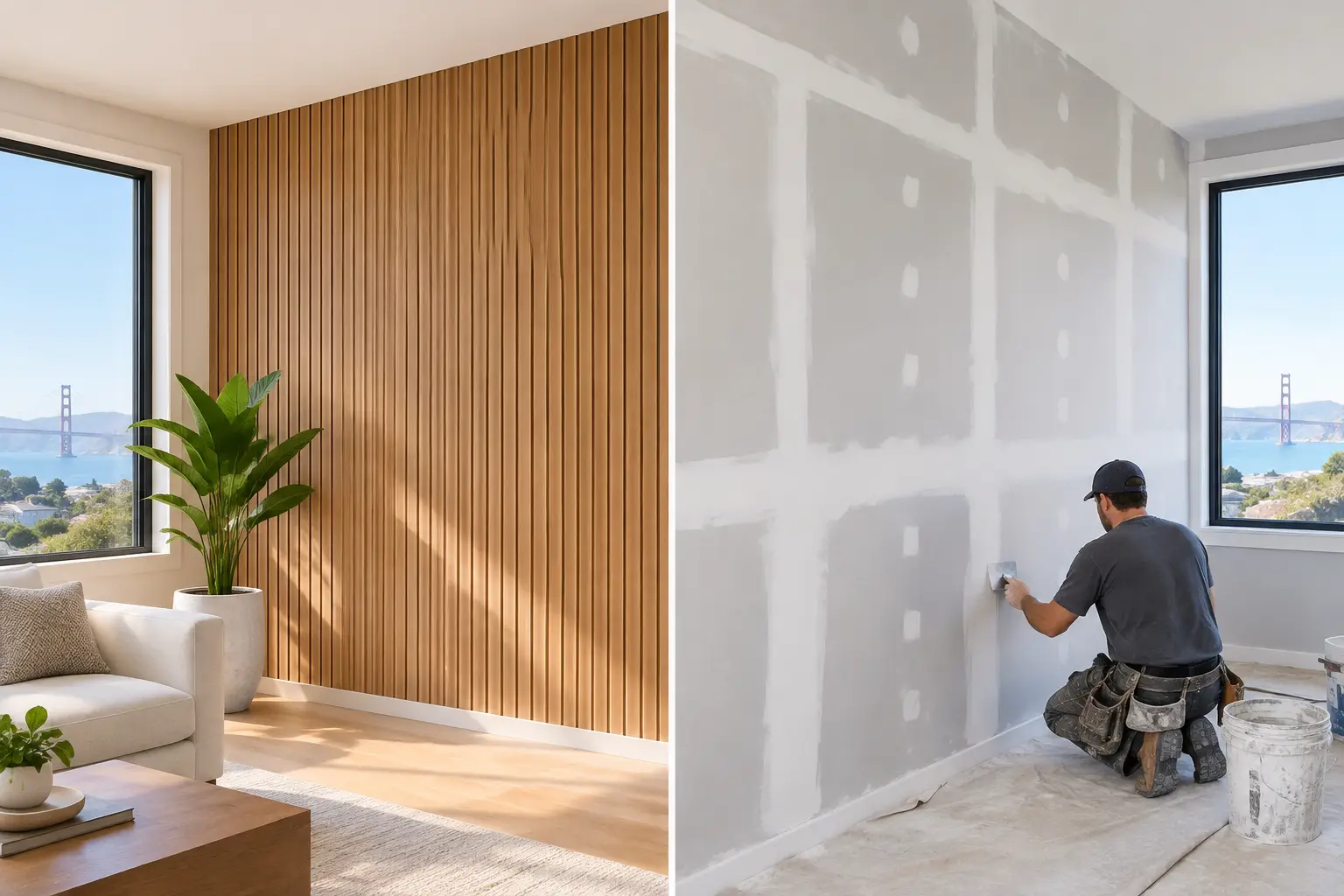
A damaged wall, dated texture, or moisture-prone bathroom can turn a simple finish decision into a bigger remodeling question. When comparing wall panels vs drywall, the right choice depends on the room, the condition of the existing walls, how much maintenance you are willing to take on, and the look you want when the work is complete.
Drywall remains the standard wall finish in most Bay Area homes for good reasons: it is versatile, repairable, and easy to blend into nearly any interior design. Wall panels can be a smart alternative where speed, visual impact, or moisture resistance matters more. Neither is automatically better. The best material is the one that fits the space and is installed correctly.
Wall Panels vs Drywall: The Core Differences
Drywall is made from a gypsum core wrapped in paper facing. It is installed in large sheets, fastened to studs or framing, then taped, finished, sanded, primed, and painted. Once completed well, it creates the smooth, continuous walls most homeowners expect.
Wall panels are prefabricated materials installed over framing or an existing wall surface. They come in many forms, including wood paneling, decorative MDF panels, PVC panels, beadboard, shiplap-style boards, laminate panels, and tile-backed systems. Their performance varies widely by material, so “wall panel” is not one single product category.
The biggest practical difference is the finish process. Drywall requires several stages of wet finishing and drying time before paint. Many panels arrive with a finished surface, which can reduce painting and sanding. That can make panels appealing for focused upgrades, but it does not eliminate the need for careful measurement, straight layout, sound backing, and clean trim work.
Where drywall works best
Drywall is a strong choice for living rooms, bedrooms, hallways, ceilings, offices, and larger open areas where you want a clean, understated surface. It gives homeowners maximum flexibility to change paint colors, hang artwork, or update the room’s style later without replacing the wall finish.
It is also the practical choice when walls need to be rebuilt, leveled, or repaired after plumbing work, electrical upgrades, water damage, or dry rot remediation. A contractor can open the affected area, address the issue behind the wall, install new drywall, and finish the repair so it blends with the surrounding surface.
Drywall does have limits. Standard drywall is vulnerable to moisture, and its paper facing can deteriorate after leaks or repeated humidity exposure. Moisture-resistant drywall can help in appropriate locations, but it is not a substitute for fixing a leak, improving ventilation, or using a properly waterproofed shower system.
Where wall panels make sense
Wall panels are often chosen for bathrooms, laundry rooms, mudrooms, entryways, accent walls, home offices, and commercial spaces where a durable finished surface is useful. Certain panel materials handle splashes, humidity, and everyday cleaning better than painted drywall. PVC and other nonporous panel systems, for example, can be a practical option in areas that need frequent wipe-downs.
Panels also create a more intentional design feature. Wood slats can add warmth to a modern room. Beadboard can give a powder room or hallway a classic look. Decorative panels can make a plain reception area, dining nook, or fireplace wall feel finished without covering every wall in the room.
The trade-off is that panels can be more style-specific. A bold panel profile may look great now but feel dated later, while drywall offers a more neutral backdrop. Some panel materials can also scratch, dent, fade, expand, or separate at seams if the product is poorly suited to the environment or installed without allowing for movement.
Cost Is More Than the Material Price
Homeowners often compare material prices first, but labor and preparation can affect the final project just as much. Basic drywall may cost less per sheet than many decorative panel products, yet drywall finishing is skilled labor. Taping, mudding, sanding, texture matching, priming, and painting take time, especially when the goal is a smooth result with no visible joints.
Panels can reduce some finishing work, but the product itself may cost more. Installation can also become more involved when walls are uneven, corners are out of square, outlets need to be moved, or trim must be removed and reinstalled. Premium wood panels and detailed feature-wall layouts require precise cuts and careful alignment.
For a small accent wall, panels may be an efficient way to achieve a finished look quickly. For an entire home interior, drywall is usually the more flexible and economical base finish. The condition of the current walls matters, too. Covering damaged drywall with panels may be reasonable only after confirming there is no active moisture, mold, loose material, or framing problem underneath.
Durability, Repairs, and Daily Maintenance
Drywall can dent or crack when furniture hits it, doors are slammed, or a building shifts slightly. The upside is that many drywall repairs are straightforward. Small nail holes, dents, and minor cracks can often be patched, sanded, and painted without replacing a large section of wall.
Panels tend to resist minor scuffs differently depending on the material. A quality wipeable panel may stand up better to fingerprints and everyday cleaning than painted drywall. However, when a panel is chipped, warped, or damaged, repairs may require replacing one board or a larger section. Matching an older color, grain, or discontinued panel can be difficult.
Maintenance is another deciding factor. Painted drywall needs occasional touch-ups, especially in busy homes with children, pets, or high-traffic hallways. Panels may need less repainting, but grooves, seams, and textured surfaces can collect dust. Wood products may require periodic care to protect their finish, while some moisture-resistant panels need only gentle cleaning.
Installation Quality Matters More Than Most Homeowners Expect
Both options can fail when the wall behind them is ignored. Before new drywall or panels go up, the installer should check for moisture damage, soft framing, poor insulation, electrical concerns, and uneven surfaces. This is particularly important in older homes, where a cosmetic upgrade can uncover previous repairs or hidden water intrusion.
Drywall installation demands clean seams, proper fastener placement, corner reinforcement, and a finish level that matches the room and lighting conditions. A smooth wall near a large window or bright recessed lights will show every uneven joint if the finishing is rushed.
Panel installation has its own precision requirements. Panels must be laid out from a level reference point, fastened according to the manufacturer’s requirements, and finished with appropriate trim around corners, windows, doors, and outlets. In wet areas, the panel system must be suitable for the location and installed with the correct waterproofing details. Decorative panels should never be used to hide an active plumbing problem.
How to Choose for Each Room
Start with the purpose of the room rather than the trend you saw online. For a bedroom, living room, or ceiling repair, drywall usually gives the cleanest and most adaptable result. For a powder room, laundry area, or statement wall, panels may deliver more character and easier upkeep.
A few questions can make the decision clearer:
- Is this surface exposed to regular moisture, splashes, or heavy cleaning?
- Do you want a neutral wall that can be repainted later, or a permanent design feature?
- Are you repairing a section of wall, refinishing a whole room, or covering an existing surface?
- Is there any chance of hidden water damage, dry rot, or electrical work behind the wall?
If moisture is part of the equation, solve the source first. If flexibility matters most, drywall is hard to beat. If the goal is a finished, durable focal point in a defined area, the right panel system can be a better fit.
A Practical Choice for Bay Area Properties
Bay Area properties often combine older construction, compact room layouts, and renovation projects completed in phases over many years. That makes preparation especially valuable. A wall that appears ready for panels may need leveling or repair first, while a drywall opening may reveal outdated wiring, moisture damage, or insulation gaps that should be addressed before closing the wall again.
For landlords and property managers, durability and repairability usually deserve extra weight. A neutral drywall finish can make turnovers easier, while washable panels may be worthwhile in specific high-use spaces. For homeowners, the decision can be more design-driven, but long-term maintenance should still be part of the plan.
The most useful next step is to have the wall assessed before ordering materials. A qualified professional can identify what is behind the surface, explain the preparation needed, and help you choose a finish that looks right on day one and continues to perform after everyday life happens.
