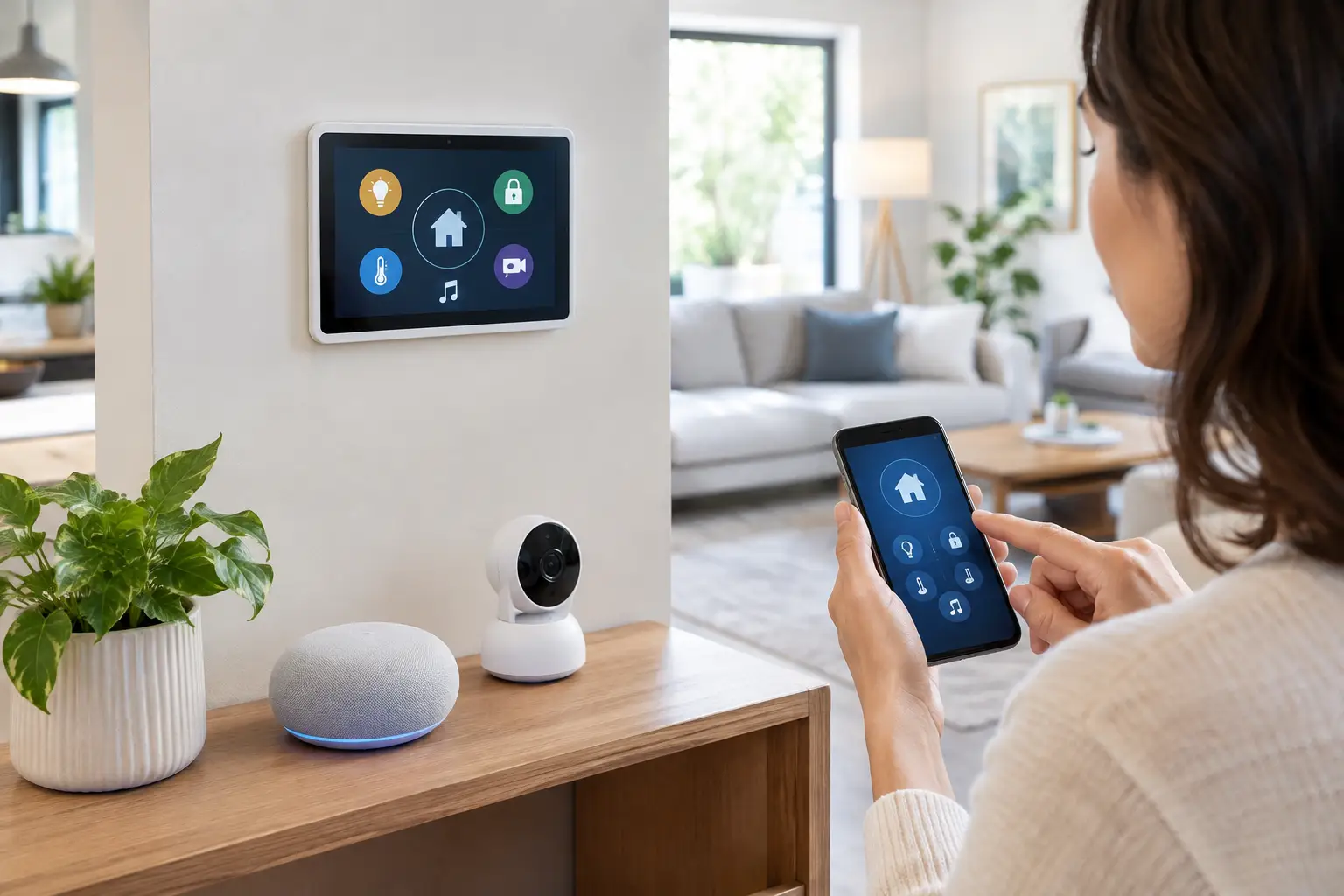
A smart home should make daily routines easier, not leave you with another app to manage. The best smart home upgrades solve a real household problem first: a door that is hard to monitor, energy bills that keep climbing, a potential water leak, or rooms with poor lighting. For Bay Area homeowners, the most worthwhile choices are usually the ones that improve safety, reduce wasted energy, and work reliably with the home you already have.
Before buying devices, look at the condition of the underlying systems. A smart switch will not fix loose wiring. A video doorbell will not solve a damaged door frame. A connected leak sensor is valuable, but it cannot replace a failed supply line. Good installation and sound repairs are what turn useful technology into a dependable long-term improvement.
Best Smart Home Upgrades for Everyday Value
Smart thermostats for better heating and cooling control
A smart thermostat is often one of the strongest starting points because it addresses a cost homeowners feel every month. It can adjust temperatures around work schedules, reduce heating or cooling when the home is empty, and provide clearer information about energy use. This is especially helpful in homes with inconsistent temperatures between rooms or households where schedules change during the week.
Compatibility matters more than the screen or brand name. Older HVAC systems, heat pumps, multi-zone setups, and systems without a common wire may need additional wiring or a compatible adapter. The thermostat also needs a sensible location. Installing it near direct sun, a drafty exterior door, or a heat-producing appliance can lead to inaccurate readings and less comfort.
A smart thermostat is not always the answer to uneven heating. If one room is consistently cold or hot, the cause could be insulation gaps, duct issues, aging windows, or a poorly balanced system. Addressing those conditions may deliver better results than programming around them.
Smart lighting that improves comfort and security
Smart lighting works best when it is designed around how people use a room. In an entryway, scheduled lights can make it safer to arrive home after dark. In a kitchen, dimmable task lighting can make food preparation easier without making the entire room overly bright. In bedrooms, a gradual morning lighting schedule can be more pleasant than a harsh alarm.
For most homes, smart switches and dimmers are a better permanent solution than relying only on smart bulbs. A wall switch keeps normal control available for guests, kids, and anyone who does not use the app. It also prevents the common frustration of someone turning off the wall switch and making a smart bulb unavailable.
Electrical boxes, neutral wires, dimmer compatibility, and fixture type all affect the installation. Older Bay Area homes may have wiring conditions that call for an electrician rather than a simple device swap. It is worth getting that work done correctly, particularly in kitchens, bathrooms, and exterior locations where electrical safety is critical.
Smart locks and video doorbells for better access control
A smart lock can be a practical improvement for busy households, landlords, and property managers. Instead of passing around physical keys, you can create temporary codes for visitors or service appointments and remove access when it is no longer needed. Many models also show whether the door is locked, which is useful when everyone has already left the house.
The lock must fit the existing door and deadbolt properly. A misaligned strike plate, warped door, loose hardware, or poor weatherstripping can cause a smart lock to bind or drain batteries faster. The same applies to video doorbells. A reliable installation may involve repairing the door frame, adjusting hardware, or providing appropriate power rather than attaching a device to a surface that is already failing.
Choose access features carefully. Keypad entry is convenient, but homeowners should still keep a backup entry plan in case of a dead battery, lost phone, or internet outage. For shared properties, set clear rules for access codes and notifications so the system improves accountability without creating unnecessary privacy concerns.
Water leak sensors and automatic shutoff options
Water damage can become expensive quickly, especially under sinks, behind appliances, near water heaters, and around toilets. Smart leak sensors are small devices that alert you when they detect moisture. They are one of the most affordable ways to monitor areas that do not get regular attention.
For greater protection, some systems can automatically shut off the home’s water supply when a major leak is detected. This option can be especially valuable for second homes, rental properties, or homes left vacant during travel. It requires careful planning because the shutoff valve, plumbing layout, and device placement all affect how well the system performs.
Sensors should be placed where leaks are likely, not simply where they are easiest to see. Consider the dishwasher supply line, washing machine connections, refrigerator water line, water heater pan, bathroom vanity, and utility areas. A sensor can provide early warning, but it should be paired with routine plumbing maintenance and prompt repairs for drips, corrosion, or damaged caulking.
Smart smoke and carbon monoxide alarms
Connected smoke and carbon monoxide alarms can send an alert to your phone if an alarm activates while you are away. Some models can identify the type of event and the location in the home, which may help occupants respond faster. This is a meaningful benefit in larger homes, multi-level properties, and homes where bedrooms are separated from the main living areas.
These devices are not a substitute for proper placement and regular testing. Smoke alarms and carbon monoxide alarms have specific location requirements, and older units may need replacement based on their manufacturer date. If an alarm is hardwired, replacement should be handled with attention to electrical compatibility and local safety requirements.
Smart garage controls and exterior monitoring
A connected garage controller can show whether the garage door is open and allow you to close it remotely. It is useful for households that use the garage as a main entry point or store valuable equipment inside. Exterior cameras and motion-activated lighting can also help homeowners monitor entry points and improve visibility around walkways.
The trade-off is that exterior devices need dependable power, weather-appropriate installation, and a strong Wi-Fi signal. Before adding cameras or controllers, check coverage at the garage, front gate, driveway, and side yard. A weak connection can turn a security device into a source of false alerts and missed notifications.
Plan Smart Home Upgrades Around the Home, Not the Gadget
The strongest smart home projects start with a walkthrough. Identify where the home wastes energy, where water damage could begin unnoticed, which entrances need better control, and which areas are difficult to use after dark. Then choose devices that work together without forcing every household task into one complicated system.
Avoid mixing too many incompatible platforms. A home with several disconnected apps, different account logins, and overlapping notifications can feel less convenient than a standard home. Pick a primary ecosystem that household members can use comfortably, and make sure basic functions still work manually when Wi-Fi is down.
Privacy deserves the same attention as convenience. Change default passwords, use strong account security, review who has access, and think carefully about where indoor cameras are appropriate. For rental or shared properties, communicate clearly about monitoring devices and access permissions.
Some upgrades are simple device installations. Others involve electrical work, door adjustments, plumbing connections, drywall repair, or mounting equipment on exterior surfaces. Fullhouse Remodeling & Handyman Services can help homeowners coordinate the practical work behind smart devices, from installing compatible hardware to correcting the small issues that keep it from working as intended.
A well-chosen smart upgrade should disappear into your routine. When the lights respond where you need them, the thermostat keeps the house comfortable, and a leak alert reaches you before damage spreads, the technology has done its job.
