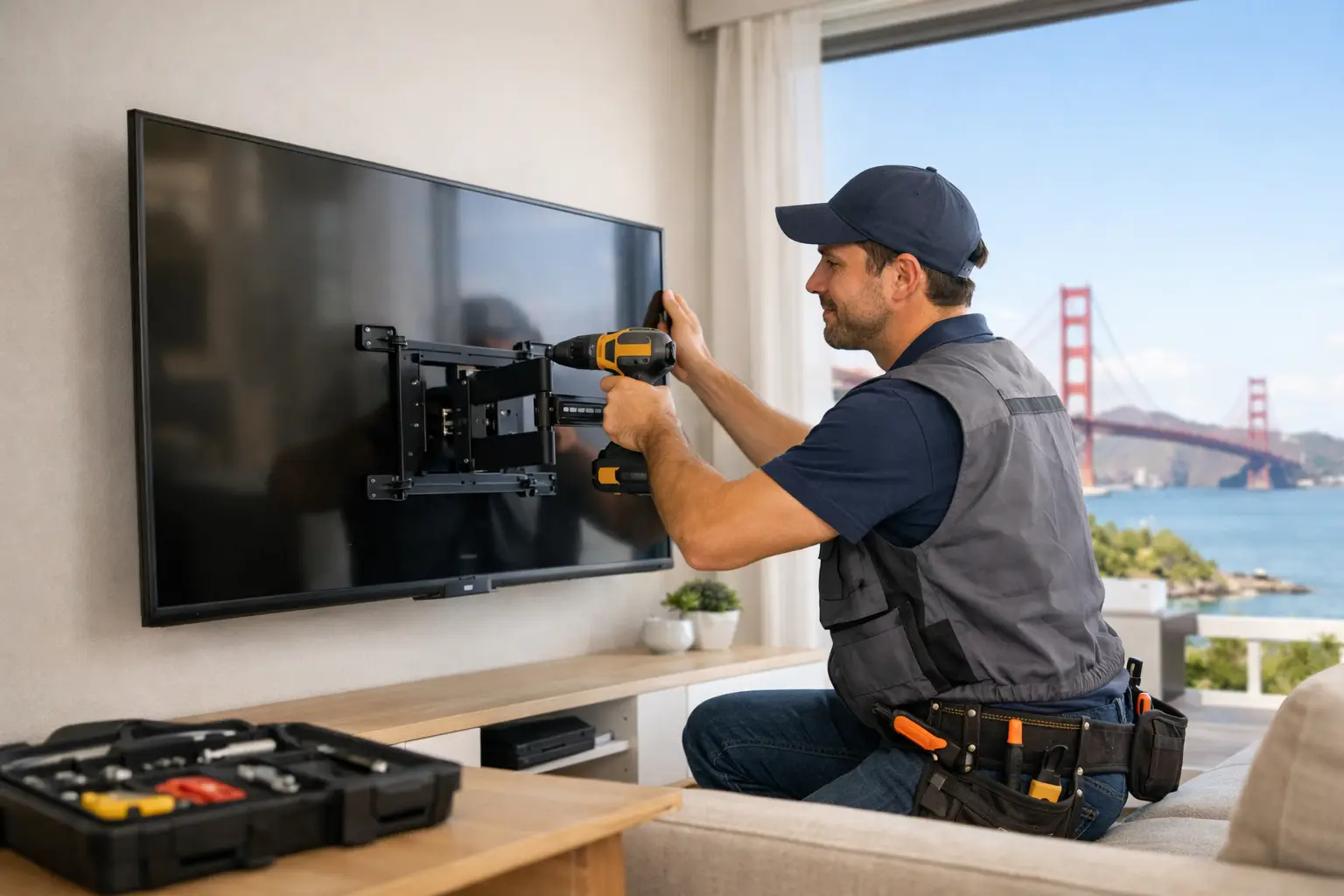
A TV mounting service review should tell you more than whether the screen looks straight when the technician leaves. The real test is whether the mount is matched to the wall, the hardware is secure, the viewing height feels right, and the finished setup works for the way your household actually watches TV. For Bay Area homeowners, renters, landlords, and office managers, a professional installation can prevent wall damage, loose mounts, exposed cords, and the frustration of having to redo the job later.
A flat-screen TV may look simple to hang, but the work behind a clean installation is rarely one-size-fits-all. Wall construction, stud placement, television size, outlet location, mount type, and connected devices all affect the job. A worthwhile service is not just about getting the TV onto the wall quickly. It is about making sound decisions before the first hole is drilled.
What a TV Mounting Service Review Should Cover
The most useful reviews describe the work itself, not just a general statement that the technician was nice. Look for details about punctuality, communication, wall assessment, mounting accuracy, cleanup, and how the installer handled unexpected conditions. These specifics give you a clearer picture of the workmanship you can expect.
For example, a homeowner may request a TV above a fireplace, then learn that the desired location has no suitable framing or that heat and viewing angle could create problems. A dependable installer explains the issue, offers practical alternatives, and gets approval before changing the plan. That kind of communication matters as much as the final appearance.
Reviews are also more credible when they mention the type of property or challenge involved. A mount installed on drywall over wood studs is different from one installed on masonry, metal studs, plaster, or a wall with concealed utilities. The best feedback often comes from customers who had a situation similar to yours: a large screen, a tight living room, an older home, a rental unit, or a conference room that needs a professional finish.
Safety Is the First Measure of Good Work
A television and mount create a concentrated load on a small section of wall. The right mounting method depends on the screen’s weight, the mount’s rating, and what is behind the finished wall surface. An installer should identify a secure attachment point and use hardware designed for that application rather than relying on shortcuts.
Stud-mounted installations are common in many homes, but not every preferred TV location lines up neatly with studs. This is where experience matters. A qualified professional can evaluate compatible mount options, framing conditions, and placement adjustments without compromising safety. Mounting directly into drywall with unsuitable anchors may seem acceptable at first, but it can lead to sagging, cracking, or a dangerous failure.
The wall must also be checked for electrical wiring, plumbing, and other hidden obstacles before drilling. This is especially important in remodeled homes, condos, and commercial spaces where previous work may not follow an obvious pattern. A clean-looking installation is never worth risking a damaged wire or pipe.
Above-the-Fireplace Installations Need Extra Planning
Mounting a TV over a fireplace is a common request, but it deserves a careful assessment. The location can place the screen too high for comfortable viewing, and some fireplaces produce heat that is not suitable for nearby electronics. There may also be stone, tile, brick, or a chimney structure behind the wall, all of which change the installation approach.
There are cases where an above-fireplace installation works well. There are also cases where a lower wall location, a different mount, or a separate media setup will give you a safer and more comfortable result. A professional should explain the trade-offs plainly rather than treating every fireplace wall as identical.
Placement Makes the Difference Between Good and Great
Many people focus on getting the screen centered on a wall. Centered can look balanced, but it is not always the best viewing position. The ideal height depends on seating distance, sofa height, room layout, screen size, and how the space is used. A TV in a family room may need a different placement than one in a bedroom, kitchen, workout area, or office lobby.
Before work starts, a good installer will confirm the center point, screen height, and mount movement with you. Tilt mounts can help manage higher placements. Full-motion mounts are useful when the TV must be viewed from more than one seating area or pulled away from the wall. Fixed mounts provide a slim profile when the viewing angle is already right.
Each option has a trade-off. A full-motion mount adds flexibility, but it requires more clearance and puts different forces on the wall. A fixed mount is clean and simple, but it leaves less room to reach ports after installation. Discussing these details upfront avoids surprises once the screen is in place.
Clean Cable Management Should Be Planned, Not Assumed
One of the most common disappointments in a TV mounting job is discovering that cable concealment was not included in the expected scope. Some customers want the TV securely mounted and are comfortable with a surface-mounted cable cover. Others want cables routed through the wall for a more finished appearance. These are different tasks, and the wall conditions can affect what is possible.
A clear service provider asks what devices you plan to connect: streaming equipment, a soundbar, gaming consoles, cable boxes, antennas, or office presentation hardware. The answer affects cable length, outlet placement, port access, and where components should sit after the TV is mounted.
Professional cable planning also means respecting electrical safety. Low-voltage cables and power connections have different requirements. If an outlet needs to be added or moved to support the desired layout, that should be evaluated and completed correctly rather than improvised with extension cords hidden inside a wall.
Questions to Ask Before Booking
A short conversation before the appointment can reveal whether the provider is prepared for your project. Ask whether they assess wall type and mounting location before installation, what information they need about the TV and mount, and how they handle obstacles found behind the wall. You should also confirm whether the scope includes mount assembly, leveling, device connection, cable management, testing, and cleanup.
It is smart to mention anything unusual in advance. Tell the provider if the wall is brick, tile, stone, plaster, or concrete. Share whether the TV is especially large, whether you already own a mount, and whether the installation is in a rental, multi-unit building, or business setting. Accurate details help the technician arrive prepared and help you receive a more reliable estimate.
For property managers and business owners, consistency is equally important. A conference-room screen, lobby display, or tenant turnover installation should be completed with attention to appearance, safety, and minimal disruption. Working with one dependable home services provider can also simplify future repairs, drywall touch-ups, electrical work, or related improvements.
Signs of a Dependable TV Mounting Service
Trust the service process as much as the finished photo. A dependable provider gives a clear scope, arrives prepared, protects the work area, confirms placement before drilling, and tests the TV before leaving. They should also be willing to answer practical questions without rushing you through the decision.
Be cautious of vague promises that do not address wall type, hardware, or cable needs. The lowest quote is not always the lowest overall cost if the work has to be corrected, wall damage needs repair, or the mount is not appropriate for the television. Transparent expectations protect both the customer and the installer.
Fullhouse Remodeling & Handyman Services approaches TV mounting as a home installation job, not a quick hang-and-go task. That means considering the wall, the equipment, the room, and the finish you expect before work begins.
The right TV mount should disappear into the room while doing its job every day. Choose a service that takes the time to secure the screen correctly, place it thoughtfully, and leave your space looking better than it did before.
