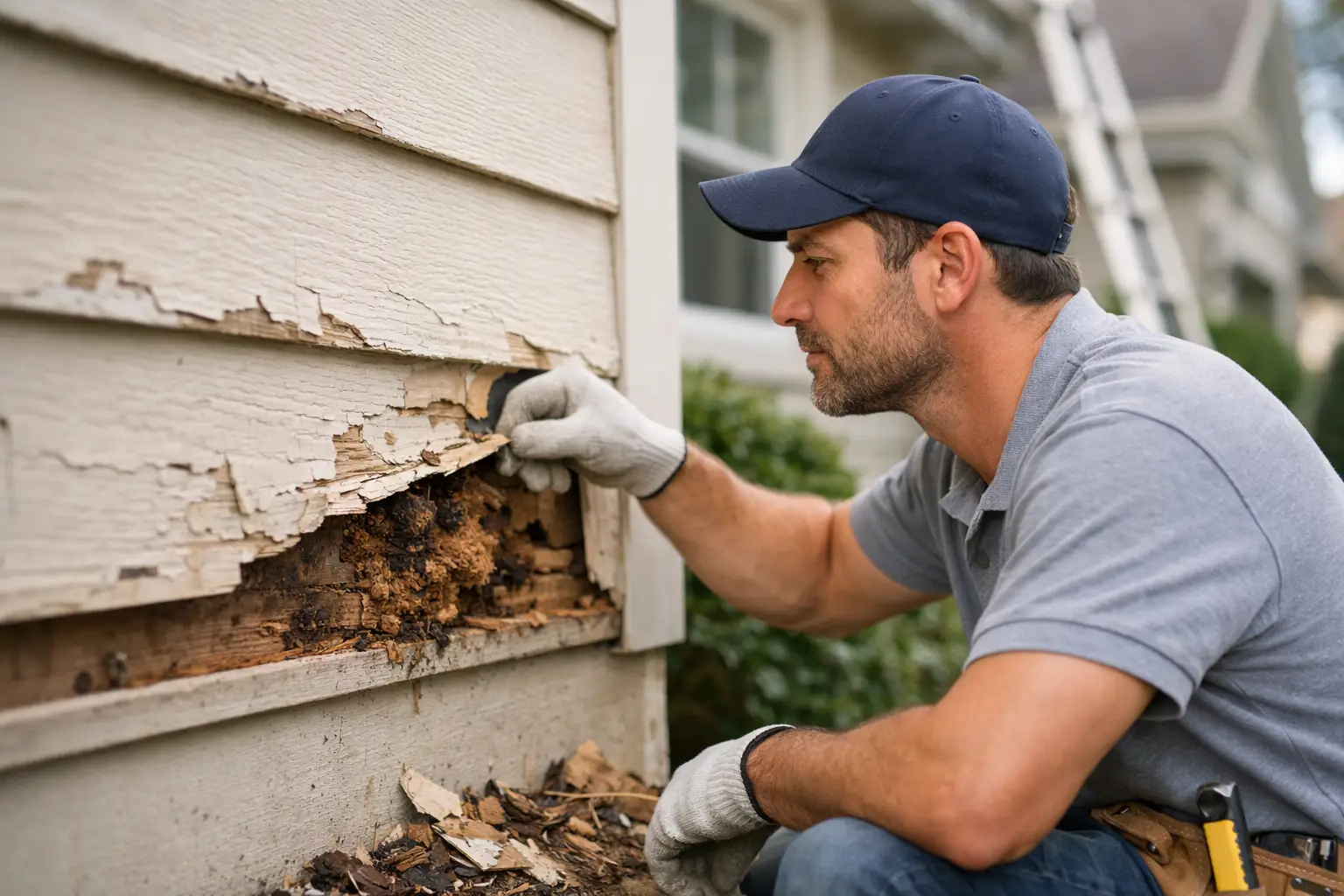
A small crack near a window or a patch of peeling paint may look like a weekend maintenance job. But these can be siding replacement warning signs, especially when moisture has already reached the material behind the exterior. On Bay Area homes, where coastal fog, rain, sun exposure, and changing temperatures all take a toll, catching trouble early can prevent dry rot, wall damage, and a much larger repair scope.
Siding does more than give a home a finished appearance. It is part of the exterior weather barrier that helps keep water, pests, and outside air out of the wall assembly. Some issues can be repaired locally. Others mean the siding has reached the end of its useful life. The difference depends on the material, the location of the damage, and what is happening underneath.
9 Siding Replacement Warning Signs to Watch For
1. Cracks, holes, or missing sections
Visible openings in siding are a clear signal to take action. Cracks can develop from age, impact, shifting, or repeated expansion and contraction. Holes may be caused by pests, storm debris, or accidental damage. Missing pieces leave the wall directly exposed to moisture and wind.
A single small opening can sometimes be patched if the surrounding siding is sound and replacement material is available. Widespread cracking or brittle pieces that break during a simple inspection generally point toward replacement. The concern is not just appearance. Water can get behind damaged siding and remain hidden for months.
2. Soft, spongy, or crumbling wood
Wood siding should feel solid when lightly pressed. If a board feels soft, flakes apart, or crumbles around edges and joints, moisture has likely caused decay. You may also notice dark staining, swollen boards, or areas that stay damp longer than the rest of the exterior.
Dry rot repair may be needed before new siding goes on. Replacing only the visible board without checking the sheathing, framing, and trim behind it can leave the underlying problem in place. A proper assessment identifies how far the damage extends and whether failed caulking, flashing, gutters, or roof drainage caused it.
3. Warped, buckled, or loose boards
Siding should sit flat and align consistently across the wall. Boards that cup, bow, buckle, or pull away from the home have often absorbed water or lost their fastening strength. On vinyl siding, waviness can also result from heat exposure or improper installation that did not allow for movement.
One loose board after a wind event may be a targeted repair. Multiple distorted sections usually mean there is a broader moisture, installation, or material-aging issue. Refastening damaged siding without addressing the cause can create a temporary fix that does not hold.
4. Paint that peels soon after repainting
Exterior paint eventually wears out, but it should not peel, blister, or bubble shortly after a quality paint job. When that happens, moisture may be pushing outward from behind the siding, or the siding surface may no longer be stable enough to hold paint.
Paint can protect healthy wood siding, but it cannot restore decayed material. If repeated scraping, priming, and repainting have become routine, replacement may be the more practical investment. A contractor should also inspect nearby window trim and roof edges, since water often enters at those transitions.
5. Mold, mildew, or persistent stains
Green, black, or gray growth on siding can be surface-level mildew, particularly on shaded walls. Cleaning may solve the issue if the siding is otherwise in good condition and the area dries properly. Persistent staining that returns quickly, however, deserves closer attention.
Mold or mildew near seams, trim, windows, and lower wall sections can indicate water is getting behind the siding. This is especially concerning when it appears alongside soft wood, peeling paint, or a musty smell inside. The exterior should be evaluated before cleaning becomes a cycle that hides an active leak.
6. High energy bills or uncomfortable rooms
Siding is not insulation, but damaged siding can expose weaknesses in the wall system. Drafty rooms, unusually hot west-facing walls, or rising heating and cooling costs may signal gaps around siding, trim, windows, or penetrations.
Energy loss alone does not automatically mean you need new siding. Older windows, attic insulation, and air leaks can produce similar symptoms. But when comfort problems appear with visible exterior damage, a siding inspection is a sensible next step. Replacement provides an opportunity to correct damaged sheathing and improve the weather-resistant layers behind the siding.
7. Insect activity around exterior walls
Termites, carpenter ants, and other wood-damaging insects are attracted to damp or decaying material. Small holes, sawdust-like debris, insect wings, or unexplained damage near the base of a wall should not be ignored.
Pest treatment and siding work often need to be coordinated. The damaged wood may need to be removed so the wall structure can be inspected and repaired. Installing new siding over insect-damaged material is not a lasting solution.
8. Loose caulk and failing seams
Caulk around windows, doors, trim boards, and siding joints does real protective work. When it splits, shrinks, or pulls away, water can enter the narrow gaps that lead behind the exterior surface. Failed caulk is common as homes settle and materials expand at different rates.
If the siding itself remains solid, recaulking and repainting may be enough. If seams keep opening because boards are warped, rotted, or improperly installed, the problem goes beyond maintenance. Those recurring gaps are among the siding replacement warning signs that should be addressed before the next rainy season.
9. An exterior that needs constant patching
A few repairs over the life of a home are normal. Constant repairs are different. If you are replacing individual boards every year, repainting problem areas repeatedly, or dealing with recurring leaks in multiple locations, the total cost and inconvenience can outweigh a planned replacement project.
Replacement lets you address the exterior as one system rather than chasing isolated symptoms. That may include repairing dry rot, correcting flashing, replacing damaged trim, and installing siding that better fits the home’s exposure and maintenance needs.
When a Repair Makes Sense and When Replacement Does Not Wait
Repair is often the right choice when damage is small, localized, and caused by a one-time event. For example, a single cracked panel from an impact or a small section of deteriorated trim can usually be handled without replacing an entire elevation. The key is confirming that the surrounding materials and wall structure are dry and sound.
Replacement becomes more urgent when damage is widespread, moisture-related, recurring, or hidden behind several visible issues. A wall with soft siding, failed paint, mold staining, and loose seams is rarely a simple cosmetic project. Waiting can allow water to reach sheathing and framing, where repairs become more disruptive.
Material selection also matters. Wood offers a traditional look but needs ongoing paint and moisture management. Fiber cement and engineered wood can provide different durability and maintenance benefits. The right choice depends on the home’s style, exposure, budget, and the level of upkeep you want over time.
What to Do Before Scheduling Siding Work
Start with a visual walk-around after rain or during daylight. Look closely at lower wall sections, corners, areas beneath rooflines, and the siding around windows and doors. Take photos of cracks, staining, loose pieces, and peeling paint so changes are easier to track.
Avoid covering damaged areas with new caulk, paint, or temporary panels before an inspection unless you need to stop an immediate water entry point. Surface fixes can make it harder to see the original condition. If there is active leaking, soft wood, or suspected dry rot, arrange a professional evaluation promptly.
For homeowners and property managers who need clear answers, Fullhouse Remodeling & Handyman Services can assess exterior damage, identify related repair needs, and provide straightforward recommendations for repair or replacement. The goal is to fix the cause, not simply cover the symptom.
Your siding does not need to look perfect to protect your home well. It does need to be solid, properly sealed, and free of the moisture damage that quietly spreads behind the walls. Acting when the first warning signs appear gives you more control over the scope, timing, and outcome of the work.
