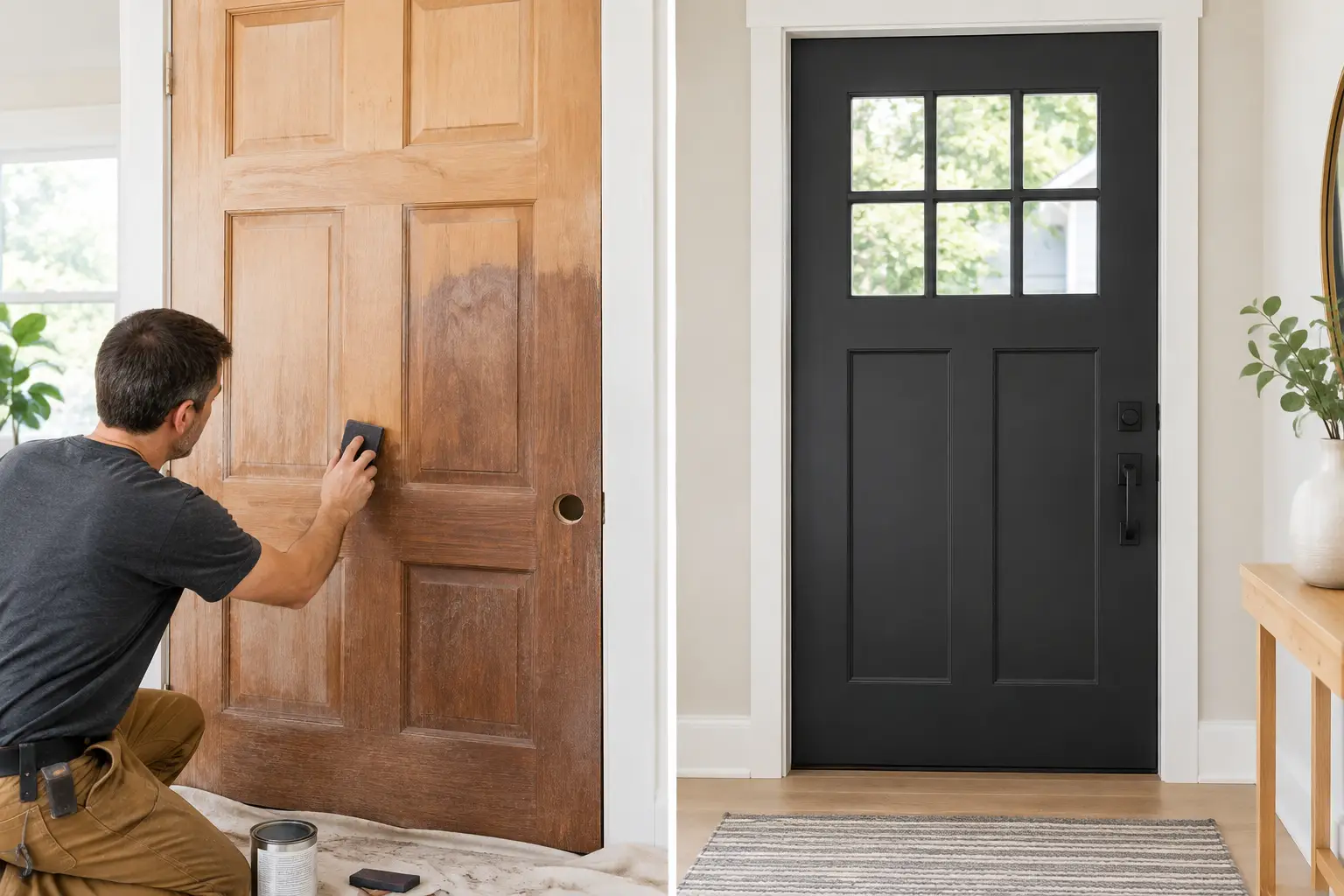
A door that sticks, looks worn, or lets in a draft can make the whole home feel neglected. When homeowners weigh refinish versus replace doors, the right answer depends on more than surface appearance. The door’s condition, material, location, security, and how well it fits the opening all matter. A professional assessment can prevent you from spending money on a new door when a repair would do the job, or repeatedly repairing a door that has reached the end of its service life.
Refinish Versus Replace Doors: Start With the Door’s Condition
Refinishing is often a smart choice when the door is structurally sound and the issue is mainly cosmetic. Solid wood doors, especially older doors with quality construction, can often be sanded, repaired, stained, painted, and protected for many more years. Small dents, scratches, faded finish, minor water marks, and outdated color are usually refinishing problems, not replacement problems.
Replacement becomes more practical when the door has significant rot, warping, splitting, delamination, or damage that affects everyday operation. An exterior door that no longer closes securely, has a loose frame, or allows water and air into the home deserves more than a fresh coat of paint. The same is true for an interior door that is badly cracked, swollen from moisture, or too damaged to latch correctly.
Before deciding, look beyond the door slab itself. A door may stick because of loose hinges, a shifted jamb, seasonal expansion, damaged weatherstripping, or foundation movement. Those issues can often be corrected without replacing the door. On the other hand, a new door installed in a damaged or out-of-square frame will not solve the underlying problem for long.
When Refinishing a Door Makes Sense
Refinishing is ideal when you want to improve the look of a quality door while preserving its character. This is especially common with solid wood entry doors, paneled interior doors, and older doors that fit the home’s architecture better than many off-the-shelf replacements.
A proper refinishing job starts with preparation. Hardware may need to be removed, damaged areas filled or repaired, old paint or finish sanded down, and the surface cleaned before primer, paint, stain, or clear protective coating is applied. Skipping those steps can leave visible brush marks, peeling paint, or a finish that fails quickly in sun and moisture.
For exterior doors, the finish must stand up to weather exposure. Bay Area properties can deal with fog, coastal moisture, strong sun, and temperature changes, sometimes all in the same week. A protective exterior-grade finish and properly sealed edges help reduce moisture intrusion and premature wear.
Refinishing may be the better route when:
- The door is solid wood or another durable material with only surface damage.
- The door opens, closes, and locks properly after minor adjustments.
- The frame and threshold are in good condition.
- You want to retain a custom size, vintage detail, or architectural style.
- Your goal is a color or finish update rather than improved security or insulation.
Keep in mind that refinishing cannot correct deep structural failure. Paint can temporarily hide cracks, but it will not stop rot or stabilize a warped door. If the damaged area is soft, spreading, or caused by water getting behind the finish, the source of moisture must be addressed first.
Signs It Is Time to Replace the Door
Replacement is usually the more dependable long-term solution when the door no longer performs its main jobs: protecting the property, operating safely, controlling drafts, and providing privacy or security. Exterior entry doors deserve particular attention because their failure can lead to water damage, higher energy use, and security concerns.
Visible rot is one of the clearest signs. If a wood door has soft spots along the bottom edge, around glass panels, or near hardware, refinishing may only delay a larger issue. Warping is another concern. A severely bowed door can leave gaps around the perimeter, strain the hinges, and make the lock difficult to engage.
Replacement may also make sense if the door is hollow, flimsy, outdated, or poorly matched to the needs of the space. A laundry-room door exposed to regular humidity may benefit from a more moisture-resistant option. A busy rental property may need a durable door and hardware package that stands up to frequent use. For a front entry, better weather sealing and a secure locking system can be as valuable as the visual upgrade.
Doors with broken cores, extensive peeling veneer, major cracks, or repeated latch problems are often poor candidates for refinishing. So are doors that have been trimmed down excessively and no longer fit the opening correctly. In these cases, repair costs can add up without delivering the reliability of a properly installed replacement.
Do Not Overlook the Frame, Hardware, and Weather Sealing
The refinish versus replace doors decision is rarely only about the visible panel. Hinges, strike plates, thresholds, jambs, casing, locks, and weatherstripping affect how a door works every day.
A door that scrapes the floor may need hinge adjustment or a small trim correction. A door that swings open by itself may point to a frame alignment issue. A lock that does not catch could need a strike plate adjustment, but it could also indicate that the frame has shifted. These repairs are often straightforward when caught early.
For exterior doors, inspect the threshold and surrounding trim for water damage. Stained drywall, soft wood, cracked caulking, or gaps around the frame can signal a leak that should be repaired before refinishing or installing a replacement. Addressing the full assembly helps protect the investment and avoids covering up a problem that will return.
Choosing Based on Your Goals
If you are preparing a home for sale, refinishing an otherwise sound front door can improve curb appeal quickly. A clean, well-finished entry creates a better first impression without changing the home’s existing style. For a landlord or property manager, targeted repairs and durable repainting can be an efficient way to keep multiple units looking maintained.
If comfort, security, and energy performance are the priority, replacement may offer more value. A new exterior door with proper installation, weather sealing, and functional hardware can reduce drafts and make the entry feel more secure. For interior projects, replacing mismatched or damaged doors can also create a more consistent look during a remodel.
There is no single rule for every property. A beautiful solid wood door with worn finish may be worth restoring. A damaged entry door with rot and air leaks is usually better replaced. The key is making the decision based on the door’s actual condition, not just how it looks from a distance.
Get a Clear Scope Before Work Begins
A dependable door project begins with an on-site look at the door, frame, hardware, and surrounding wall or trim. This helps identify whether the work involves surface preparation, drywall or wood repair, hinge and lock adjustments, weatherproofing, or a complete replacement.
Fullhouse Remodeling & Handyman Services helps Bay Area homeowners, landlords, and property managers handle both smaller door repairs and larger replacement projects with a practical, straightforward approach. A clear scope of work makes it easier to choose the option that fits the property and avoids unnecessary surprises.
The best door decision is the one that solves the real problem for the long term. If the structure is sound, a careful refinish can bring it back to life. If the door is failing at protection, operation, or security, replacement gives you a stronger foundation to build on.
