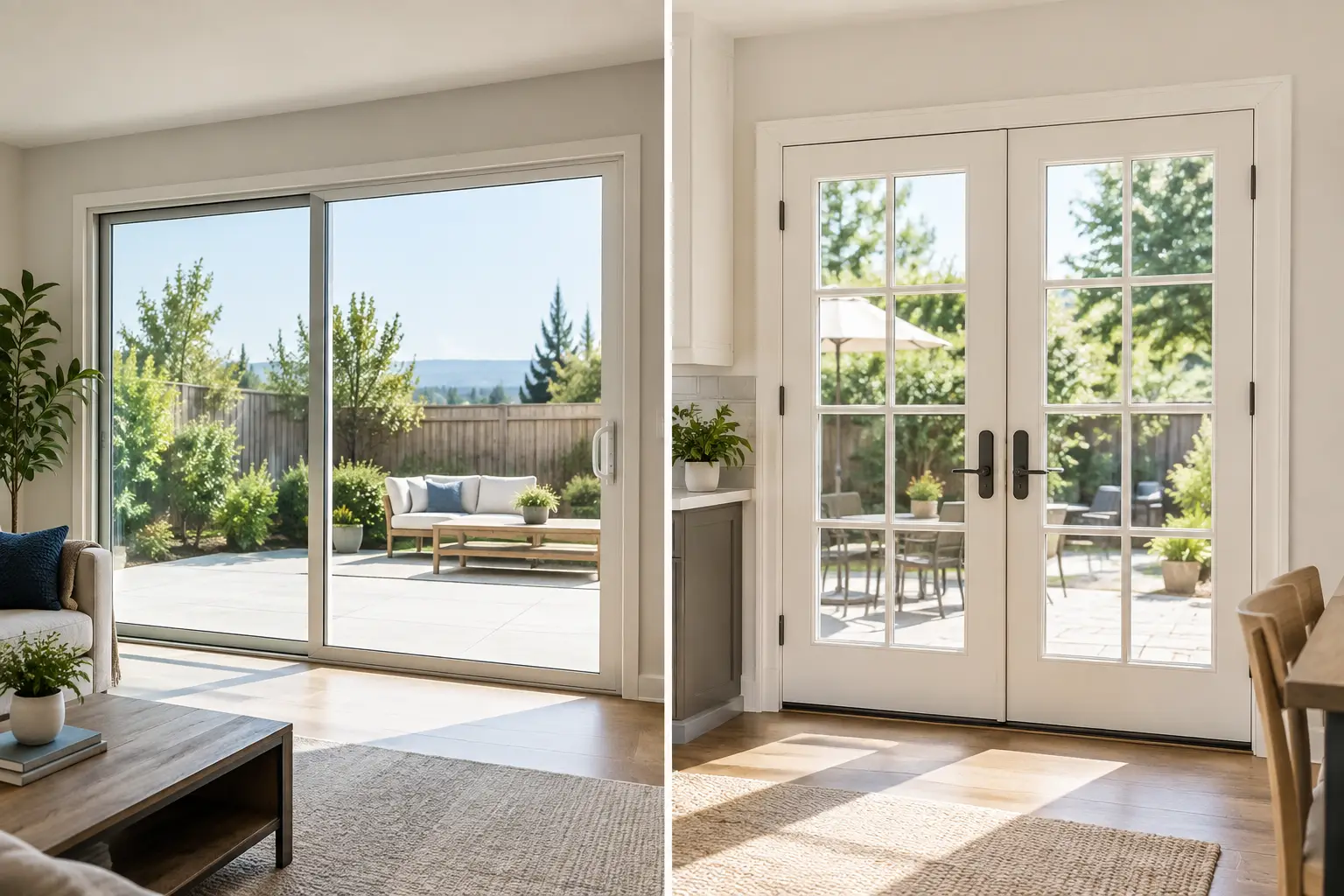
A patio door changes more than the route to your backyard. It affects how a living room is arranged, how much daylight reaches the interior, whether fresh air moves easily through the house, and how secure the opening feels at night. When comparing sliding versus french patio doors, the better choice is usually the one that works with your room, your outdoor area, and the way your household actually uses both.
For Bay Area homes, that decision can be especially practical. Compact lots, hillside patios, wind exposure, older wall openings, and a desire for brighter interiors can all influence the right door style. A good installation starts with the door itself, but it also depends on correct measurements, solid framing, weather protection, and reliable operation.
Sliding Versus French Patio Doors: The Main Difference
A sliding patio door moves horizontally along a track. One panel typically slides while the other remains fixed, although multi-panel configurations are also available. Because the panels stay within the door opening, a sliding door does not require floor space to swing open.
French patio doors use one or two hinged panels that swing inward or outward. Traditional French doors have two active panels that meet in the center, creating a wide opening when both are open. Some systems use a fixed panel alongside one operating door, which can offer a similar look in a tighter layout.
Neither option is automatically better. Sliding doors are often the practical solution where space is limited. French doors can create a more traditional architectural feel and a broader, less obstructed passage when opened fully. The details of your home determine which advantage matters more.
Choose Sliding Doors When Floor Space Matters
The strongest reason to choose a sliding patio door is simple: it does not swing into a room or across a patio. That can make a meaningful difference in a family room with furniture near the glass, a narrow deck, or a small concrete patio.
Sliding doors also tend to suit contemporary homes and clean-lined renovations. Their large glass panels can bring in substantial natural light while maintaining a low-profile look. If your goal is to create a visual connection to a garden, deck, or view without adding a door swing to the room, a slider is often the more efficient fit.
There are trade-offs. In a standard two-panel slider, only about half of the opening is available for walking through at one time. That may be perfectly adequate for daily use, but it can feel restrictive when carrying furniture outside, moving a grill, or hosting a gathering that flows between the kitchen and patio.
The track also deserves attention. Dirt, pet hair, leaves, and normal outdoor debris can make a sliding door harder to operate over time. Quality rollers and proper installation help, but regular track cleaning is part of owning a slider. If an existing door drags, jumps its track, or will not lock consistently, it should be inspected rather than forced.
Sliding doors work well for
Sliding doors are commonly a strong match for rooms where furniture must stay close to the doorway, small balconies and patios, modern remodels, and openings where a full swinging door would interfere with daily traffic. They can also be a sensible choice when the exterior walkway runs directly in front of the door.
Choose French Doors for a Wider, More Traditional Opening
French doors bring a different kind of presence to a room. With two panels open, they can create a generous opening that makes an indoor-outdoor area feel more connected. This is valuable for entertaining, moving large items, or simply enjoying an unobstructed path to the yard.
Their hinged design often works especially well in traditional, craftsman, colonial, and cottage-style homes. French doors can add architectural character that a standard slider may not provide. They are also available with different grille patterns, panel designs, glass options, and hardware finishes, making it easier to match nearby windows and interior finishes.
The key question is where the doors will swing. In-swing doors require clear interior floor space. Out-swing doors preserve indoor space, but they need a patio or deck area that stays clear and level. On a small deck, an outward-swinging panel can become an obstacle. On an exposed site, wind can also make an outward-opening door less convenient if it is not secured properly.
French doors have more moving components at the center meeting point than a basic sliding door. The hinges, astragal, weatherstripping, latch hardware, and sill all need to be installed and adjusted correctly. A well-built door system can perform very well, but poor installation can lead to drafts, sticking, water intrusion, or alignment problems.
French doors work well for
French patio doors are often ideal for homeowners who want a classic look, a wide opening for entertaining, or a stronger visual transition between the house and an outdoor living area. They make the most sense when there is enough clearance for the door swing on the interior or exterior side.
Light, Views, and Ventilation
Both door styles can brighten a room, but they frame the view differently. Sliding doors typically have fewer visual interruptions across a wide glass opening. This makes them appealing for garden views, decks, and rooms where daylight is a priority.
French doors usually have a center seam where the panels meet. Depending on the style, they may also have divided-light grilles that create a more detailed appearance. Some homeowners see that as a drawback for views; others prefer the character and proportion it gives the room.
Ventilation is another practical distinction. A two-panel slider generally opens to roughly half its total width. French doors can open nearly the full width of the frame. If you rely on the patio door for airflow during warmer days, French doors may deliver more ventilation. Still, open doors need practical planning for screens, pets, children, and insects. Retractable or sliding screen solutions should be considered as part of the overall door selection, not after the installation is complete.
Energy Efficiency and Weather Protection
Door style alone does not determine energy performance. Glass package, frame material, weatherstripping, installation quality, and exposure to sun and wind all matter. A well-installed, energy-efficient slider can outperform a poorly installed French door, and the reverse is equally true.
For a home that receives strong afternoon sun, low-emissivity glass and appropriate glazing can reduce heat gain while preserving daylight. For cooler or windy locations, durable weatherstripping and a properly flashed opening are essential. Water management is particularly important at patio doors because the threshold sits low and is exposed to runoff.
During replacement, the installer should evaluate the condition of the surrounding wall, sill, and framing. Hidden dry rot or prior water damage should be corrected before a new door is installed. Covering a damaged opening with a new unit may create a better-looking door temporarily, but it does not solve the underlying problem.
Security, Accessibility, and Daily Use
Modern sliding and French patio doors can both be secure when they include quality locking hardware, strong frames, properly functioning latches, and correctly installed glass. The weak point is often not the style of door but neglected hardware, loose adjustment, worn rollers, or a frame that has shifted over time.
For accessibility, consider threshold height and how easily the door operates. A slider can be convenient because it does not require managing a swinging panel, but it should glide smoothly with minimal effort. French doors offer a broad opening, which can help with moving equipment or accommodating mobility needs, but the threshold and door swing still need to be evaluated carefully.
Think about the everyday routine. Does the dog go in and out constantly? Is the patio door the main route to a deck? Will a child push the door open with one hand while carrying sports gear? The best choice is the one that remains easy to use on an ordinary Tuesday, not just the one that looks best in a showroom.
Installation Details That Protect the Investment
Replacing a patio door is not simply a matter of removing the old unit and setting a new one in place. The opening must be measured accurately, the frame must be plumb and square, and the sill must be prepared to direct water away from the home. The door needs to be shimmed, insulated, flashed, sealed, and tested for smooth operation before trim is finished.
Older homes may also reveal uneven framing or wall damage once the existing door comes out. Addressing those conditions during the project helps prevent drafts, binding, and future water problems. It is worth having a licensed professional assess the full opening, especially when enlarging a door, converting one door type to another, or repairing visible damage around the frame.
For homeowners who want a dependable assessment and professional installation, Fullhouse Remodeling & Handyman Services can help evaluate the opening, discuss practical door options, and complete the surrounding repair work when needed.
The right patio door should make your home easier to live in. Choose the option that gives your room the clearance, light, access, and weather protection it needs, then make sure the installation is built to last.
