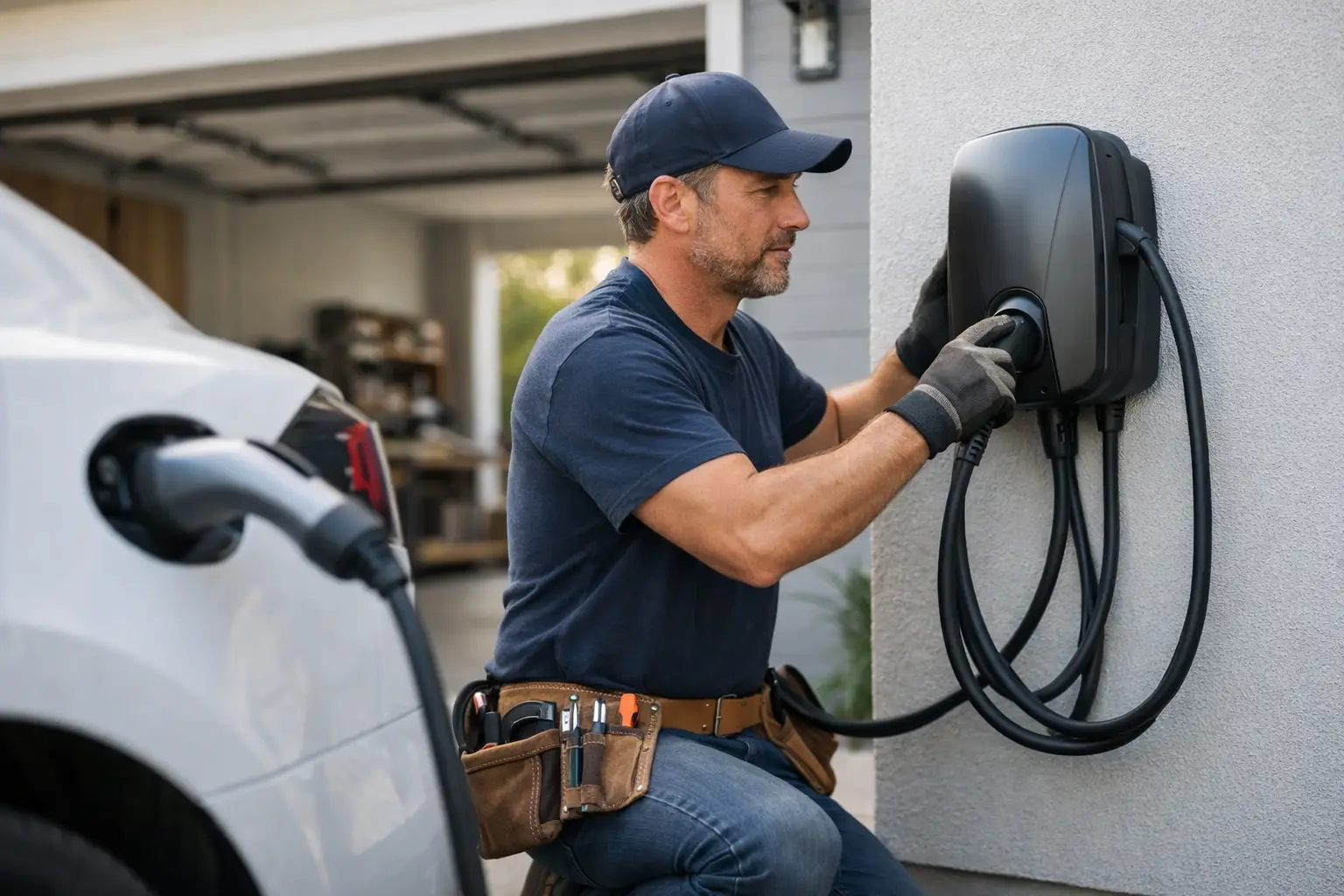
A new EV can make a standard garage outlet feel painfully slow. For most homeowners, the practical question is: can electricians install EV chargers safely, legally, and without overloading an older home electrical system? Yes – a qualified, properly licensed electrician is the right professional for the job. But the installation itself is more than mounting a box on the wall.
A dependable EV charger installation starts with an electrical assessment. The electrician needs to confirm your panel capacity, identify the best circuit route, account for local permit requirements, and match the equipment to how you actually drive. That planning protects your vehicle, your home, and your investment.
Can Electricians Install EV Chargers Safely?
Electricians install EV charging equipment, often called EVSE, or electric vehicle supply equipment. The wall-mounted unit does not technically charge the car battery on its own. It safely delivers power to the vehicle, while the vehicle’s onboard system manages battery charging.
Because an EV charger draws significant electrical current for long periods, it needs dedicated wiring, correct overcurrent protection, and a properly sized circuit. This is not the same as adding a standard outlet or replacing a light fixture. A qualified electrician understands the electrical code requirements, load calculations, grounding, disconnect needs, and permit process involved.
For homeowners, the biggest benefit is peace of mind. The right installer can spot limitations before work begins, rather than discovering halfway through that the service panel is full or the planned charger location creates an impractical wiring route.
Why EV Charger Installation Requires More Than a Handyman Visit
Some home projects can be handled with basic repair skills. EV charging is not one of them. The work may involve opening the electrical panel, installing a new dedicated breaker, running heavy-gauge wire through walls or conduit, and making connections that must meet code.
An improperly installed charger can cause repeated breaker trips, damaged equipment, overheating conductors, or failed inspections. It may also create complications with a home sale, insurance claim, or warranty if unpermitted electrical work is discovered later.
In California, electrical work and permit rules can vary by jurisdiction. Homeowners in San Francisco, Oakland, San Mateo, and surrounding Bay Area communities should verify local requirements before scheduling installation. A professional electrician can help determine whether a permit is required and ensure the work is ready for inspection when it is.
The First Step: Check Your Electrical Capacity
Before selecting a charger, an electrician should evaluate your home’s available electrical capacity. Many Bay Area homes have older panels, added appliances, remodeled spaces, and electrical demands that were never part of the original design. Air conditioning, electric dryers, induction ranges, heat pumps, hot tubs, and EV charging can add up quickly.
The electrician performs a load calculation to estimate how much power the home may use at one time. This does not simply mean looking at the number printed on the main breaker. A 200-amp panel, for example, may have limited available capacity depending on the appliances and circuits already connected to it. Conversely, a smaller service may still support a charger if the calculated load allows it and the installation is designed appropriately.
If capacity is tight, there may be several paths forward. The best option depends on the property, charging habits, and budget:
- Install a lower-amperage charger that works within the current load limits.
- Use load-management equipment that reduces or pauses charging when household demand is high.
- Upgrade or replace an overcrowded electrical panel.
- Complete a larger service upgrade if the existing service cannot support present and future electrical needs.
A lower-powered installation is not necessarily a compromise. If your vehicle is parked overnight and your daily commute is moderate, a charger that replenishes the battery over several hours may be all you need. Faster charging is helpful, but it is not always worth the additional electrical work.
Choosing Between Level 1 and Level 2 Charging
Level 1 charging uses a standard 120-volt outlet. It is the slowest approach and can be suitable for drivers with short daily mileage, a plug-in hybrid, or a temporary setup. The outlet and circuit still need to be in good condition, especially if charging will occur for extended periods every day.
Level 2 charging uses 240 volts and is the preferred home solution for many EV owners. It can provide substantially faster charging, making it easier to recharge overnight and start each morning ready to drive. Level 2 equipment may be hardwired directly to a dedicated circuit or connected through a properly installed receptacle, depending on the charger, code requirements, and installation plan.
An electrician will help match the circuit and charger output. The charger cannot be selected based on speed alone. Circuit size, wire size, breaker rating, equipment instructions, and continuous-load rules all need to work together. Installing a high-output unit on inadequate wiring is unsafe, while buying more charging capacity than the home can support can lead to unnecessary upgrade costs.
Where Should an EV Charger Be Installed?
The most convenient location is usually near the vehicle’s charging port, with enough cable length to reach without stretching it across a walkway. For a garage, this might be beside the parking space or on a wall near the front of the vehicle. For a driveway or carport, weather-rated equipment and carefully planned conduit are especially important.
The shortest route from the electrical panel to the charger often reduces labor and material needs, but convenience still matters. A charger located too far from where you park becomes frustrating to use. Your installer should consider parking patterns, cord management, wall construction, access to the panel, and future needs such as a second EV.
Outdoor installations deserve additional attention. The equipment should be rated for the environment, mounted securely, and protected from impact where needed. The wiring method must also be suitable for outdoor conditions. A clean installation is not just about appearance – it helps prevent damage and keeps the charging area safer for everyone using the property.
Permits, Inspections, and Utility Considerations
Many EV charger installations require a permit, particularly when a new 240-volt circuit, panel modification, or service upgrade is involved. The permit process may feel like an extra step, but it serves a useful purpose. It confirms that the work is reviewed for safety and follows local code.
A permit can also matter when selling or refinancing a property. Documented electrical improvements are easier to explain than work with no record, especially when a buyer’s inspector sees a charger, new circuit, or altered panel.
Some utility programs, local incentives, or charger manufacturer requirements may also depend on qualified installation or specific equipment features. Ask before purchasing a charger if you are considering smart charging, time-of-use scheduling, solar integration, or future battery backup. Those decisions can affect which equipment and electrical design make sense.
Questions to Ask Before Hiring an Installer
A clear conversation upfront prevents avoidable surprises. Ask whether the installer is qualified to perform the required electrical work, whether a permit is anticipated, and whether they will complete a load calculation before finalizing the scope. You should also ask what panel work, wall repair, conduit, trenching, or finish work may be needed based on the charger location.
Request a written scope that explains what is included. The proposal should make it clear whether the work covers the charger installation only or also includes a new circuit, breaker, panel modifications, permit handling, inspection coordination, and restoration of affected surfaces. Transparent planning is especially valuable in older homes, where concealed conditions can affect the final approach.
It also helps to think one step ahead. If a second EV may be in your future, tell the electrician now. Planning for expanded capacity, a larger conduit path, or load management during the first installation can be far easier than reopening finished walls later.
A Safer, More Useful Upgrade for Your Home
A home EV charger should make daily life easier, not create a new electrical concern. The right installation balances charging speed, household power demand, code compliance, and the way you use your vehicle. It may be a straightforward dedicated circuit, or it may reveal that a panel upgrade is the smarter long-term investment.
Start with a qualified electrical assessment before buying equipment or assuming the existing outlet will do the job. A well-planned installation gives you reliable overnight charging and the confidence that your home is prepared for the miles ahead.
