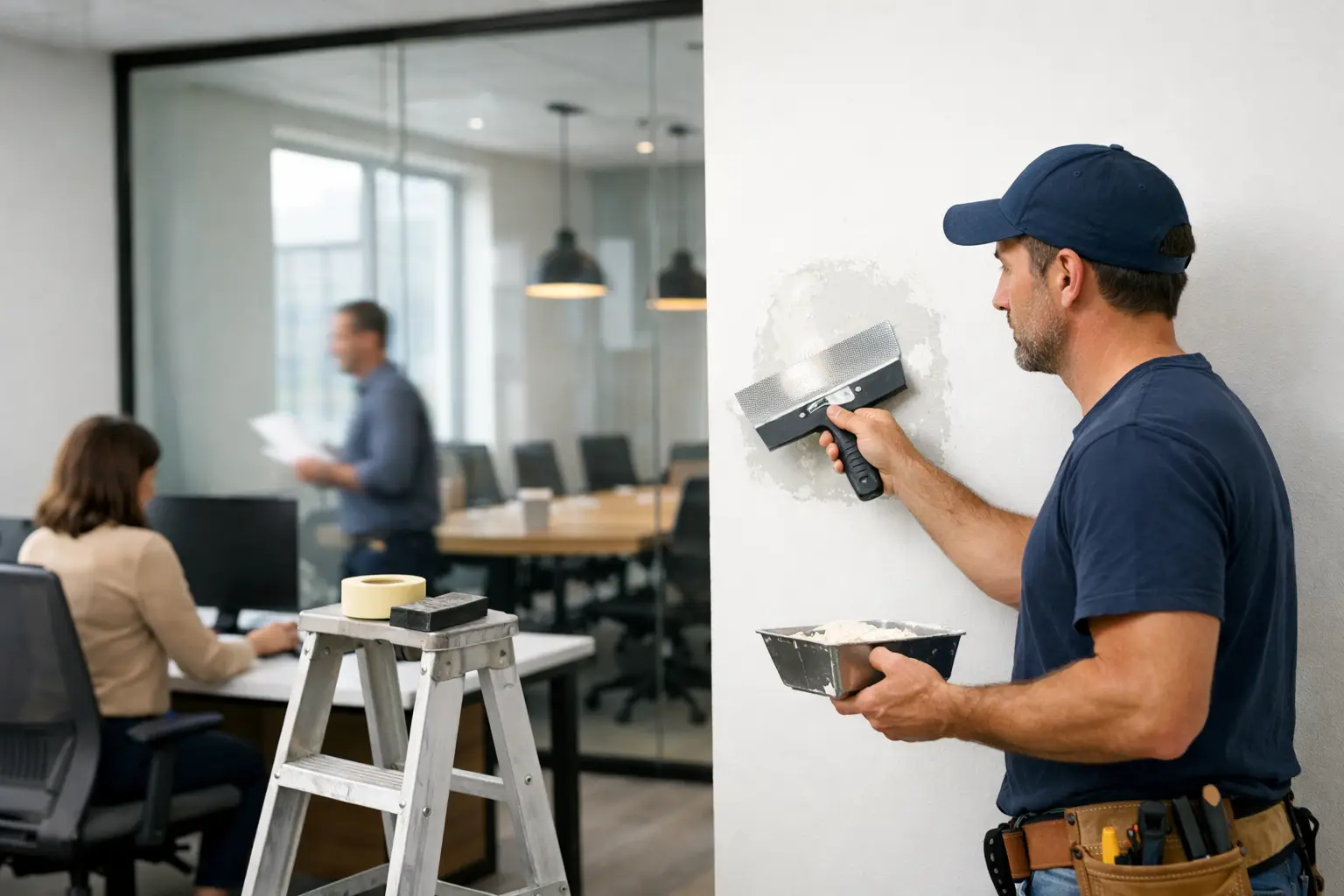
A damaged office wall can make an otherwise well-run workplace look neglected fast. A door-handle hole, peeling seam, water stain, or dent near a busy hallway may seem minor, but it affects how employees, clients, tenants, and visitors see the space. Timely office drywall repair keeps damage from spreading and helps your workplace stay clean, safe, and ready for business.
For Bay Area offices, retail spaces, managed properties, and commercial suites, the right repair is not just about covering a hole with joint compound. It means identifying the source of the damage, matching the surrounding finish, protecting the work area, and completing the job with as little interruption as possible.
When Office Drywall Repair Should Not Wait
Some drywall damage is cosmetic, while other damage points to a larger issue behind the wall. A small dent from moved furniture can often be repaired quickly. Soft drywall, recurring stains, spreading cracks, or bubbling paint need closer attention before anyone starts patching.
Water is the most common reason a simple drywall repair turns into a more involved job. A leak from plumbing, a roof issue, condensation near an HVAC line, or water entering around a window can soak insulation and weaken drywall from the inside. Painting over the stain may improve the appearance briefly, but the damage will return if the moisture source remains.
Cracks also deserve a practical assessment. A thin hairline crack at a drywall seam may be caused by normal building movement. Wider cracks, cracks that keep reopening, or cracks around doors and windows can indicate movement, poor prior installation, or a problem that needs to be investigated before cosmetic repairs are made.
Office walls often take damage in high-traffic areas: reception areas, conference rooms, hallways, break rooms, storage spaces, and entry doors. Repairing these areas promptly prevents chipped edges and exposed gypsum from getting worse through regular use.
Common Office Wall Problems We Repair
Office drywall damage is rarely identical from one building to the next. The repair approach depends on the size of the affected area, the wall finish, what is behind the wall, and whether the damage was caused by impact, moisture, or movement.
Small nail holes, picture-hanging holes, and minor dents usually need filling, sanding, priming, and paint touch-up. Larger holes from door hardware, carts, furniture moves, or removed wall-mounted equipment require a drywall patch that is properly supported and blended into the existing wall.
Damaged corner bead is another common issue in offices. Corners near hallways and doorways receive repeated impacts, causing metal or vinyl edge material to bend, crack, or separate. A lasting repair requires removing loose material, restoring a straight corner, applying joint compound in layers, and sanding it smooth before painting.
Water-damaged drywall may need to be cut out and replaced rather than patched. Once drywall becomes soft, swollen, or moldy, it no longer has the strength or clean finish needed for a professional workspace. The affected area should be opened carefully, dried, and repaired only after the leak or moisture source is addressed.
The Difference Between a Quick Patch and a Professional Repair
A quick patch can be appropriate for a very small, dry, stable blemish in a low-visibility area. But offices usually need a result that holds up under regular use and looks consistent with the rest of the suite. That is where preparation makes the difference.
A professional office drywall repair begins by checking the wall for loose material, moisture, hidden fasteners, wiring, plumbing, or other conditions that affect the work. Damaged drywall is cut back to solid material. For larger openings, the new section must have secure backing so it does not flex or crack later.
The repaired area is then taped and finished in thin layers. Drywall compound needs time to dry between coats, and each coat is feathered wider than the previous one. This gradual blending is what prevents the patched area from looking like a raised square after painting.
Paint matching is often the final challenge. Even when the original paint color is known, existing walls may have changed slightly over time because of sunlight, cleaning, and normal wear. A careful contractor can blend repairs and help determine whether a localized touch-up will look right or whether repainting a full wall is the better choice.
How to Keep Repairs From Disrupting Your Office
The most effective repair schedule depends on your business hours, noise tolerance, and the location of the damage. A repair in an unused storage room may be easy to complete during the day. Work near a reception desk, medical office, classroom, conference room, or customer-facing entrance may be better planned around low-traffic hours.
Containment matters. Drywall cutting and sanding create fine dust, even when the repair area is small. Furniture, electronics, and nearby surfaces should be protected, and the work zone should be cleaned thoroughly when the job is complete. For occupied offices, communication is just as valuable as craftsmanship: people need to know which area will be unavailable and how long the work is expected to take.
There is also a trade-off between speed and finish quality. A small patch can sometimes be completed in one visit, but drying times, texture matching, and paint curing can require additional time for the best result. Rushing those steps may leave visible seams, uneven texture, or a paint sheen mismatch under office lighting.
Repairs That Require Extra Attention
Some office walls are not standard partitions. If the wall is part of a fire-rated assembly, contains sound-control insulation, supports mounted equipment, or separates tenant spaces, repairs need to preserve the wall’s intended performance.
Fire-rated drywall assemblies may require specific materials, thicknesses, and installation methods. Simply replacing a damaged piece with whatever drywall is available can compromise the assembly. The same applies to walls that support televisions, shelving, whiteboards, signage, or other mounted equipment. The repair may need added backing or blocking so the wall can safely handle the load.
Older commercial spaces can also hold surprises behind the drywall, including outdated wiring, plumbing changes, or previous repairs that were not completed correctly. When the cause or condition is unclear, opening the wall carefully and evaluating what is behind it is the responsible approach.
What to Do Before Calling for Drywall Repair
You do not need to diagnose the entire problem before requesting service, but a few details help get the repair started efficiently. Note when the damage appeared, whether it is growing, and whether there has been a leak, plumbing issue, or recent impact. If water is involved, stop the source if possible and avoid covering the damaged area until it has been inspected.
Clear portable items away from the wall and take note of nearby outlets, switches, data lines, or mounted equipment. If the repair is in a shared building or leased suite, check whether building management needs to approve the work or coordinate access to utility areas.
For property managers and business owners, it is smart to address small drywall issues before a tenant turnover, office expansion, inspection, or client visit. Small repairs are easier to plan when they are not part of an urgent cleanup after more damage has occurred.
Dependable Help for Office Wall Repairs
Fullhouse Remodeling & Handyman Services provides practical drywall repair for Bay Area offices, commercial properties, and managed spaces. From small wall patches and damaged corners to drywall replacement after a leak, the goal is straightforward: complete the repair correctly, protect the workspace, and leave the area looking professional.
A clean wall does more than improve appearance. It helps your office feel maintained, trustworthy, and ready for the people who use it every day. When drywall damage appears, handling it early gives you more options, less disruption, and a better-looking result.
