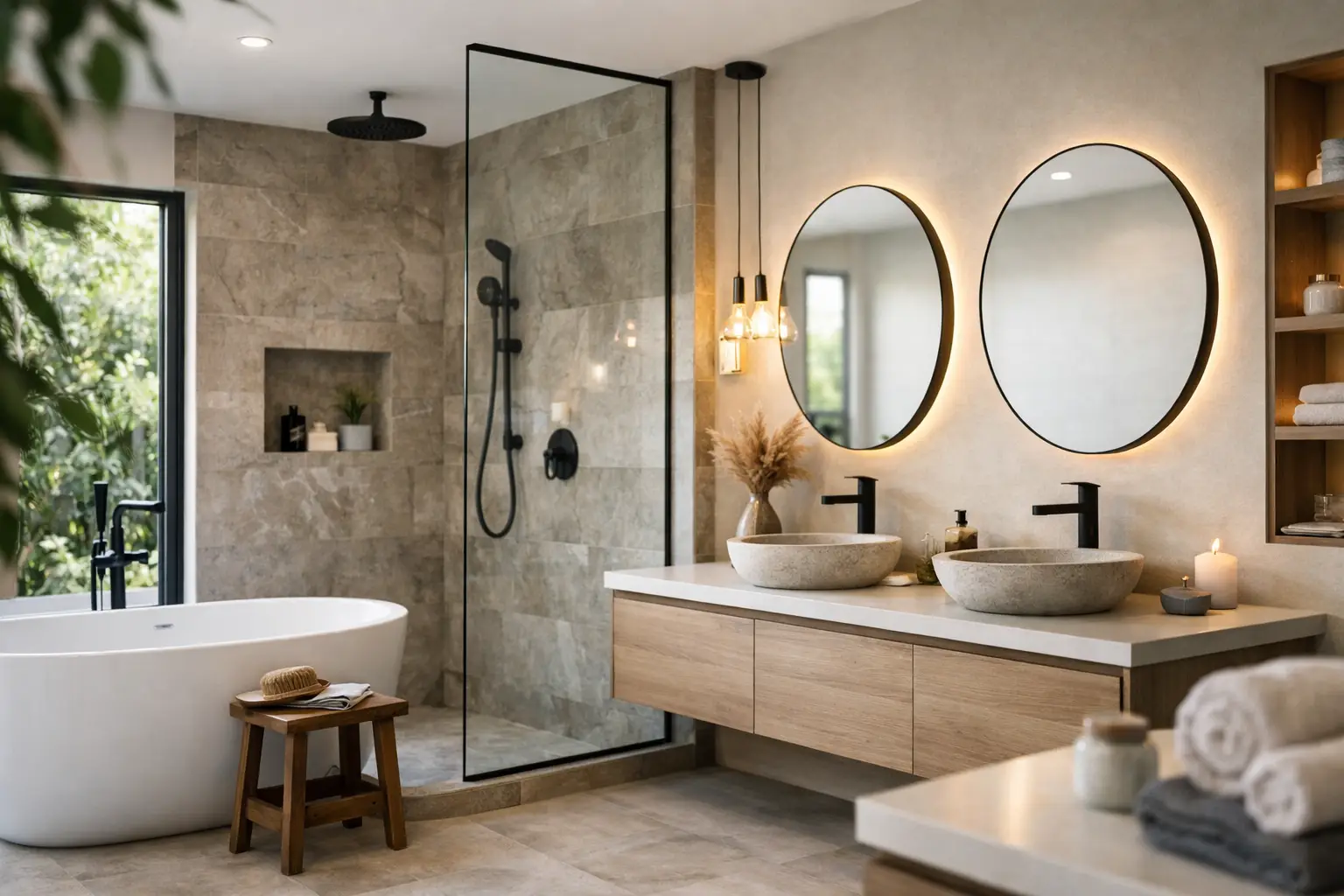
A beautiful bathroom has to work at 6:30 a.m., not just in a photo. That is the practical shift behind bathroom remodeling trends 2026: homeowners are choosing spaces that feel calm and elevated while solving everyday problems like poor lighting, limited storage, worn finishes, and hard-to-clean surfaces.
For Bay Area homes, the best updates are rarely about copying a showroom exactly. They are about making smart use of a compact footprint, choosing materials that hold up to real use, and completing plumbing, electrical, tile, ventilation, and finish work correctly from the start. Here is what is shaping bathroom renovations this year and how to decide which ideas make sense for your home.
Bathroom Remodeling Trends 2026 Put Function First
The strongest trend is not a single tile color or fixture style. It is a more intentional layout. Homeowners want bathrooms that reduce morning bottlenecks, provide a place for daily essentials, and remain easy to maintain over time.
That can mean replacing a tub that is rarely used with a larger shower, adding a double vanity where two people get ready at once, or reclaiming unused space for a linen cabinet. In a smaller San Francisco or Oakland bathroom, even moving a door swing or choosing a wall-mounted vanity can improve circulation significantly.
Layout changes require careful planning. Moving plumbing may be worthwhile when the current room is inefficient, but it adds complexity and can affect the project scope. Keeping fixtures near their existing locations is often the better value when the goal is a major visual upgrade without unnecessary demolition.
Curbless and Low-Threshold Showers
Walk-in showers continue to lead bathroom design because they feel open, modern, and easy to enter. A curbless shower creates a cleaner floor line and can support aging-in-place goals, while a low-threshold shower delivers a similar look with fewer construction constraints in some homes.
This is not simply a tile decision. Proper slope, waterproofing, drain placement, and floor framing all matter. A shower that looks minimal but drains poorly will create expensive problems. For that reason, homeowners should treat shower construction as a technical installation first and a design feature second.
Glass panels are replacing bulky framed enclosures, especially in tight bathrooms where visual openness matters. Still, fully open showers are not right for every room. They can allow more spray and may feel cool in a drafty space. A fixed glass panel with a properly sized shower area often offers the best balance.
Warm, Natural Finishes Replace Stark All-White Rooms
Bright white bathrooms are not disappearing, but the look is becoming softer. In 2026, warmer whites, creamy paint tones, light oak vanities, natural stone looks, and muted earth-inspired colors are making bathrooms feel less clinical.
The goal is not to make every surface beige. It is to create contrast without visual clutter. A warm wood vanity paired with matte nickel fixtures and off-white wall tile can feel current for years. Deep green, clay, charcoal, or blue-gray vanity colors can also work well when the room gets enough light and the surrounding finishes stay simple.
Large-format porcelain tile remains a practical choice for walls and floors. It can create a clean, continuous appearance with fewer grout lines to scrub. Porcelain that resembles limestone, terrazzo, or handmade tile gives homeowners a high-end look with greater durability and easier care than some natural materials.
Natural stone has real appeal, but it needs realistic expectations. Marble and other porous materials may require sealing and can show etching or staining. For a low-maintenance family bathroom or rental property, porcelain often provides the more predictable long-term result.
Texture Has a Place, but Not Everywhere
Bathrooms are gaining texture through fluted vanity fronts, ribbed glass, handmade-look tile, plaster-inspired walls, and brushed metal hardware. These elements add depth to a simple room without requiring excessive pattern.
Use texture selectively. A textured feature wall behind a vanity can be striking, but combining patterned floor tile, bold shower tile, veined countertops, and decorative wallpaper in one small room can feel crowded quickly. Choosing one focal material and keeping the remaining surfaces quieter is usually the safer design move.
Better Storage Is a Non-Negotiable Upgrade
A remodeled bathroom should not leave toothbrushes, skin care products, medications, towels, and cleaning supplies scattered across the counter. Storage is one of the clearest ways to make a renovation feel more valuable every day.
Deep vanity drawers are replacing open cabinets because they make small items easier to find. Drawer organizers, pull-out trays, and outlets inside a vanity or medicine cabinet can keep electric toothbrushes and grooming tools off the countertop. Recessed medicine cabinets are especially useful in compact bathrooms because they add storage without taking up room depth.
When wall space permits, a tall linen cabinet can do more for a bathroom than an oversized decorative mirror. Open shelves have a place for folded towels or a few display items, but they require regular upkeep. Closed storage is the more practical choice for most busy households.
Layered Lighting Makes the Room More Useful
One ceiling light is not enough for shaving, makeup, contact lenses, or a late-night visit without waking everyone up. Bathroom remodeling trends 2026 favor layered lighting that handles each task well.
Start with general overhead lighting, then add face-level lighting at or near the mirror to reduce shadows. Sconces on both sides of a mirror typically provide more even illumination than a single fixture above it. Dimmable lighting gives the room flexibility, while a subtle toe-kick or under-vanity light can provide a useful nighttime path.
Mirrors with integrated lighting remain popular, particularly in modern bathrooms. They can be a clean solution, but homeowners should consider repairability and whether the fixture provides enough light for detailed grooming. A well-designed vanity light and a quality mirror may be the more flexible option.
Electrical planning should happen before walls are closed. Consider outlet placement for hair tools, charging devices, bidet seats, and medicine cabinets, along with required safety protections. This is also the right time to address an outdated exhaust fan.
Wellness Features Should Be Chosen Carefully
Homeowners are bringing comfort-focused features into the bathroom, including heated floors, rain-style showerheads, hand showers, bidet seats, and towel warmers. These upgrades can make a daily routine more comfortable, but they should fit the household rather than follow a trend for its own sake.
Heated flooring is particularly appealing under tile and can be a meaningful comfort upgrade in cooler parts of the Bay Area. It also needs proper electrical planning and a thermostat location that makes sense. A hand shower is one of the most useful additions because it helps with cleaning, bathing children or pets, and accessibility.
Water-saving fixtures remain a smart choice, especially when they deliver good performance without waste. The best shower experience does not always come from the largest showerhead. Correct valve selection, water pressure considerations, and fixture quality affect the result.
Ventilation and Waterproofing Are the Upgrades You Cannot See
The most durable bathroom renovations are built behind the finished surfaces. Exhaust ventilation, waterproof shower assemblies, properly installed backer materials, secure plumbing connections, and correct tile preparation protect the investment far more than a trendy fixture alone.
A bathroom with recurring peeling paint, mildew, loose tile, or soft flooring may have a moisture issue that needs to be corrected before cosmetic updates begin. Replacing a fan without confirming ducting, airflow, and proper exterior venting may not solve the underlying problem.
This is where professional project coordination matters. Bathroom work often involves demolition, framing, plumbing, electrical, drywall, tile, painting, fixture installation, and finish carpentry. Handling these pieces in the right order prevents delays and avoids the common mistake of reopening completed work to fix something missed earlier.
How to Choose Trends That Will Still Feel Right Later
Use trends to guide the mood of the room, not dictate every purchase. A timeless base of quality tile, solid storage, reliable fixtures, and good lighting gives you room to add personality through paint, mirrors, hardware, or a vanity color that can be updated more easily later.
Before committing to a design, think about who uses the bathroom and how long you expect to stay in the home. A primary bathroom may justify more comfort features and custom storage. A guest bathroom may benefit most from durable surfaces, strong lighting, and a layout that feels easy for anyone to use. For landlords and property managers, cleanable materials and dependable fixtures often matter more than highly customized details.
A clear plan also protects the schedule. Confirm measurements, fixture lead times, electrical needs, and any layout changes before demolition starts. Fullhouse Remodeling & Handyman Services helps Bay Area property owners bring those moving parts together with licensed, practical bathroom remodeling support.
The right 2026 bathroom will not depend on a passing color or a social media trend. It will feel organized on a busy morning, comfortable at the end of the day, and built well enough that you do not have to think about what is behind the walls.
