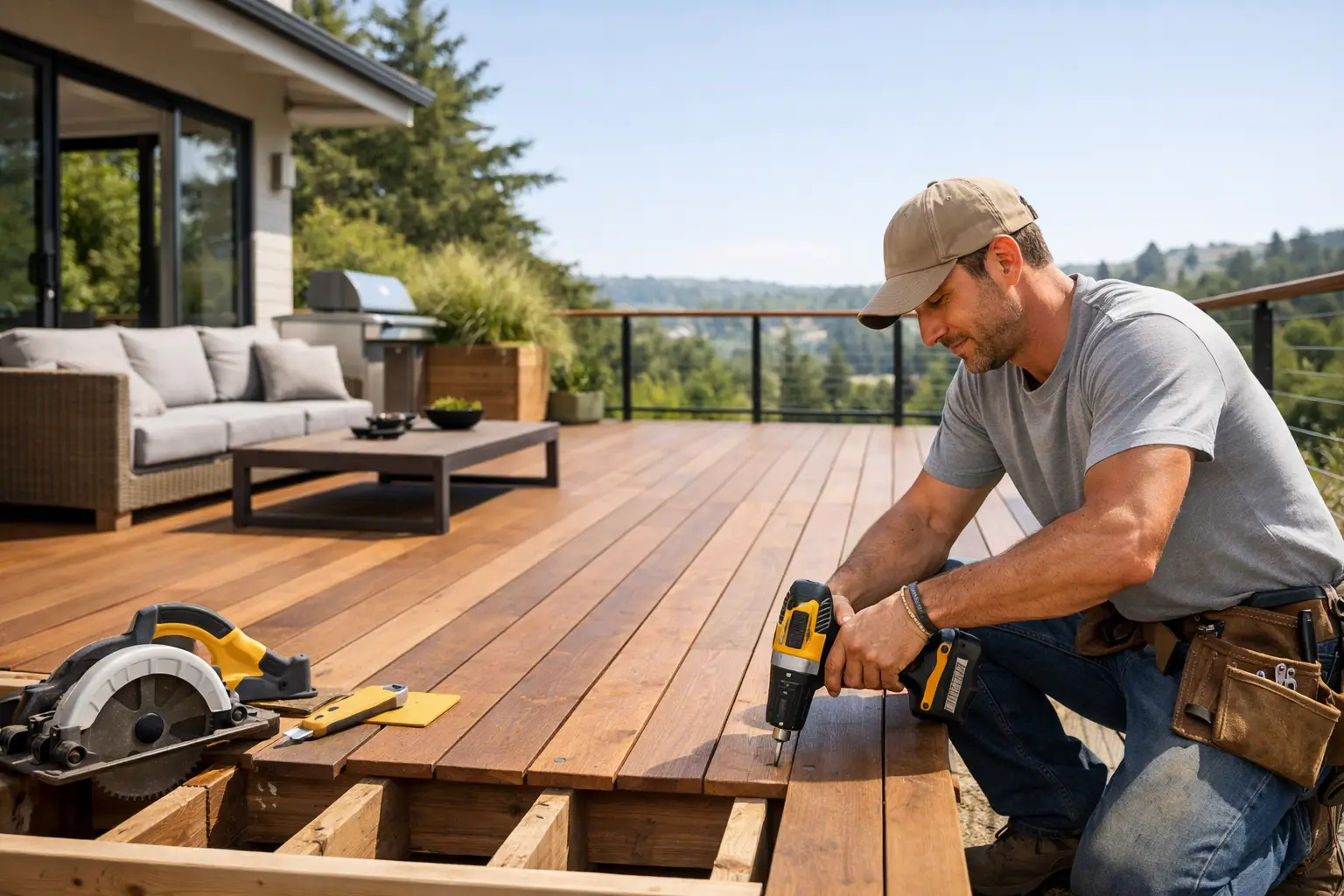
A deck should make your home easier to enjoy, not add another repair project to your weekend list. The right Redwood City deck builder helps you make smart decisions before construction starts: where the deck should sit, how it will handle sun and moisture, which materials fit your maintenance expectations, and what the finished space needs to support.
For a small ground-level platform, a raised deck overlooking the yard, or a replacement for aging wood framing, details matter. A deck is exposed to daily foot traffic, changing weather, irrigation overspray, and the occasional heavy gathering. Good workmanship begins below the surface, with a sound structure, proper connections, and a plan that matches the way you actually use your outdoor space.
What a Redwood City Deck Builder Should Evaluate First
A new deck is not simply a surface of boards. It is a structural addition connected to your home or supported independently in your yard. Before choosing materials or railings, your contractor should assess the site conditions, the deck height, access points, drainage, existing landscaping, and the condition of the home where the deck may connect.
The first question is usually practical: what do you want this deck to do? A compact landing outside a back door has different needs than a large entertaining area with room for dining furniture, a grill, and seating. If the deck will be elevated, stairs and guardrails become a major part of both safety and appearance. If it will sit near a slope, older retaining area, or uneven grade, the support plan deserves extra attention.
An experienced contractor also looks for concerns that can affect the project after the first board is installed. Water damage around doors, soft siding, dry rot, or inadequate drainage should be addressed before a new deck covers the problem. Building over damaged materials may look finished for a while, but it can create a more expensive repair later.
Structure Comes Before the Finish
Homeowners naturally focus on the visible choices: board color, railing style, lighting, and stairs. Those choices matter, but the frame is where deck quality is determined. Proper footings, correctly sized framing, secure fastening, flashing where needed, and careful joist spacing all help the deck feel stable and last longer.
This is especially relevant when replacing an older deck. Surface boards may be worn out while the framing still appears intact, yet hidden rot or weakened connections can make a simple resurfacing plan a poor long-term choice. In other cases, a structurally sound frame can support a more focused update. The right answer depends on an on-site inspection, not an assumption based on appearance alone.
Choosing Deck Materials That Fit Your Home
There is no single best deck material for every Redwood City property. The right choice depends on your budget, desired look, how much maintenance you want to handle, and the exposure your deck receives throughout the year.
Wood remains a popular option for homeowners who value a natural appearance and want flexibility in finishing. It can be stained or painted to coordinate with the home, but it requires regular care. Cleaning, sealing, staining, and prompt attention to worn areas help reduce weathering and moisture damage. Wood can be an excellent fit when maintenance is part of the plan, not an afterthought.
Composite decking is often chosen for its consistent color and lower routine maintenance. It does not eliminate all care – decks still need cleaning, and debris should not be allowed to collect between boards or around the frame. However, many homeowners appreciate that composite boards generally do not require the same refinishing schedule as natural wood. The trade-off can be a different appearance and a higher upfront material investment.
Railings also deserve more thought than they usually receive. A simple wood railing may suit a traditional home, while metal or cable-style options can create a more open view. Safety requirements, deck height, spacing, and local permitting requirements all influence what is appropriate. Your contractor should explain how the railing choice affects the project scope instead of treating it as a last-minute add-on.
Permits, Safety, and Clear Project Scope
Deck projects can involve permitting and code requirements, particularly when the deck is elevated, attached to the home, or includes stairs and guardrails. Requirements can vary based on the property’s conditions and the design. A professional should help determine what applies before construction moves forward.
This process is not paperwork for paperwork’s sake. Permit review and inspections are intended to confirm that structural and safety details receive proper attention. That includes items such as supports, connections, stair geometry, railing height, and safe access. Cutting corners may save time at the beginning, but it can create complications during a future sale, insurance review, or repair.
A clear scope of work also prevents common misunderstandings. Before the job begins, homeowners should know whether the project includes removal of the existing deck, disposal of debris, structural repairs, stairs, railings, finishes, and cleanup. If electrical work for outdoor lighting or an outlet is part of the plan, it should be identified early so the work can be coordinated correctly.
Signs Your Existing Deck Needs Professional Attention
A deck does not need to collapse to need service. Early repairs can often prevent a smaller issue from becoming a full replacement. Take a closer look if you notice boards that flex excessively, loose railings, unstable stairs, protruding fasteners, visible rot, or discoloration around the connection to the house.
Pay special attention to posts and framing near the ground. These areas are more likely to hold moisture and may be difficult to inspect without removing surface boards. Soft wood, splitting, fungal growth, or rusted hardware are warning signs worth addressing promptly.
Water is usually the underlying issue. A deck that stays damp due to poor drainage, blocked airflow, leaking irrigation, or missing flashing will deteriorate faster than one that can dry properly. Repairing the source of moisture is as important as replacing the damaged material. Otherwise, the same condition can return beneath the new work.
Repair or Replacement: It Depends on the Frame
Some deck concerns can be resolved with targeted repairs, such as replacing damaged boards, securing railings, rebuilding steps, or correcting minor drainage issues. This approach can make sense when the overall structure is stable and the problems are limited.
Replacement becomes the more responsible option when the framing has widespread rot, supports have deteriorated, the deck no longer meets practical safety expectations, or repeated repairs are no longer cost-effective. A contractor should be direct about this distinction. A cheap surface fix is not a value if it leaves structural problems in place.
How to Plan a Deck That Gets Used
The most successful decks match everyday habits. If your family eats outside often, reserve enough room for chairs to move comfortably around a table. If you grill regularly, plan for safe clearance and a surface that makes cleanup manageable. If the deck is mainly a transition from the house to the yard, prioritize a durable landing, safe stairs, and a layout that does not crowd the door.
Think about shade and privacy before construction. Afternoon sun can make a beautiful deck uncomfortable at the exact time you want to use it. Nearby windows, fences, and neighboring properties can also affect where seating feels most relaxed. These considerations may shape the deck size, orientation, railing style, or future plans for shade structures.
Maintenance access matters too. A deck should not block access to essential areas around the home, including utility equipment, drainage routes, or crawlspace entries. A thoughtful layout protects the function of the property while improving the outdoor living area.
Work With a Contractor Who Can Handle the Details
A dependable deck project requires more than installation labor. It requires someone who can evaluate related conditions, communicate the scope clearly, coordinate repairs when needed, and keep the work moving without leaving homeowners to manage several trades.
Fullhouse Remodeling & Handyman Services brings contractor-level capability to deck installation, repairs, dry rot correction, siding concerns, painting, and other connected home improvement work. That breadth can be valuable when a deck project reveals an issue that needs to be resolved properly before the finished surface goes in.
Your deck should feel solid underfoot, look appropriate for your home, and give you a reason to spend more time outside. Start with a clear plan, address hidden conditions honestly, and choose workmanship built for years of real use.
