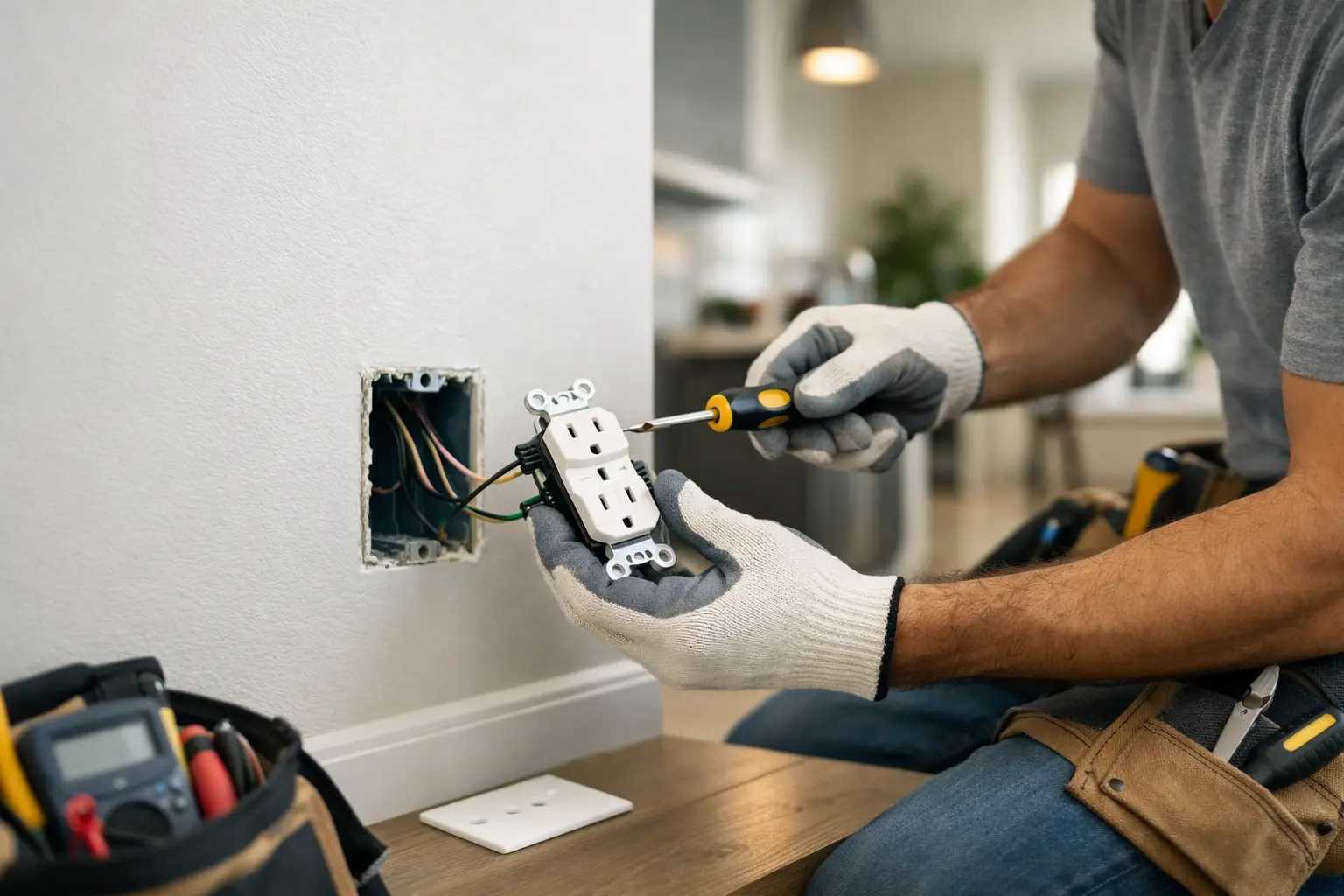
A loose outlet that lets a plug sag, a cover plate that feels warm, or a receptacle that only works when the cord is held at a certain angle is more than an everyday annoyance. Electrical outlet replacement can correct a worn connection before it becomes a larger safety or reliability issue. For Bay Area homeowners, landlords, and property managers, it is also a practical opportunity to bring older rooms closer to current safety expectations and modern charging needs.
An outlet replacement may look like a small repair, but the work behind the wall matters. The right solution depends on the circuit, the location, the age of the wiring, and whether the outlet is protecting downstream devices. A professional assessment avoids the common mistake of replacing the visible receptacle while leaving the actual electrical problem unresolved.
When Electrical Outlet Replacement Is the Right Call
Most outlets do not fail all at once. They wear gradually as plugs are inserted and removed over years of daily use. The internal contacts can loosen, reducing their grip on plug blades and creating a poor connection. That poor connection can generate heat, especially with appliances that draw more power.
A replacement should be scheduled promptly when an outlet is cracked, chipped, discolored, loose in the wall, or hot to the touch. Buzzing, popping, a burning smell, visible sparking beyond a brief minor plug-in spark, or a breaker that trips repeatedly all deserve immediate attention. Stop using the outlet and have the circuit evaluated. Replacing only the receptacle may not be enough if there is damaged wiring, a loose splice, or an overloaded circuit behind it.
Other warning signs are less dramatic but still worth addressing. A plug that falls out easily, intermittent power, a dead outlet, or a reset button that will not stay engaged can point to a worn or failed device. In older homes, two-slot outlets, ungrounded outlets, and outdated receptacles may also limit how safely and conveniently the space can be used.
Choosing the Right Replacement Outlet
Not every outlet serves the same purpose. Selecting the right device is part of doing the job correctly, particularly in kitchens, bathrooms, garages, laundry areas, outdoor spaces, and older properties with evolving electrical needs.
Standard, tamper-resistant, and grounded outlets
A standard grounded outlet has the familiar two vertical slots and round grounding opening. In many homes, tamper-resistant versions are the sensible replacement choice. Their internal shutters help prevent children from inserting objects into a slot, while still allowing normal plugs to be inserted properly.
If an existing outlet has no ground opening, the answer is not always to install a three-prong receptacle and move on. The wiring method and grounding path need to be checked first. A professional can explain whether grounding is available, whether GFCI protection is appropriate, or whether a larger wiring upgrade is the better long-term repair.
GFCI outlets for moisture-prone areas
Ground-fault circuit interrupter, or GFCI, outlets are designed to cut power quickly when they detect a current imbalance. They are commonly used where water and electricity may come into contact, including bathrooms, kitchens, garages, laundry rooms, crawl spaces, and exterior locations.
A GFCI outlet can protect itself and, when wired correctly, other outlets farther along the same circuit. That is useful, but it also means a dead outlet may be caused by a tripped GFCI elsewhere. Before assuming a receptacle has failed, a technician should identify how the circuit is configured. Incorrect line and load connections can leave protection or power functioning improperly.
USB outlets and higher-use locations
USB charging outlets can reduce adapter clutter around kitchen counters, bedrooms, home offices, and entry tables. They are convenient, but they take up more space inside the electrical box than a standard receptacle and must be compatible with the circuit and box conditions. In a shallow or crowded box, installation may require additional work rather than a simple device swap.
For entertainment centers, workstations, and appliance-heavy counters, the bigger question may be circuit capacity. Adding more charging ports does not increase the amount of power the circuit can safely supply. If breakers trip when several devices are in use, a dedicated circuit or broader electrical update may be more appropriate.
Why a Dead Outlet Needs Diagnosis First
A nonworking outlet is not automatically a bad outlet. It may be controlled by a wall switch, affected by a tripped breaker, protected by a GFCI device, or disconnected because of a failure at another point on the circuit. In some cases, the issue is a loose connection at a nearby outlet, where power passes through to the dead receptacle.
This is why replacing a dead outlet without testing can be misleading. The new device may remain dead, or worse, a hidden wiring concern may go unaddressed. A qualified electrical professional tests the circuit, checks the panel and protective devices as needed, and verifies that the replacement is wired, grounded, and secured correctly.
Older Bay Area properties can add another layer of complexity. Previous remodels may have left mixed wiring methods, crowded boxes, aging insulation, or modifications that do not match the current layout of the home. A careful inspection is especially valuable when outlets are being updated during a kitchen remodel, bathroom renovation, drywall repair, or room conversion.
What Professional Replacement Should Include
Safe outlet work begins by identifying the correct circuit and confirming it is de-energized with proper test equipment. The technician then examines the device, box, wire condition, grounding, and connections before installing the appropriate replacement. The outlet must sit firmly in the box, the cover plate must fit cleanly, and the circuit must be tested after the work is complete.
For GFCI outlets, testing the reset function is essential. For switched outlets, split receptacles, or outlets serving appliances, the wiring arrangement needs to be preserved or intentionally updated. These details are easy to miss when the work is treated as cosmetic.
Permitting and code requirements can also vary based on the scope of the work. A straightforward like-for-like replacement is different from adding a new outlet, extending a circuit, relocating receptacles during a remodel, or correcting unsafe wiring. A licensed, experienced provider can help determine what the project requires before walls are opened or finishes are installed.
Avoid These Common Outlet Mistakes
The biggest mistake is continuing to use an outlet that shows signs of heat damage. Do not cover discoloration with a new faceplate or rely on a power strip to work around a loose receptacle. Heat, odor, melting, and repeated tripping should be treated as warning signs, not inconveniences.
Another common problem is overloading one outlet with adapters and extension cords. Power strips can be useful for low-demand electronics when used correctly, but they are not a substitute for adequate permanent outlets or properly designed circuits. High-draw appliances such as space heaters, microwaves, hair tools, and window air conditioners need particular care.
Finally, avoid assuming that all replacement outlets are interchangeable. A bathroom GFCI, an outdoor weather-resistant receptacle, a switched outlet, and a standard bedroom outlet each have different requirements. The correct device is only one part of a safe installation.
A Small Upgrade With Lasting Value
Outlet replacement is one of those repairs that can make a home feel immediately safer and more functional without disrupting the whole room. It can eliminate loose plugs, restore reliable power, add modern charging access, and address wear before it affects the wiring behind the wall.
If an outlet is damaged, unreliable, warm, or simply outdated, Fullhouse Remodeling & Handyman Services can help evaluate the issue and complete the right repair with clear communication and professional workmanship. A properly installed outlet is a small detail, but it supports the way your home works every day.
