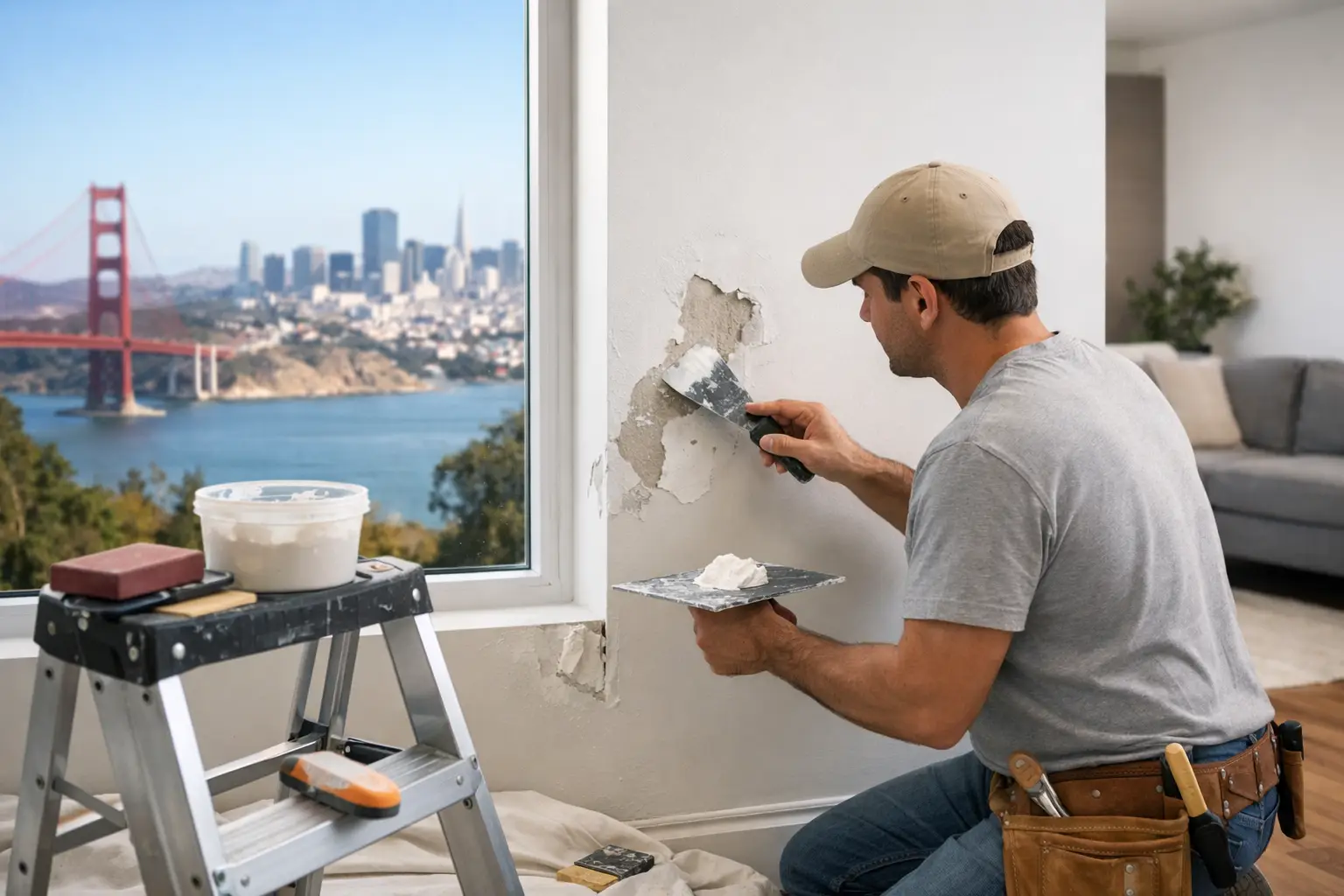
A small wall crack can be easy to ignore until it widens beside a doorway, catches the light, or returns after being patched. San Francisco drywall repair is not just about making a wall look clean again. A durable repair starts with identifying what caused the damage, especially in homes with older construction, active households, previous renovations, or a history of moisture.
For busy homeowners, landlords, and property managers, the goal is straightforward: get the damage assessed correctly, repaired cleanly, and finished in a way that does not create another project a few months later. The right scope depends on the type of damage, where it appears, and whether the drywall itself is the real problem or simply showing signs of something behind it.
When San Francisco Drywall Repair Should Not Wait
Drywall damage is often cosmetic, but not always. A nail pop, a shallow dent, or a small picture-hanging hole can usually be handled before painting or during routine maintenance. Water stains, soft wallboard, recurring cracks, and sagging ceiling areas deserve faster attention because they may point to a leak, movement, or deteriorated material.
Moisture is the most urgent issue. Drywall absorbs water quickly, then loses strength as its gypsum core and paper facing break down. A brown ceiling stain may come from a plumbing leak, roof issue, window intrusion, or condensation. Painting over it without addressing the source can trap the homeowner in a cycle of stains, peeling paint, and repeated repairs.
A damaged ceiling needs particular care. Ceiling drywall carries its own weight, and a soft or bowed section can become a safety concern. If the area is actively wet, spreading, or showing signs of separation, avoid disturbing it and arrange an inspection promptly. The repair may involve opening the affected area, resolving the source of moisture, replacing damaged board, and restoring the texture and paint.
Cracks require a little more judgment. Fine, hairline cracks can result from normal settling or seasonal expansion and contraction. Wider cracks, cracks that run diagonally from window or door corners, or cracks that keep reopening may indicate movement that needs to be evaluated before cosmetic work begins. A good repair should not hide a condition that is still active.
What a Lasting Drywall Repair Actually Includes
The visible patch is only one part of professional drywall work. The quality of the finished wall depends on preparation, reinforcement, finishing, and blending the repaired area into the surrounding surface.
For a small hole, the work may involve fitting a backing or patch material, applying joint compound in thin layers, sanding between coats, priming, and painting. Larger holes usually need a new piece of drywall cut to fit the opening. The seams are taped and coated so they remain stable rather than cracking along the edges later.
Texture matching is where many otherwise solid repairs become obvious. Smooth walls demand careful feathering so the patch disappears under paint. Orange peel, knockdown, skip trowel, and other textured finishes require a different approach. The goal is not simply to cover the seam. It is to recreate the visual pattern well enough that the repair does not stand out across the room.
Paint is another common trade-off. If the exact paint color and sheen are available, a localized touch-up may blend successfully. In rooms with aged paint, sunlight exposure, or walls that have been cleaned unevenly over time, even a correct color can look different. Painting the entire wall is sometimes the cleaner choice, especially around a large repair or in a highly visible area.
Common Damage and the Right Repair Approach
Door handles, moving furniture, and everyday impacts create punctures and dents. These are usually straightforward repairs when the surrounding drywall is solid and dry. Small holes can be filled and finished, while larger openings need support behind the patch to prevent weak edges.
Nail pops happen when fasteners move slightly beneath the drywall surface. Simply adding compound over the bump may not last. The repair typically requires securing the drywall properly near the affected fastener, setting the area below the surface, then taping or finishing as needed. If multiple nail pops appear in one area, it is worth looking for a broader fastening or movement issue.
Water-damaged drywall should not be treated like a normal patch. Once drywall becomes soft, swollen, crumbly, or mold-affected, replacement is generally more reliable than trying to dry and cover it. The water source must be corrected first. Otherwise, a new patch will inherit the same problem.
Corner damage is common in hallways, stairwells, and rental properties. The metal or vinyl corner bead beneath the finish coat can bend or separate after an impact. A quality repair may require straightening or replacing the damaged bead, not just filling over the cracked corner. This keeps the edge crisp and helps prevent the damage from returning.
Cracks at drywall seams can be caused by insufficient tape bonding, framing movement, or previous repair work that was rushed. A lasting fix often means removing loose material, applying new tape correctly, building out compound in thin coats, and allowing proper drying time. Thick compound applied in one pass can shrink, crack, or create a noticeable hump.
Why Fast Patching Is Not Always the Best Value
It is reasonable to want a repair completed quickly, especially before guests arrive, a tenant moves in, or a property goes on the market. But speed should not mean skipping diagnosis or drying time. A repair that looks good on the first day can fail quickly if moisture remains in the cavity, loose drywall was not secured, or the patch was not feathered and primed properly.
DIY repairs can make sense for very small, dry holes in an inconspicuous area. They are less forgiving when the damage is overhead, textured, water-related, or larger than a simple patch. Sanding dust, uneven texture, flashing paint, and visible seams are common frustrations. There is also a practical difference between filling a hole and restoring a wall so it looks finished in normal daylight.
Hiring a professional can be the more efficient choice when several repairs need attention at once. A technician can address wall patches, ceiling damage, door trim issues, paint touch-ups, and related maintenance in a coordinated visit when the scope is appropriate. That avoids the hassle of bringing in separate providers for small but important jobs.
Preparing for a Drywall Repair Visit
A few simple details help the work move faster and produce a better result. Clear furniture and wall decor away from the damaged area when possible, and point out any history of leaks, plumbing work, roof repairs, or recurring cracks. Photos of the damage before it changed can also be useful, particularly with intermittent water stains.
Be realistic about access and finish expectations. A repair behind a large built-in, above a stairway, or on a high ceiling may require additional setup. Matching an older wall texture or paint color can take more care than repairing the drywall itself. Clear communication upfront helps determine whether a targeted repair is appropriate or whether a larger section should be refinished for a consistent appearance.
For properties in San Francisco and across the Bay Area, Fullhouse Remodeling & Handyman Services can help homeowners and property managers address drywall damage with contractor-level capability and practical handyman responsiveness. The focus should be on a repair that is secure, clean, and suited to the condition of the wall – not a temporary cover-up.
If a crack is growing, a ceiling stain is spreading, or a wall feels soft to the touch, treat it as useful information from the building. Addressing the cause early often protects more than the drywall: it protects the finish, the room, and the time you would otherwise spend repairing the same area twice.
