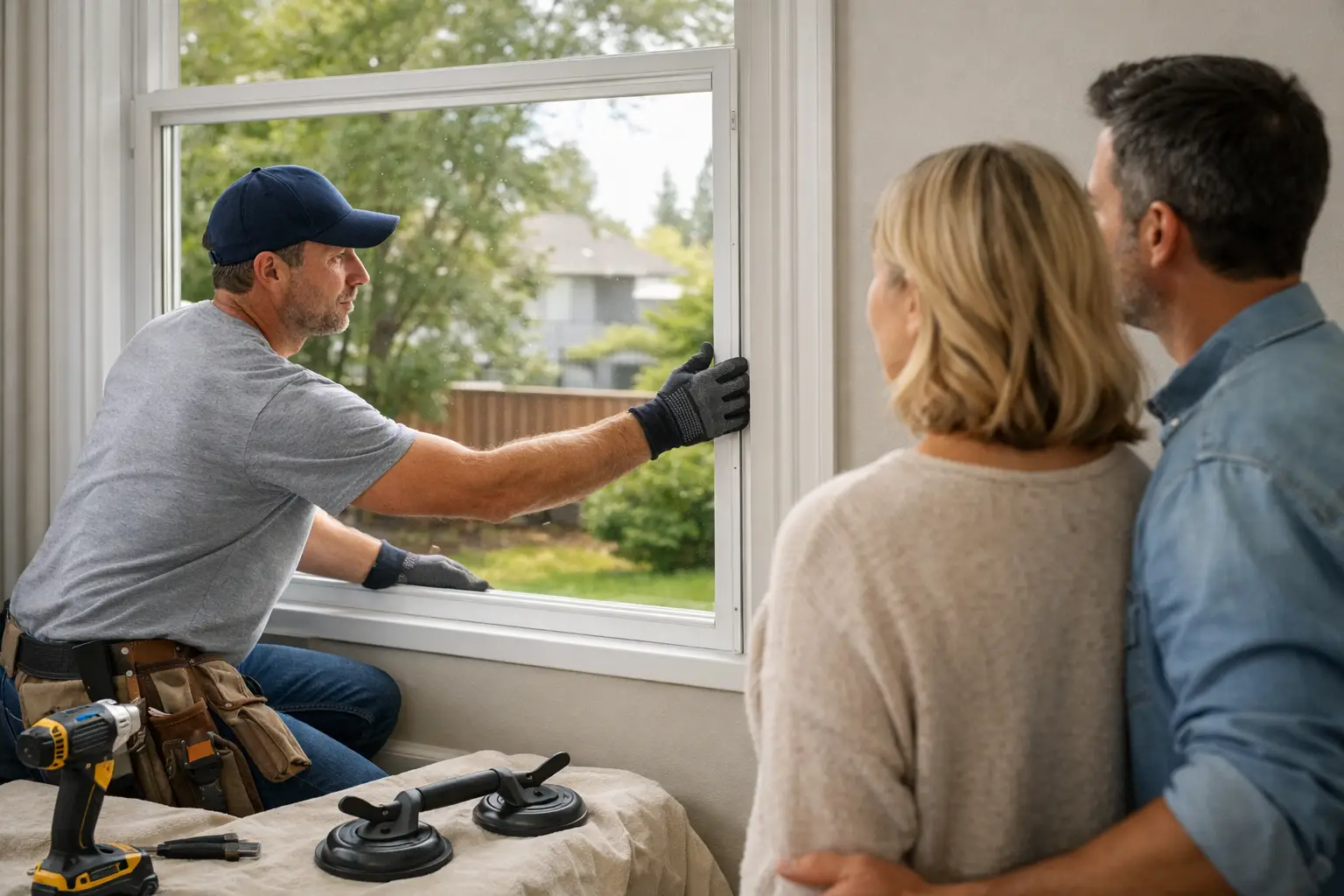
Old windows usually make themselves known slowly. A little draft near the couch. Condensation that never seems to go away. Paint starting to peel around the frame. Then one day the window sticks, won’t lock right, or lets in enough outside noise that you finally decide it’s time.
This window replacement guide is built for homeowners who want clear answers before they commit. If you are replacing one failed unit or planning a full-house upgrade, the right choice depends on more than style alone. The age of the home, the condition of the surrounding frame, your energy goals, and the quality of the installation all matter.
When window replacement makes sense
Not every problem means you need a brand-new window. In some cases, a repair is enough. Minor trim damage, worn caulking, or a hardware issue can often be fixed without replacing the whole unit. But if the glass seal has failed, the frame is rotting, the sash is warped, or the window no longer opens and closes properly, replacement is usually the better long-term move.
A lot of homeowners wait until damage becomes obvious. That can be costly. Water intrusion around a bad window can affect drywall, trim, and even framing over time. In older homes, especially, a window problem can be the visible symptom of a larger issue around the opening.
If your heating and cooling bills feel high, replacement can also be worth considering even before failure. Older single-pane windows and worn frames often let conditioned air escape. New windows can improve comfort noticeably, especially in rooms that get too hot in the afternoon or feel cold in the morning.
Window replacement guide: full-frame vs insert replacement
One of the most important decisions in any window replacement guide is the installation method. Homeowners often compare window brands and glass options first, but the real question is whether the existing frame is in good enough shape to keep.
Insert replacement
Insert replacement fits a new window into the existing frame. This approach works best when the original frame is structurally sound, square, and free from moisture damage. It is typically less invasive, faster to complete, and may reduce disruption to interior and exterior finishes.
The trade-off is that you are working within the limits of the old frame. Glass area may shrink slightly, and any hidden damage in the original frame will remain a problem.
Full-frame replacement
Full-frame replacement removes the entire window assembly down to the rough opening. This is often the better option when there is rot, warping, water damage, or poor previous installation. It also gives you more flexibility if you want to change window size, improve insulation around the opening, or update exterior trim.
It usually costs more in labor and materials, and it can involve more finish work. But when the opening has underlying issues, full-frame replacement is often the smarter investment because it addresses the source of the problem instead of covering it.
Choosing the right window material
Material affects maintenance, durability, appearance, and performance. There is no single best choice for every home.
Vinyl is popular because it is cost-effective, low maintenance, and energy efficient. For many homeowners, it offers the best balance of performance and value. That said, not all vinyl windows are built the same. Lower-grade products can look bulky or hold up poorly over time.
Wood windows have a classic appearance that suits many traditional homes, but they require more upkeep. They can be a strong choice when preserving the look of an older property matters, though they generally involve a higher commitment to maintenance.
Fiberglass is durable and stable in changing temperatures. It tends to perform well over the long run and can offer a slimmer profile than some vinyl products. The upfront cost is often higher, but some homeowners prefer it for longevity.
Aluminum windows can work well in certain designs, especially modern homes, but thermal performance varies. In a mild climate, they may still be a practical option, though energy efficiency should be reviewed carefully.
Picking a window style that actually fits the room
The best style is the one that works with how the room is used. Double-hung windows are common because they are versatile and easy to clean. Casement windows can seal tightly and often provide strong ventilation. Sliding windows are simple and practical for wider openings. Picture windows bring in light but do not open, so they are better where ventilation is not a priority.
Bathrooms and kitchens often benefit from styles that are easy to operate in tight spaces. Bedrooms need to balance airflow, privacy, and code requirements if the window serves as an emergency exit. Living areas usually call for a mix of natural light and energy performance.
If you are replacing several windows at once, it helps to think in terms of the whole house, not just one opening at a time. Matching sightlines, trim details, and operating styles can make the finished result feel intentional instead of pieced together.
Energy efficiency without the sales pitch
Most homeowners want better efficiency, but product labels can get confusing fast. Start with the basics. Glass packages, low-emissivity coatings, multiple panes, and gas fills all affect how the window performs. The right combination depends on sun exposure, room orientation, and comfort goals.
In the Bay Area, energy efficiency is less about extreme winter conditions and more about year-round comfort, UV protection, and limiting heat gain in bright rooms. A well-chosen window can help keep indoor temperatures more consistent without making the house feel closed off.
Still, product performance on paper is only part of the equation. Even a high-quality energy-efficient window can underperform if it is installed poorly. Gaps, improper flashing, and bad sealing can cancel out the benefit quickly.
Why installation quality matters as much as the window itself
This is where many projects go wrong. A window can look fine on day one and still fail early if the opening was not prepared correctly. Proper installation means checking the rough opening, managing moisture, insulating where needed, and making sure the unit is level, secure, and fully sealed.
That matters even more in older homes, where openings are not always square and hidden damage is more common. A reliable installer will assess the surrounding materials, not just swap out the visible parts. If trim, siding, or interior finishes need attention during the process, that should be addressed clearly from the start.
For homeowners who do not want to coordinate multiple trades, working with one licensed team that can handle both the window installation and related carpentry or finish repairs can save time and reduce mistakes.
What to ask before you approve the job
A good quote should tell you what is being replaced, what installation method is planned, and whether any repair work around the opening is included. If rot or water damage is discovered during removal, ask how that will be handled. You also want clarity on who is responsible for trim, caulking, finishing, and cleanup.
It is also reasonable to ask about lead times, especially if the windows are custom-sized. Delays often come from manufacturing, not the installation itself. Knowing the sequence helps you plan and avoids frustration.
If your home is older, ask whether the contractor expects any hidden framing or moisture issues. You may not know the answer before opening the wall, but an experienced professional should be able to explain the possibilities and the likely next steps.
A practical timeline for homeowners
Window replacement is usually smoother when it is planned before the windows fail completely. If a window still functions but shows signs of deterioration, that is often the best time to act. You have more flexibility in scheduling, product selection, and budgeting.
If multiple windows are showing the same age-related issues, replacing them together may be more efficient than doing one emergency repair after another. On the other hand, if only one or two windows are damaged and the rest are sound, a phased approach can make sense. It depends on the condition of the house and your goals.
For busy homeowners, the real priority is not just getting new windows. It is getting the job done cleanly, correctly, and without unnecessary back-and-forth. That is why many people choose a contractor who can evaluate the full scope, explain the trade-offs in plain terms, and handle the related repair work if needed.
A good window replacement project should leave your home quieter, more comfortable, and easier to maintain. If you start with the condition of the opening, not just the look of the glass, you are far more likely to get a result that holds up.
