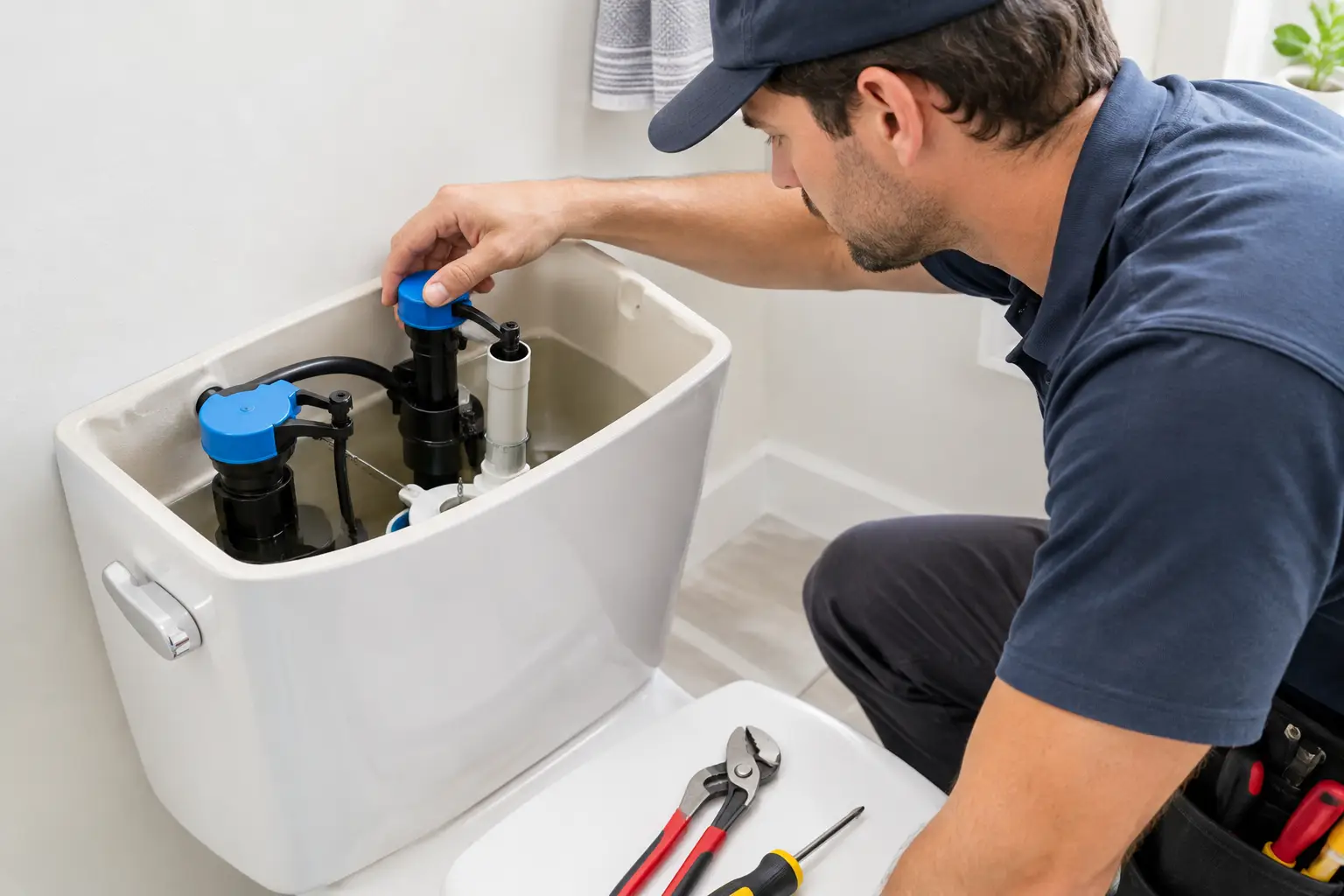
That faint hiss after a flush is easy to ignore until it becomes the soundtrack of your bathroom. When a toilet keeps running, it is usually wasting water around the clock, even if there is no puddle on the floor. The good news is that most running toilets come down to a few parts inside the tank, and a quick inspection can often identify the problem.
A toilet tank is simple by design. Water enters through the fill valve, stops at the proper level, and stays in the tank until the next flush. If water continues entering the bowl or the tank never stops filling, one of those steps is failing. Addressing it promptly can prevent a higher water bill and avoid the inconvenience of a toilet that suddenly will not refill or flush correctly.
First, Stop the Water If It Is Overflowing
If water is rising toward the top of the tank or spilling onto the floor, turn the shutoff valve behind the toilet clockwise right away. It is usually located low on the wall or floor near the base of the toilet. Then remove the tank lid carefully and set it on a towel or stable surface. Porcelain lids can crack easily.
If the tank is not overflowing, there is no need to shut the water off immediately. Take the lid off and watch what happens after the toilet finishes flushing. You are looking for where the water goes and whether the fill valve ever shuts off. That observation usually narrows the issue down quickly.
The Most Common Reasons a Toilet Keeps Running
A worn or misaligned flapper
The flapper is the rubber seal at the bottom of the tank. After you flush, it lifts to release water into the bowl, then should settle back into place and create a watertight seal. Over time, rubber flappers can become warped, stiff, dirty, or cracked. Mineral buildup can also prevent the seal from sitting flat.
When the flapper leaks, water slowly drains from the tank into the bowl. The fill valve senses the lower water level and turns on periodically to refill the tank. You may hear the toilet run for a few seconds every several minutes, even when nobody has used it.
Start by checking that the flapper is centered over the drain opening and that nothing is caught underneath it. If it looks worn or feels brittle, replacement is usually the practical fix. Also check the chain connecting the flush lever to the flapper. A chain that is too short can hold the flapper slightly open. It needs a little slack when the flapper is closed, but not so much that it tangles.
The fill valve is not shutting off
The fill valve controls water entering the tank after a flush. It should turn off once the water reaches the correct height. If it is dirty, worn, or incorrectly adjusted, it may keep filling long after the tank is full.
Look at the water level inside the tank. Most toilets have a fill line marked on the overflow tube or tank wall. The water should sit roughly an inch below the top of the overflow tube. If it is reaching the tube and flowing into it, the fill valve needs adjustment or replacement.
Many newer fill valves have a small adjustment screw or sliding clip that lets you lower the water level. Make small adjustments, flush, and watch the refill cycle. If the valve still hisses, refills slowly, or fails to turn off, replacing it is generally more reliable than trying to extend the life of a failing part.
The float is set too high or is sticking
On some toilets, the fill valve is controlled by a float cup that moves up and down with the water. Older models may use a float ball attached to a metal arm. When the float does not rise properly, the valve does not receive the signal to shut off.
A float may simply be set too high, especially after a past repair. It can also stick because of debris, corrosion, or a damaged mechanism. Gently move the float while the tank is filling. If moving it upward stops the water, the float setting or the fill valve assembly is likely the source of the issue.
Do not force brittle plastic components. A small adjustment is reasonable, but if the part catches, leaks, or feels loose, it is better to replace the assembly than risk turning a minor repair into a broken tank fitting.
The refill tube is pushed too far into the overflow tube
The thin flexible refill tube clips to the top of the overflow tube. Its job is to restore the proper amount of water to the bowl after flushing. If the end of that tube is inserted down inside the overflow pipe instead of clipped above it, it can create a siphoning effect. Water may continue draining into the bowl, causing the fill valve to run repeatedly.
The solution is simple: make sure the refill tube is secured above the opening of the overflow tube. It should direct water into the tube without being submerged inside it.
A cracked overflow tube or tank component
Less often, the overflow tube itself has a crack or has separated from the flush valve base. In that case, water can leak from the tank into the bowl even though the flapper appears to be closed. A crack can be difficult to spot, particularly if it is below the normal waterline.
Inspect the tube closely with a flashlight. If the toilet only runs when the water level reaches a particular point, a damaged overflow tube is a real possibility. This repair often requires removing the tank from the bowl to replace the flush valve assembly. That is a manageable project for an experienced homeowner, but it calls for careful handling of porcelain, bolts, and old seals.
A Simple Dye Test for a Hidden Flapper Leak
A running toilet does not always make a noticeable sound. If you suspect water is leaking from the tank into the bowl, a dye test can confirm it.
Add a few drops of food coloring to the tank water, then do not flush for 15 to 20 minutes. Check the bowl afterward. If colored water appears in the bowl, water is passing through the flapper or flush valve seal. Flush immediately once the test is complete so the dye does not stain the porcelain.
This test is useful because it separates a slow tank leak from a fill-valve problem. If no color reaches the bowl but the toilet is still hissing, focus on the fill valve, float, and overflow level instead.
When a Quick Repair Makes Sense
Replacing a flapper, adjusting a float, or installing a new fill valve are common maintenance tasks. Before buying a replacement part, check the toilet model or bring the old part to a hardware store for comparison. Toilet components are not all identical, and the wrong flapper size or valve height can create another problem.
Turn off the water supply before removing any tank component, flush to drain the tank, and keep towels nearby for the remaining water. Avoid overtightening plastic nuts or tank bolts. Tightening them too aggressively can crack fittings or porcelain.
If the toilet is older, it can be worth replacing the flapper and fill valve together when both show wear. The trade-off is a little more work upfront, but it can prevent repeat repairs from aging components that are nearing the end of their service life.
When to Call a Professional
Call for professional plumbing help if the shutoff valve will not close, the toilet is overflowing, the tank is cracked, or the repair requires removing the tank and you are not comfortable doing so. You should also get help if the toilet keeps running after replacing the flapper and adjusting the fill valve. The issue may involve a damaged flush valve seat, hidden mineral buildup, an incorrect prior installation, or a problem with the toilet’s internal assembly.
For Bay Area homeowners, landlords, and property managers, a prompt repair is especially useful in vacant units, rentals, and busy households where a small water waste issue can go unnoticed for days. Fullhouse Remodeling & Handyman Services can diagnose the cause, replace worn toilet components, and make sure the refill cycle is working correctly without guesswork.
A toilet should fill, stop, and stay quiet until the next flush. If yours does not, start with the water level and flapper, act before the waste adds up, and do not hesitate to bring in qualified help when the repair moves beyond a simple adjustment.
