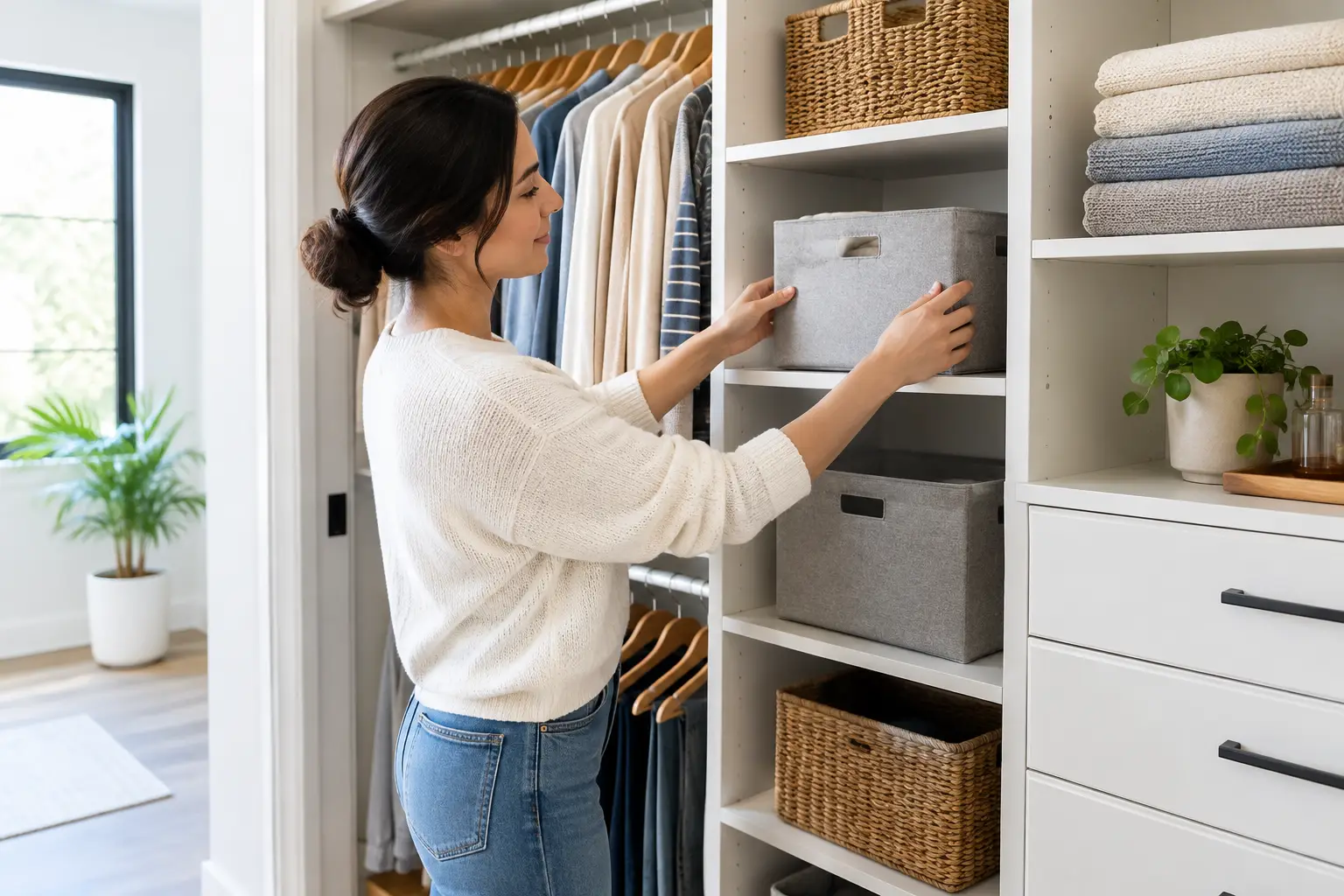
A closet can look full long before it is actually working hard. That is especially true in Bay Area homes, where bedroom closets are often compact, shared, or expected to hold more than clothing. Learning how to organize closet space is less about buying a stack of matching bins and more about creating a layout that makes getting dressed, putting laundry away, and finding what you need noticeably easier.
The best closet organization starts with honest decisions about what belongs there, followed by a storage plan built around your real daily routine. A setup that looks good but requires constant rearranging will not last.
Start by Emptying the Closet and Taking Stock
Remove everything from the closet before deciding where anything should go back. It is the fastest way to see the actual shelf space, hanging space, wall area, and awkward corners you have to work with. Vacuum the floor, wipe down shelves, and check for loose rods, sagging shelves, sticking doors, or poor lighting while the closet is empty.
Then sort your items into clear groups: clothes you wear often, seasonal clothes, special-occasion items, shoes, bags, linens, and items that belong somewhere else. Be realistic about frequency of use. If you have not worn something in a year because it does not fit, needs repair, or no longer suits your life, it should not occupy prime closet space.
This step is also where many closets reveal a bigger issue. If the rod is pulling away from the wall, shelves are warped, or there is only one high shelf above a single rod, organizing products alone will not solve the problem. A few well-placed shelves, a second hanging rod, or a properly secured closet system can make a small closet far more useful.
How to Organize Closet Space Around Daily Use
Think of your closet in zones rather than as one large storage box. The items you reach for several times a week should be between knee height and eye level. That is the most valuable real estate in the closet.
Place everyday shirts, work clothes, uniforms, and frequently worn shoes where you can grab them without bending, stretching, or moving other items. Less-used clothing, formalwear, and seasonal pieces can go higher up or toward the back. Heavy luggage, spare bedding, and keepsake boxes belong on sturdy upper shelves, not balanced on a flimsy rod or piled where they may fall.
For a shared closet, divide the space intentionally. Each person should have a defined section for hanging clothes, folded items, and shoes. A vague arrangement where everyone uses any open spot tends to become cluttered quickly. Even in a small reach-in closet, a simple left-and-right division can prevent daily frustration.
Measure Before You Buy Storage Pieces
Measure the width, depth, and height of the closet, including the door swing. Measure the length of hanging garments, too. Long dresses and coats need more vertical clearance than shirts, while folded sweaters and jeans need shelf depth more than hanging space.
Avoid purchasing containers before you know what they must hold. Oversized bins can waste valuable shelf space, while deep baskets often become places where small items disappear. Choose containers that fit the shelf dimensions and let you see or easily access their contents.
Clear containers work well for infrequently used items, but opaque labeled bins can look cleaner for linens, accessories, and seasonal storage. The better choice depends on whether you need visual reminders or prefer a more uniform appearance.
Add Hanging Space Before Adding More Hangers
Most standard closets underuse vertical space. If you hang mostly shirts, blouses, skirts, and folded pants, adding a second rod below the existing one can nearly double the available hanging capacity. Reserve one full-height section for dresses, long coats, or other long garments.
Use the same style of slim, sturdy hanger where possible. Matching hangers are not just cosmetic. They reduce bulk, prevent clothes from slipping, and make it easier to see what you own. However, delicate items and structured jackets may need wider or padded hangers, so do not force every garment onto one type.
Keep the rod from becoming a storage solution for everything. A packed rod makes it difficult to find clothes, causes wrinkles, and puts extra stress on the mounting hardware. Leave a little breathing room so hangers can slide freely.
Make Shelves and Drawers Do Specific Jobs
Shelves are useful only when they are assigned a purpose. A high shelf becomes cluttered when it holds random bags, extra towels, gift wrap, and shoes all at once. Give each shelf one category, such as seasonal clothes, bedding, handbags, or hats.
Folded clothing stays neater when stacks are short. Instead of creating one tall pile of sweaters, make two or three lower stacks that are easier to remove without toppling. Shelf dividers can help separate piles, particularly in closets shared by more than one person.
If your closet has drawers, use small organizers for socks, underwear, belts, jewelry, and other loose accessories. Deep drawers are better for bulkier items like workout clothes or pajamas. Do not put rarely used belongings in the easiest drawers simply because they fit there. Convenient storage should serve your current routine.
Use the Floor Carefully
The closet floor is often the first place clutter collects. Limit it to shoes, a narrow hamper if there is room, or a few low-profile bins. Keep a clear path to the back wall so cleaning and retrieving items do not turn into a balancing act.
Shoe racks can be helpful, but only when they fit the closet depth without blocking the door or walking area. For a household with many pairs of shoes, storing out-of-season footwear in labeled bins on an upper shelf may be more practical than trying to display every pair at once.
Improve Lighting and Visibility
Poor lighting makes even a neatly organized closet feel inconvenient. If you cannot see the back of the shelf, you will likely forget what is there and buy duplicates. Battery-powered motion-sensor closet lights can improve visibility without a major project, while hardwired lighting may be the right choice during a remodel or when electrical work is already planned.
Keep lighting fixtures clear of clothing and follow safety requirements for placement. If you are upgrading shelves or adding a built-in system, plan the lighting at the same time. It is easier to route wiring and position fixtures before the storage installation is complete.
A mirror on the closet door or nearby wall can also reduce morning traffic in a shared bathroom. In a tight room, that small change may make the whole routine run more smoothly.
Build a System You Can Maintain in Minutes
The most effective closet is not the one with the most accessories. It is the one that is simple enough to reset after laundry day. Keep a donation bag or box nearby for clothes that no longer fit or get worn. When it is full, remove it instead of letting it become permanent closet storage.
Plan a quick seasonal review twice a year. Move cold-weather clothing forward when temperatures drop, then store it away when the season changes. This is also a good time to inspect shelving, rods, anchors, and door hardware for wear.
If your closet layout is the real problem, professional installation can be a better long-term investment than repeatedly buying organizers that do not fit. Fullhouse Remodeling & Handyman Services can help homeowners with practical upgrades such as secure shelving, closet rods, lighting coordination, drywall repair after old hardware is removed, and other finishing work that makes the space feel complete.
A well-organized closet should save time without demanding attention every day. Start with the items you use most, give every category a defined home, and make improvements that fit the way your household actually lives. The result is not just a cleaner closet – it is one less daily task competing for your time.
