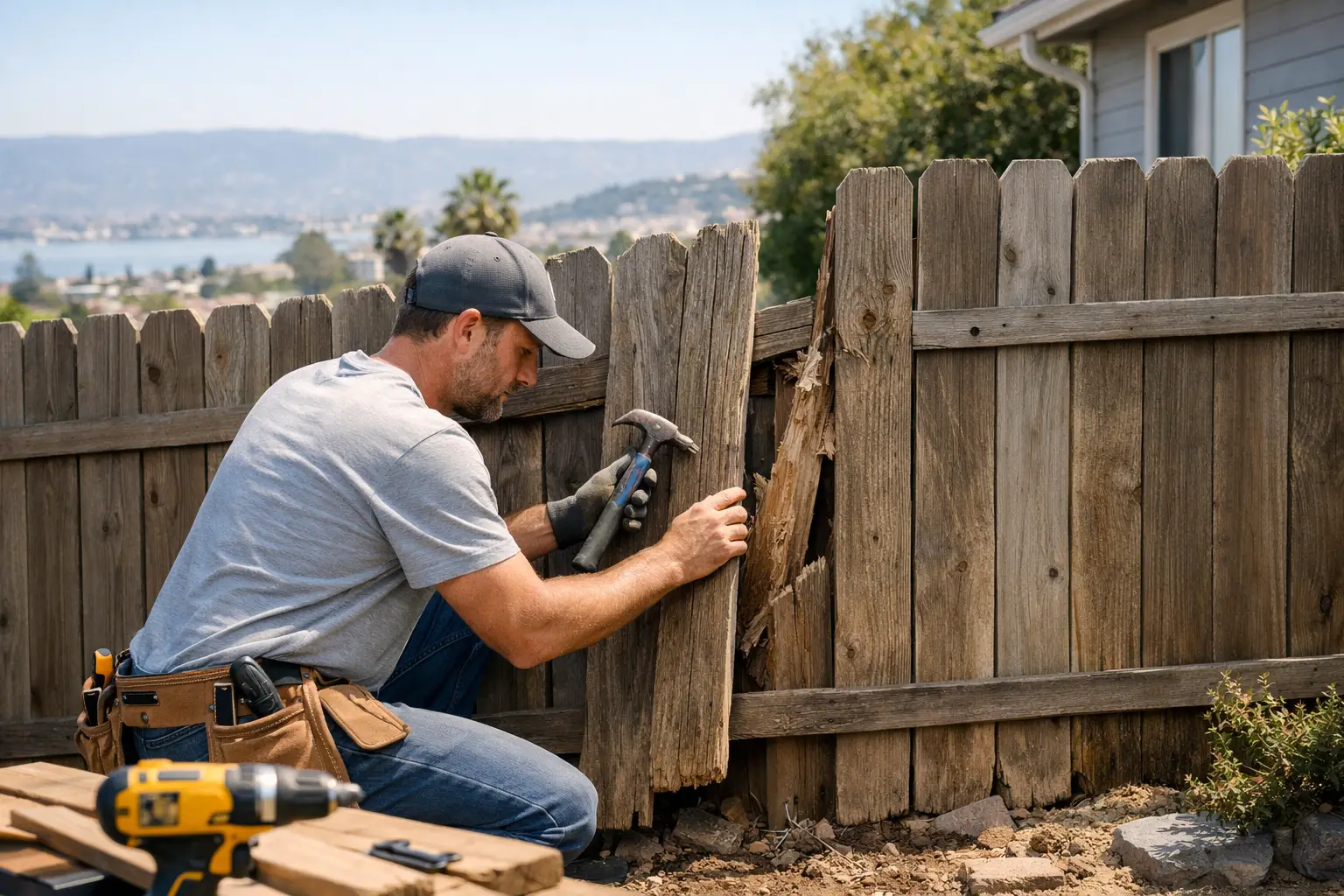
A fence rarely fails all at once. It starts with a gate that drags, a post that leans after rain, or one loose board that rattles in the wind. Timely Oakland fence repair keeps those smaller issues from turning into a privacy, safety, or property-boundary problem that requires much more extensive work.
For homeowners, landlords, and property managers, the right repair depends on what is actually damaged. A loose picket is very different from a rotted support post, and a sagging gate may be a hardware issue rather than a sign that the entire fence is worn out. A professional inspection helps separate a focused repair from a larger project, so you can make a practical decision without paying to replace materials that still have useful life.
What Oakland Fence Damage Usually Means
Oakland properties can put fences through a lot. Moisture, changing temperatures, strong sun exposure, mature landscaping, uneven ground, and normal daily use all affect wood, metal, and composite fencing. Even a well-built fence needs maintenance because its posts, fasteners, gates, and panels do not age at the same rate.
Wood fences are especially vulnerable where they meet the ground. If a post stays damp, dry rot can soften the lower section while the rest of the fence still looks sound from a distance. Boards may cup, split, or pull away from rails as they expand and contract. Paint and stain also wear down over time, leaving exposed wood more likely to absorb moisture.
Metal fencing has different concerns. Rust around a base plate, hinge, fastener, or welded connection can weaken a section that otherwise appears stable. A vehicle bump, a falling branch, or shifting soil can bend panels or throw a gate out of alignment. The visible damage may be limited, but the attachment points should be checked before the fence is put back into service.
Signs You Should Schedule Fence Repair Soon
A fence does not have to be on the ground to need attention. Waiting for a full collapse can create a larger repair, especially when a loose section pulls on neighboring posts and rails.
Look closely if you notice a gate that will not latch, posts that move when pushed, boards with soft or darkened areas near the bottom, or rails that are separating from the posts. A fence that leans noticeably, has gaps opening beneath it, or contains exposed nails and sharp hardware should be addressed promptly. These conditions can affect pets, children, tenants, and anyone using a shared driveway or side yard.
Property owners should also inspect the fence after heavy rain, high winds, or landscaping work near the line. Roots, irrigation leaks, and soil erosion can change the support around a post without causing obvious damage immediately. Catching that movement early can allow for post reinforcement or replacement before several fence sections have to come down.
When Oakland Fence Repair Is Enough
Repair is often the smart choice when the damage is isolated and the fence structure remains stable. Replacing a few cracked boards, securing loose rails, resetting one post, or installing new gate hardware can restore the fence’s function and appearance without disturbing the entire run.
Gate repairs are a common example. A gate can sag because hinges are loose, screws have pulled out, the frame is out of square, or the supporting post has shifted. Replacing only the latch may not solve the problem if the post is moving. On the other hand, a properly reinforced frame and new hardware may bring an otherwise solid gate back into reliable operation.
A focused repair also makes sense after an isolated impact. If a branch damages one panel or a delivery vehicle clips a corner, the surrounding posts and rails may still be in good condition. Matching the replacement materials, spacing, and finish helps the repair blend with the existing fence rather than making the patch look like an afterthought.
When Replacement May Be the Better Value
There is a point where repeated repairs stop being efficient. If many posts are rotted, several sections lean, rails are deteriorating throughout the yard, or the fence has been patched multiple times with mismatched materials, replacement may offer a more dependable result.
The deciding factor is usually the structure, not just the surface. Fresh paint can improve appearance, but it cannot restore wood that has lost strength or posts that no longer hold securely in the ground. Likewise, replacing boards on weak rails can leave the fence looking better while still creating a stability issue.
Replacement may also be worth considering when your needs have changed. A family may need more privacy, a property manager may need a more durable boundary between units, or a homeowner may want a gate that better accommodates regular access. In those situations, repairing the existing fence can be reasonable, but a redesigned section may serve the property better over the long term.
The Parts of a Fence That Need a Real Inspection
Good fence repair starts below the obvious damage. The visible broken board matters, but it is only one part of the system. Posts carry the load, rails hold panels in position, fasteners keep connections secure, and gates place repeated stress on hinges and latches.
During an inspection, it helps to check the condition of each post at ground level, the alignment of the fence line, and the attachment between rails and posts. The team should also identify moisture sources such as poor drainage, downspout discharge, or irrigation that repeatedly wets the same area. Repairing a rotted post without addressing the water source can lead to the same problem again.
Fence location matters, too. A side-yard fence on a slope needs different support considerations than a short decorative fence in a level front yard. Shared boundaries can add another layer of planning, particularly if access from the neighboring property is needed to complete the work. Clear communication before work begins helps prevent surprises about scope, materials, and access.
How to Protect a Repaired Fence
After Oakland fence repair is complete, a few simple habits can extend the life of the work. Keep soil, mulch, and dense plant growth from staying pressed against wood boards and posts. Trim vines and shrubs that trap moisture or put pressure on panels. Check that sprinklers are not spraying the same fence section every day.
For wood fencing, maintain the protective finish as it wears rather than waiting until bare wood is exposed. For metal components, address chipped coatings and early rust before corrosion spreads around a connection. Gates deserve regular attention because small alignment changes are easier to correct before hardware bends or the frame twists.
If you are maintaining a rental or commercial property, add fence checks to routine exterior walk-throughs. Gates, perimeter fencing, trash enclosure fences, and shared access areas receive more use than many homeowners realize. A quick inspection can identify loose hardware and shifting posts before they become a tenant complaint or safety concern.
Choose a Repair Team That Can See the Whole Project
Fence problems can involve more than fencing. A leaning section may relate to drainage, damaged siding nearby, dry rot at an attached structure, or a gate opening that needs carpentry work to function properly. Choosing a provider with broad repair experience can make the process more straightforward when the issue crosses into other parts of the property.
Fullhouse Remodeling & Handyman Services provides practical repair support for Bay Area property owners who need clear communication, dependable workmanship, and a solution that fits the actual condition of the fence. Whether the job calls for a targeted repair or a larger correction, the goal should be a secure, functional result that does not leave the underlying problem behind.
A fence should provide a clear boundary without becoming another source of worry. If yours is leaning, rotting, loosening, or no longer closing correctly, addressing it while the damage is contained can protect the rest of the structure and restore peace of mind around your property.
