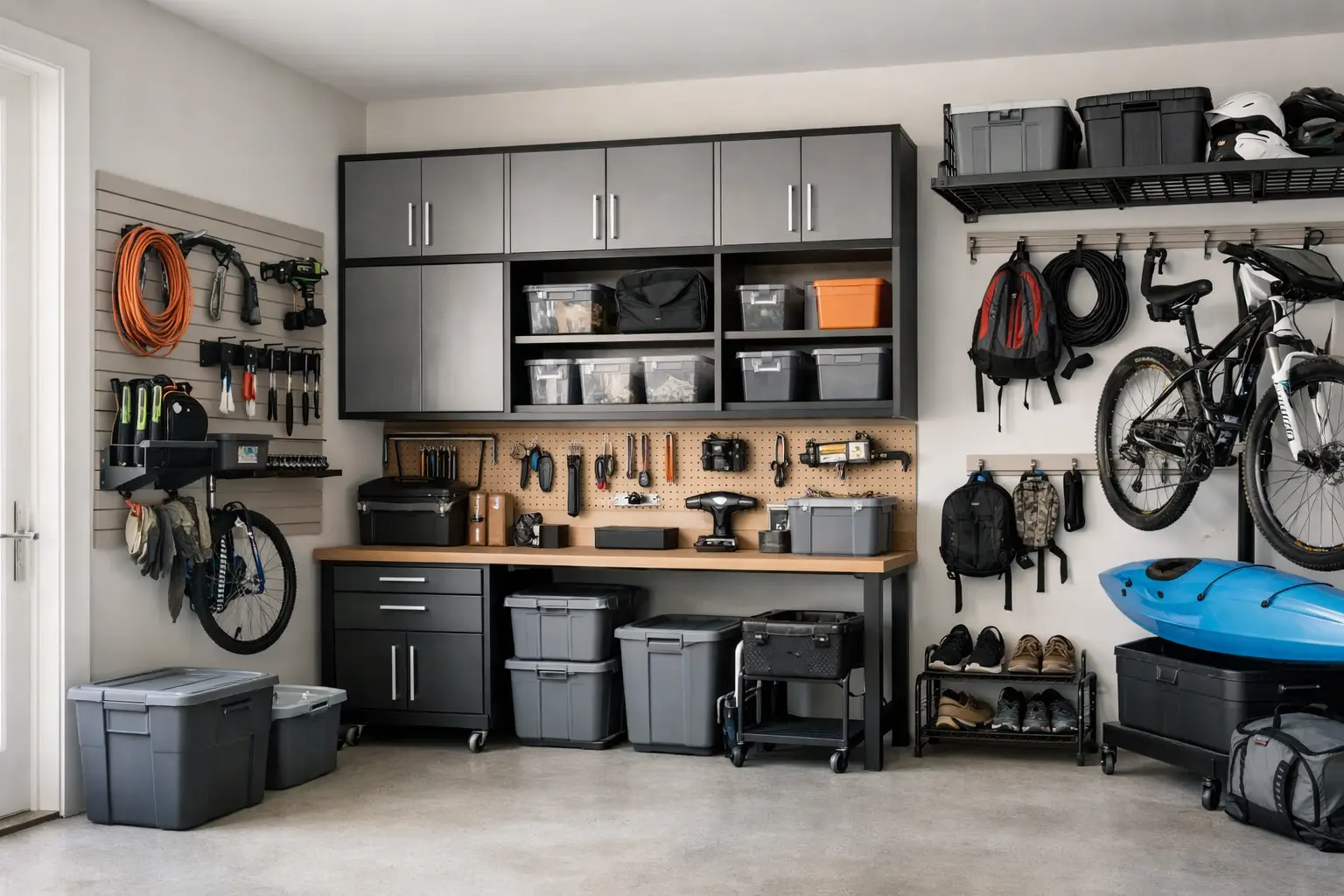
The fastest way to waste time in a garage is to store everything on the floor. One stack of paint cans turns into three, the bikes lean into the walkway, and suddenly a space meant for parking, storage, and weekend projects becomes a daily frustration. The best garage organization systems fix that by giving every category of item a defined home and making the space easier to use year-round.
A good system does more than make a garage look clean. It protects tools, keeps seasonal items from getting buried, reduces trip hazards, and helps you actually find what you need. For busy homeowners, landlords, and property managers, that matters. A garage should support the way the property functions, not create more work.
What makes the best garage organization systems work
The strongest setups are built around three things: wall space, item weight, and frequency of use. That sounds simple, but it is where many garage projects go wrong. People buy storage first and plan second, then end up with shelves that are too shallow, hooks that cannot carry the load, or cabinets that block access to outlets, doors, or vehicles.
A better approach starts with how the garage is actually used. If the space holds tools, sports gear, cleaning supplies, holiday bins, and yard equipment, each group should be stored differently. Lightweight items can go high. Everyday items should stay at arm level. Heavy or hazardous materials need stable, secure storage. The best results come from combining systems instead of relying on just one.
1. Wall track systems for flexible everyday storage
Wall track systems are often the most practical starting point because they keep items off the floor and can be adjusted over time. Hooks, baskets, and rails can hold extension cords, ladders, rakes, scooters, folding chairs, and more without locking you into one layout forever.
This option works especially well for households that expect their storage needs to change. Kids outgrow sports equipment. Tool collections expand. A garage that stores moving boxes one year may need bike storage the next. Track systems make those changes easier without requiring a full rebuild.
The trade-off is load capacity and discipline. Not every wall system is designed for heavy-duty use, and too many exposed items can still look cluttered. If you want a cleaner visual finish, a track system usually works best alongside cabinets or shelving rather than on its own.
2. Heavy-duty shelving for bins, supplies, and overflow storage
If you have a lot of bulky storage bins, shelving is hard to beat. Deep, sturdy shelves are ideal for labeled totes, contractor supplies, paint, backup household goods, and boxed seasonal items. Open shelving also gives you quick visibility, which makes inventory easier for homeowners and property managers alike.
The key is choosing the right depth and spacing. Shelves that are too deep invite forgotten junk in the back. Shelves that are too close together waste vertical space. In most garages, it makes sense to reserve one wall for higher-volume storage and keep the rest available for vehicles, work areas, or movement.
Shelving is not always the best choice for small loose items. Screws, hand tools, chargers, and automotive supplies can become messy fast if they are tossed into open bins. That is where drawers, cabinets, or smaller tool storage systems make the setup more useful.
3. Garage cabinets for a cleaner, safer finish
Cabinets are one of the best garage organization systems for homeowners who want order without visual clutter. They hide mess, protect stored items from dust, and give hazardous materials a more secure place than open shelving. If you keep chemicals, car fluids, sharp tools, or power equipment in the garage, cabinets add a level of control that open storage cannot.
They also create a more finished look, which matters if the garage connects directly to the home or doubles as a workspace. In many Bay Area homes where square footage matters, the garage is not just a catch-all zone. It may also serve as a laundry area, workshop, or utility room. Cabinets help that space feel intentional.
The downside is flexibility and cost. Once cabinets are installed, the layout is less forgiving. They also need proper anchoring and planning, especially around uneven walls, garage doors, water heaters, and electrical panels. Done right, they last. Done poorly, they become an expensive obstacle.
4. Overhead storage for seasonal and low-use items
Ceiling-mounted racks are valuable when floor space is limited and the garage ceiling height allows it. They are best for holiday decorations, camping gear, empty storage bins, and other items you do not need every week. Overhead storage can free up a surprising amount of room, especially in garages where wall space is already committed.
This system has clear limits. It should not be used for very heavy items unless the structure is designed to support the load and the rack is installed correctly. It also should not interfere with garage door operation, lighting, or attic access. In homes with lower ceilings, overhead storage can make the room feel tighter if it is overused.
Still, for the right garage, it is one of the smartest ways to reclaim square footage without losing storage capacity.
5. Slatwall panels for mixed-use garages
Slatwall systems sit somewhere between basic wall hooks and a fully customized storage wall. They provide a cleaner, more finished appearance than a simple rail system while still allowing accessories to be rearranged. They work well for hand tools, garden equipment, sports accessories, and small utility items that need to stay visible and easy to reach.
These systems are a strong fit for garages that serve multiple functions. If part of the room is used for DIY tasks, maintenance, or hobby work, slatwall helps keep frequently used items organized without crowding a workbench.
The main consideration is installation quality. Panels need to be mounted securely and aligned properly, especially if they will carry heavier items. Accessories also vary in quality, so the cheapest setup is not always the one that performs best over time.
6. Workbench systems with built-in storage
A garage without a functional work surface often turns every repair into a floor project. A workbench system solves that problem and creates a dedicated zone for assembly, maintenance, painting prep, or household fixes. The best versions include drawers, lower cabinets, pegboard or slatwall backing, and enough lighting to make the area genuinely usable.
This is one of the most effective upgrades for homeowners who handle regular home maintenance or want a more organized utility area. It gives tools a stable home and reduces the tendency for small parts to spread across shelves and boxes.
Not every garage has room for a full bench, though. In tighter layouts, a fold-down bench or compact station may be the better move. The right answer depends on how often the space is used for actual work versus storage alone.
7. Custom combinations for the best long-term result
For many households, the best garage organization systems are not a single product but a combination: cabinets on one wall, shelving on another, overhead storage for seasonal bins, and a wall-mounted system for bikes and tools. That mix gives you better control over both access and appearance.
Custom planning matters most when the garage has constraints. That could mean narrow parking clearance, uneven wall framing, old drywall, plumbing lines, or a need to share the space with laundry or utility equipment. A one-size-fits-all kit rarely accounts for those details.
This is where professional installation can save time and frustration. A properly planned system takes structure, safety, spacing, and daily use into account from the start. For homeowners who want a setup that looks clean, works hard, and holds up, that usually delivers better value than piecing together mismatched parts over several weekends.
How to choose the right system for your garage
Start by sorting what stays in the garage and what should leave it. If broken items, old packaging, and duplicate supplies are taking up space, no storage system will fix that. Once the excess is gone, group what remains by use. Keep everyday categories easy to reach and occasional-use items farther out of the way.
Next, look at the room itself. Measure wall length, ceiling height, door swing, parking space, and clearance around appliances or utility connections. The goal is not to fill every inch. It is to create storage without making the garage harder to move through.
Then think about durability. Plastic bins and light hooks may be fine for holiday decorations and balls, but yard tools, ladders, and power equipment need stronger support. Garages also deal with dust, moisture, temperature swings, and frequent impact. Materials and mounting methods matter.
If you want the space to look finished, not just functional, consistency helps. Matching cabinets, aligned shelving, and planned wall storage create a cleaner result than mixing random solutions. That is especially true when the garage is visible from the driveway or interior of the home.
A garage works best when it is set up for real life, not showroom photos. The right system should make parking easier, storage safer, and everyday tasks faster. If your current setup makes simple things harder than they should be, that is usually a sign the space needs a plan, not just more bins.
