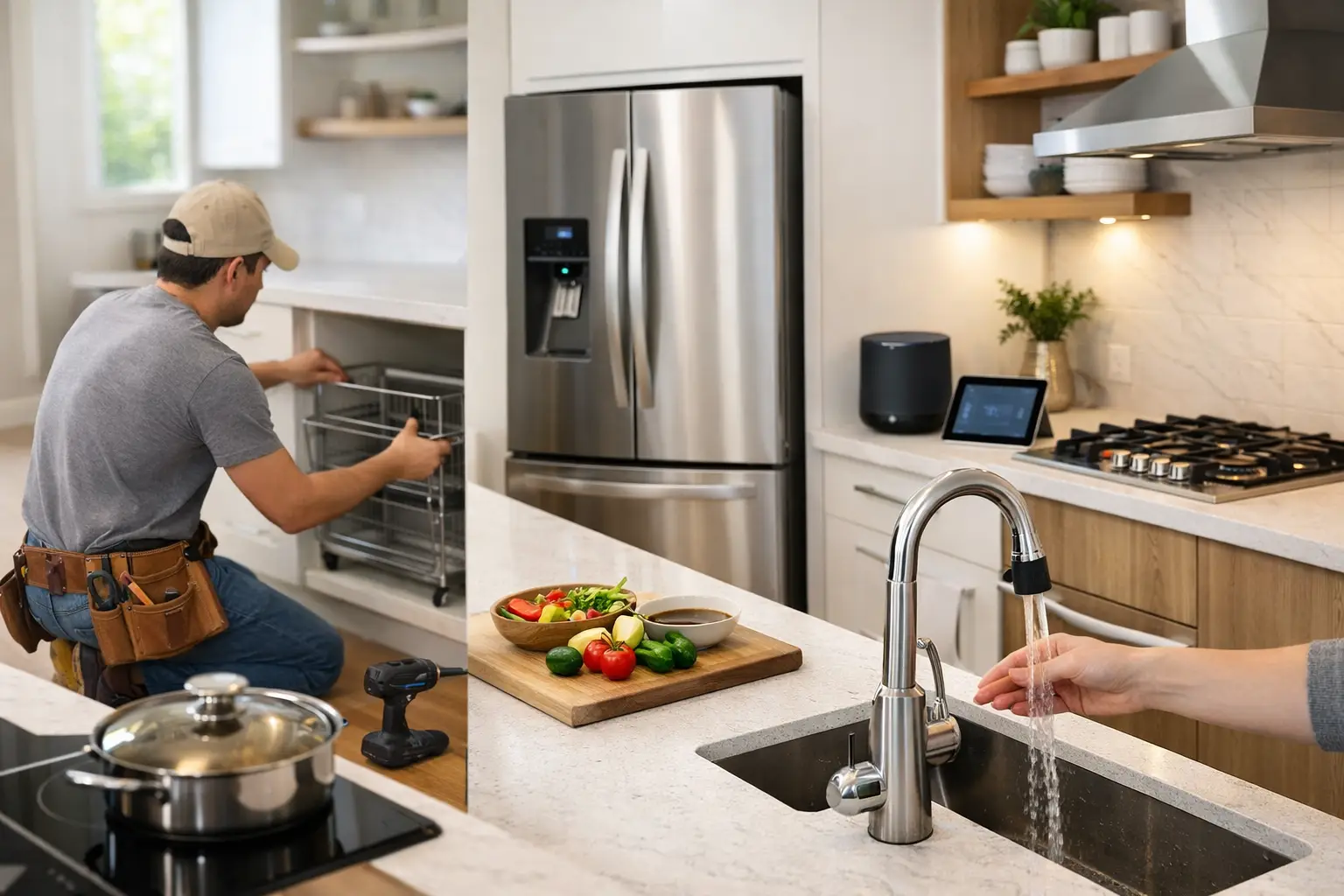
A kitchen that looks good in photos but slows you down every morning is not a successful remodel. The best kitchen remodeling ideas solve everyday problems first – not just finish choices. If your counters stay crowded, your lighting feels dim, or two people cannot move through the room without bumping into each other, the right updates can make the space easier to use from day one.
For most homeowners, the challenge is not finding inspiration. It is choosing ideas that fit the way the kitchen is actually used. A family that cooks every night needs different priorities than a landlord updating a rental or a busy professional who wants a cleaner layout with less upkeep. That is why the smartest remodels start with function, then build style around it.
Kitchen remodeling ideas that improve daily use
A strong kitchen remodel should make the room work harder without making it feel overbuilt. That often means fixing layout issues, improving storage, and choosing materials that hold up to real use.
Start with traffic flow. If the refrigerator door blocks a walkway, the dishwasher cannot open fully, or the island creates a pinch point, those problems matter more than backsplash color. A better layout may involve shifting appliances, widening clearance areas, or rethinking where prep space sits in relation to the sink and range. In smaller homes, even a modest layout change can make the kitchen feel significantly larger.
Storage is another area where practical design pays off fast. Deep drawers for pots and pans usually work better than lower cabinets with hard-to-reach shelves. Vertical tray storage, pull-out pantry shelves, and drawer organizers reduce clutter without adding square footage. Open shelving can look sharp, but it also requires discipline. If you want a cleaner appearance with less maintenance, closed cabinetry is often the better choice.
Counter space should also be treated as a daily-use feature, not a luxury. Many kitchens technically have enough square footage but waste it with awkward corners, oversized decorative elements, or appliance placement that breaks up prep zones. A remodel is a chance to create clear work surfaces where they are most useful.
Layout changes that make a kitchen feel bigger
Not every kitchen needs walls moved, but many benefit from better spatial planning. The right layout change depends on the home, the budget, and how much disruption makes sense.
Open concept is not always the answer
Removing a wall can improve light and sightlines, but it is not automatically the best move. Open kitchens are great for entertaining and keeping an eye on kids, but they also expose mess, cooking noise, and storage demands. In some homes, a partial opening or a widened pass-through gives you the benefit of connection without losing all separation.
Islands work best when they earn their footprint
A kitchen island can add prep space, seating, storage, and visual focus. It can also become an obstacle if the room is too tight. An island should support movement, not interrupt it. If the layout cannot comfortably handle one, a peninsula or expanded perimeter cabinetry may be the smarter option.
Keep the work triangle practical
The sink, refrigerator, and cooking area still matter as a planning concept, but modern kitchens often need more than a simple triangle. If multiple people cook at once, you may need separate zones for prep, cleanup, and snack access. The point is not to follow a rule blindly. It is to make movement feel natural.
Materials and finishes that hold up
Good materials should look right on day one and still perform well after years of use. That balance matters in busy households where the kitchen sees constant traffic.
Quartz countertops remain a strong choice because they are durable, low maintenance, and consistent in appearance. Natural stone has appeal too, but it can require more upkeep depending on the material. If you want a surface that handles daily cooking with less attention, engineered options often make more sense.
Cabinet finishes should match your tolerance for wear. Matte and satin finishes tend to hide fingerprints better than high gloss. Painted cabinets look clean and current, but darker colors may show dust more easily and lighter painted surfaces can reveal chips over time. Wood tones are back in a big way because they bring warmth and often age more gracefully.
Flooring needs the same level of practical thinking. Kitchens deal with spills, chair movement, dropped utensils, and heavy foot traffic. Tile is durable and water-resistant, but it can feel hard underfoot. Luxury vinyl offers comfort and resilience, while engineered wood gives warmth if moisture control is managed well. There is no universal best option – only the best fit for your household.
Kitchen remodeling ideas for storage and organization
Storage upgrades are some of the highest-value kitchen remodeling ideas because they change how the room functions every single day.
A pantry cabinet with pull-out shelves can outperform a basic closet pantry because everything stays visible and accessible. Drawer banks near the cooktop help keep utensils, spices, and cookware close to where they are used. Trash and recycling pull-outs free up floor space and keep bins out of sight. Small details like appliance garages or charging drawers can also reduce visual clutter, especially in kitchens that double as a family command center.
Upper cabinets taken all the way to the ceiling are worth considering if you need more storage and want a more finished look. The trade-off is accessibility. The highest shelves may be used only for seasonal items, which is fine as long as that is planned intentionally.
Lighting is where many remodels fall short
A kitchen can have beautiful cabinets and still feel disappointing if the lighting is weak. This is one of the most common issues in older homes, where a single ceiling fixture tries to do too much.
Layered lighting works better than one bright source
A functional kitchen needs task lighting, ambient lighting, and accent lighting working together. Under-cabinet lighting helps with prep. Recessed ceiling lights provide even general illumination. Pendants over an island can add focus and style if they are scaled correctly.
Think about lighting temperature and placement
Cooler light can feel harsh in a residential kitchen. Warmer white lighting usually creates a more comfortable look while still supporting visibility. Placement matters just as much. Lights should hit work surfaces without creating shadows from upper cabinets or from the person standing at the counter.
Style choices that age well
Trendy kitchens can look dated faster than homeowners expect. A better approach is to keep permanent elements more timeless and let personality come through in easier-to-update details.
Cabinet profiles, countertop color, and tile selection should have staying power. Hardware, paint, stools, and decorative lighting are easier to swap later. That does not mean the kitchen has to be plain. It means the biggest investments should still feel right five or ten years from now.
Many homeowners are moving toward warmer, softer palettes. Off-whites, natural wood, muted greens, and earthy tones tend to feel more inviting than stark all-white kitchens. Mixed metals can also work well, but only when there is a clear visual hierarchy. Too many finishes in one room can feel accidental.
What to prioritize if you are remodeling in phases
Not every project needs to happen all at once. If you are planning a phased remodel, start with the items that are hardest to change later.
Layout, electrical, plumbing, flooring, and cabinetry should come first because they affect everything else. Countertops and backsplashes follow naturally after cabinet decisions are locked in. Paint, hardware, and finishing touches can happen later if needed.
This staged approach is especially useful for homeowners who need to keep the kitchen usable during part of the project. It also helps landlords and property managers improve function without creating unnecessary rework. A capable contractor can help sequence the job so short-term decisions do not create long-term limitations.
How to choose the right kitchen remodeling ideas
The right remodel is rarely the one with the most features. It is the one that removes frustration and adds value where you will actually feel it.
If cooking is the priority, invest in workflow, ventilation, and prep space. If resale matters most, focus on broad appeal, durable finishes, and a clean layout. If the home has older systems, behind-the-wall improvements may deserve attention before cosmetic upgrades. In many Bay Area homes, especially older properties, that kind of practical planning prevents expensive surprises later.
At Fullhouse Remodeling & Handyman Services, we see the best results when homeowners stay focused on use, durability, and the quality of installation. A well-planned kitchen should not just look updated. It should make your home easier to live in every day.
Before you choose colors or fixtures, pay attention to what annoys you in the current space. That is usually where the best remodeling decisions begin.
